E-Paper



Congress reduced to brother-sister party, says JP Nadda
While addressing a meeting of BJP’s booth-level workers in Bhubaneswar, Nadda said, though the BJP was fighting with the Indian National Congress, however, the party was no longer ‘national’ or ‘Indian’ and has only become a party of brother and sister


The Bharatiya Janata Party (BJP) president JP Nadda on Thursday said the Congress has reduced to a brother-sister party.
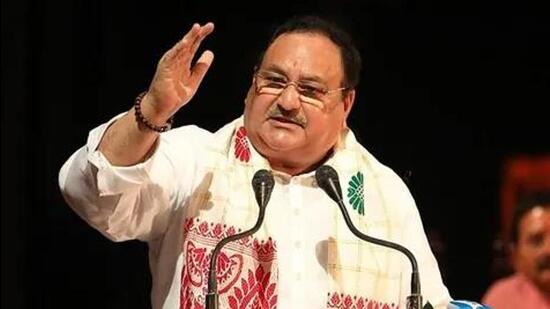
While addressing a meeting of BJP’s booth-level workers in Bhubaneswar, Nadda said, though the BJP was fighting with the Indian National Congress, however, the party was no longer ‘national’ or ‘Indian’ and has only become a party of brother and sister.
“We are now fighting with the family-based parties. Family members are running regional parties like National Conference in Jammu and Kashmir, Samajwadi Party in Uttar Pradesh, Rashtriya Janata Dal (RJD) in Bihar, Trinamool Congress in West Bengal, Biju Janata Dal (BJD) in Odisha and Telangana Rashtra Samithi (TRS) in Telangana,” he said, while addressing a meeting of BJP’s booth-level workers in Bhubaneswar.
Nadda claimed that BJP remained the only national party in the country and that it is operating on its own principles since the beginning.
Also Read: JP Nadda to visit Kerala as part of BJP’s renewed outreach
“We are the party with a strength of 18 crore. We have 302 MPs in Lok Sabha, 92 in Rajya Sabha, 1,394 MLAs, around 120 mayors. There is no party in the world with such strength. For us, it is always nation first, but keeping in mind the regional aspirations. BJP is a cadre-based party but at the same time, it is a mass-based party with a mass following,” said Nadda.
Setting the tone for the party’s 2024 polls in Odisha, the BJP chief alleged that Naveen Patnaik-led BJD government was neck-deep in corruption and urged people to throw such government out of power here.
“It is really unfortunate that there is corruption in Odisha which is not possible due to the involvement of its leaders. Fake bills are created under MGNREGA. The Centre has provided money, but patients are suffering and pregnant women are giving birth to children on roadside. Houses under PM Awaas Yojana are being labelled as Biju Pucca Ghar here. Despite being in power for over 20 years, the BJD has failed miserably as pregnant women are forced to deliver babies along roadside due to absence of basic amenities. What kind of governance is prevailing here,” asked Nadda.
He said one can easily imagine the kind of governance that is being provided in Odisha from the fact that there have been murder allegations against three ministers of the ruling BJD.
“The Odisha government is not implementing the Ayushman Bharat Yojana, thereby depriving around 60 lakh families in Odisha to avail the benefits of the scheme,” he said.
Raking up the Ratna Bhandar issue of Jagannath temple, Nadda said even the treasure of the Lord is not safe here. “Some say that Ratna Bhandar’s key is lost and others say the key is duplicate. What can people expect under such circumstances. It is time to show such people the exit door,” said Nadda, adding that the time has come for a “double engine” government in Odisha. “Ratna Bhandar of Lord Jagannath is also not safe here. While someone says that the key is lost, another says it is duplicate. Yes... when there is a duplicate Government, of course there will be a duplicate key.”
On the other hand, chief minister Patnaik addressing a meeting of leaders of its frontal organisations of BJD in Bhubaneswar asked them to “talk less”. “Our party is with the people. It’s working for the people. We have to, therefore, focus on sensitising people on the various welfare programmes of our government. Let our work speak for itself,” said Patnaik in a virtual address from Bangalore, where he is meeting investors for Make in Odisha conclave to be held later this year.
Patnaik exhorted party workers to make the party’s outreach programme–the annual month-long ‘Jan Sampark Padyatra’ beginning from Gandhi Jayanti (October 2) a grand success.
“Even after all these years, the party has not deviated from its commitment. Therefore, we have a responsibility to carry forward this commitment and make the Jana Sampark Padyatra a success,” said BJD’s organisational secretary Pranab Prakash Das. Party workers from all over the State including office-bearers of youth, students and women wings; all Ministers, MLAs; MPs and State office-bearers participated in the meeting.