
 E-Paper



Congress should learn from the Jan Sangh on how to be an Opposition: BJP general secy
A day after the Congress demanded to know why status quo ante was not insisted upon and the lack of mention about the territorial sovereignty of eastern Ladakh’s Galwan Valley in the Union Ministry of External Affairs’ (MEA) statement; the BJP hit back at its rival.


The Bharatiya Janata Party (BJP) on Wednesday slammed the Congress and its former president Rahul Gandhi, for doing “disservice” to the nation by asking questions “irresponsibly” on the border stand-off with China, instead of joining forces with the government.
A day after the Congress demanded to know why status quo ante was not insisted upon and the lack of mention about the territorial sovereignty of eastern Ladakh’s Galwan Valley in the Union Ministry of External Affairs’ (MEA) statement; the BJP hit back at its rival.
The saffron party said that the Congress should learn from it how to be a responsible opposition.
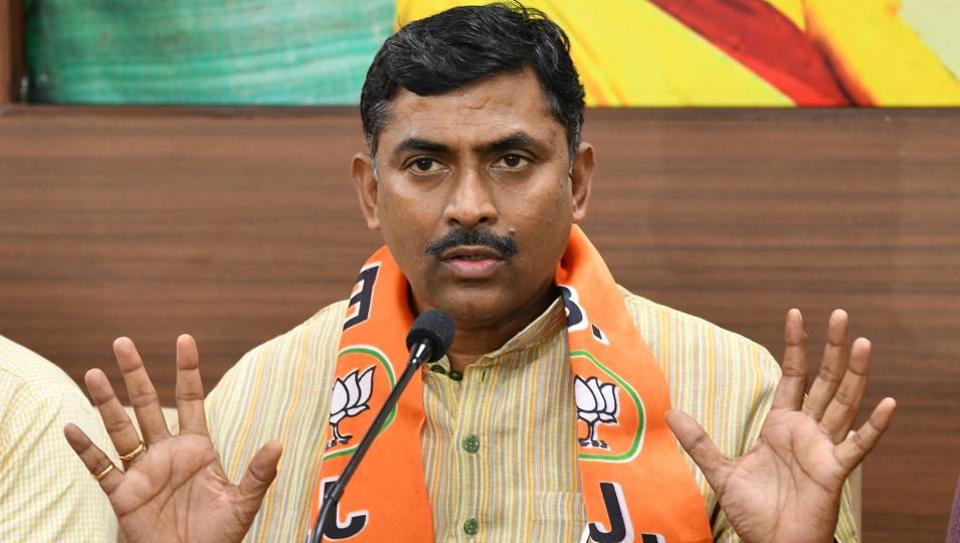
“The opposition is only an example of how irresponsible it (Congress) is. They should learn from Bhartiya Jan Sangh and the BJP, who during the successive wars that the country had fought in 1948, 1962, 1965, and 1971 and how we had behaved as opposition and not the enemy of the government. We, in no way, gave direct or indirect strength to enemy countries. Today, when the [Narendra] Modi has given the world a model in leadership, instead of participating, they are doing a disservice to the nation,” said Murlidhar Rao, general secretary, BJP.
The BJP and the Congress have been sparring over the government’s response to the raging coronavirus disease (Covid-19) pandemic as well as the stand-off with China along the disputed Line of Actual Control (LAC) in Ladakh.
The Congress has been asking the government to be transparent on the territorial transgressions by China and the violent face-off between Indian and China’s People’s Liberation Army (PLA) troops at Galwan Valley on June 15 that had left 20 Indian soldiers dead.
The BJP has accused the Congress of lowering the morale of the soldiers by their comments.
To a separate question on Gandhi’s comment about the state of the economy and how MSMEs (micro, small and medium enterprises) are struggling in the aftermath of an economic slowdown, Rao said the government has been proactive in identifying the challenges and addressing those.
On Wednesday, Gandhi had tweeted: “Small & medium enterprises stand destroyed. Large companies are under severe stress. Banks are in distress. I had stated months ago that an economic tsunami was coming and was ridiculed by the BJP and the media for warning the country about the truth.”
Retorting to Wayanad Member of Parliament’s (MP) tweet, Rao said, “The blind cannot be shown the light... During and after the Covid-19 crisis, the government has been doing its bit. Congress leaders, especially Rahul Gandhi, should look into their history, and learn what was their (party’s) role during a crisis. He (Gandhi) is trying to present himself as a wise man, but people have refused to accept him. If we accept his arguments, we will also be rejected. By accepting him as a leader, the Congress is decimated.”
Rao said because of the pandemic, supply chains have been disrupted and this has led to problems in every sector. “The PM is motivating people to become the market for the manufacturing sector. He (Gandhi) cannot understand the science and subtlety (of it)”.
He also denied that the Union Ministry of Home Affairs’ (MHA) probe into the financial dealings of the Rajiv Gandhi Foundation (RGF) is politically motivated.
“RGF is in the public domain. It has various aspects related to FCRA, 2010, (Foreign Contribution Regulation Act), income-tax audit, etc. The Modi government believes in transparency, we are committed to it. So it’s natural to initiate a probe into it. No foundations are private, and the investigations are in the public interest. If it was political, would we have waited six years?” he asked.
The MHA had set up an inter-ministerial committee to coordinate investigations into allegations against the foundation and the Indira Gandhi Memorial Trust of violating the legal provisions of the Prevention of Money Laundering Act (PMLA), 2002, the Income-Tax (I-T) Act, 1961, and the FCRA, 2010.


