
 E-Paper



Sajjan Kumar, convicted for role in 1984 riots , dies
He was serving life imprisonment for his role in the violence, which resulted in the deaths of many Sikhs. His controversies plagued his political career.

 Prefer HTon Google


Sajjan Kumar, the controversial former Congress member of Parliament who was serving a life term for his role in the 1984 anti-Sikh riots, died in a New Delhi Hospital on Thursday. He was 80.
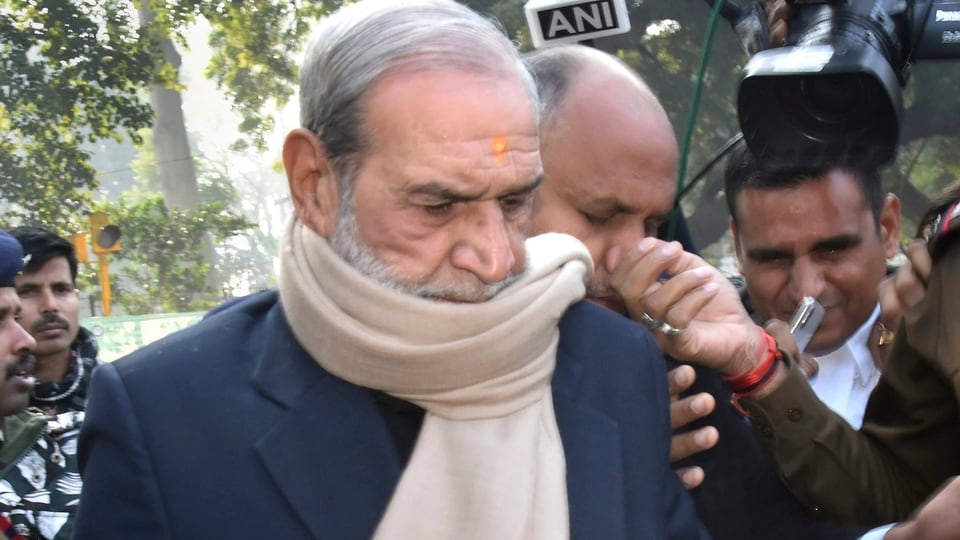
Safdarjung Hospital, where he was taken from jail on Thursday morning after exhibiting signs of “altered sensorium”, said in a statement that he died at 12.30 pm despite medical and life-support measures being provided. It noted that he had a history of high blood pressure and Parkinson’s disease and had multiple hospital admissions in the past.
Kumar is survived by his wife, two daughters and one son, according to his profile on the Lok Sabha website. The Supreme Court had been scheduled to hear a plea for parole by his lawyers on Thursday.
Deep Dive

Also Read | 1984 anti-sikh riot survivors feel Sajjan Kumar evaded justice: 'Dying in jail not enough'
He was sentenced to life imprisonment by the Delhi High Court in 2018 for leading a mob that killed five Sikhs and the burning of a gurdwara in Raj Nagar near Palam Colony, though he was initially acquitted in the case in 2013. Later in 2025, he was convicted again in another murder case related to the riots and was sentenced for life. He was acquitted in another riots case earlier this year, but continued to serve his sentence in the other cases.
The riots broke out following the assassination of Indira Gandhi, the then Prime Minister of India, on the morning of October 31, 1984, by two of her Sikh bodyguards.
For four days between November 1 and 4, the carnage claimed the lives of thousands of Sikhs across Delhi. Thousands more died across the country.
Kumar started his legislative journey as a municipal councillor from Nangloi in Delhi in 1977 and later rose to become the general secretary of Delhi Pradesh Congress Committee. The prominent Jat leader represented the erstwhile Outer Delhi constituency in the Lok Sabha in three separate terms spread across three decades. He was elected to Lok Sabha in 1980, 1991 and 2004.
Also Read | Who was Sajjan Kumar, ex-Congress MP and 1984 riots convict
But the continuing controversy over his role in the riots cost him his seat — the Congress fielded his brother from the South Delhi Lok Sabha constituency for the 2009 elections.
A year later, he was named in charge sheets filed by the Central Bureau of Investigation (CBI), which had been probing his role since 2005, in two cases related to the riots.
After his conviction in 2018, Kumar resigned from the primary membership of the Congress.
The party had long distanced itself from him. In 2005, Manmohan Singh, the first Sikh Prime Minister of India, apologised in Parliament for the riots. “What took place in 1984 is a negation of what is enshrined in our constitution and on behalf of my country I bow my head in shame for what has happened,” Singh said.
Few from the party reacted to the news of his death. Congress’s media department head Pawan Khera offered his “deepest condolences to his family” while general secretary for Karnataka Randeep Singh Surjewala tweeted, “The news of Chaudhary Sajjan Kumar’s passing has left me deeply saddened. His grassroots connection, recognition of workers, and simple nature will continue to evoke the fragrance of the soil associated with him. My heartfelt condolences to the family members, all colleagues, and well-wishers.”
Also Read | Ex-Congress MP Sajjan Kumar, jailed in 1984 anti-Sikh riots case, dies
Shiromani Akali Dal MP Harsimrat Kaur Badal said, “Sajjan Kumar’s name has been written in Sikh history in black ink. His death should have come through a hanging sentence.”


