
 E-Paper



Coronavirus outbreak: Why Congress’ Manish Tewari wants you to read this book
Wuhan, the capital of the central Chinese province of Hubei, is the epicentre of the ongoing Covid-19 outbreak that has so far killed more than 1600 people and infected thousands.

 Prefer HTon Google


Congress leader Manish Tewari has tweeted excerpts from a book in the middle of swirling conspiracy theories that the coronavirus involved in the outbreak in China’s Wuhan appears to be man-made and could have escaped from a lab in the city.
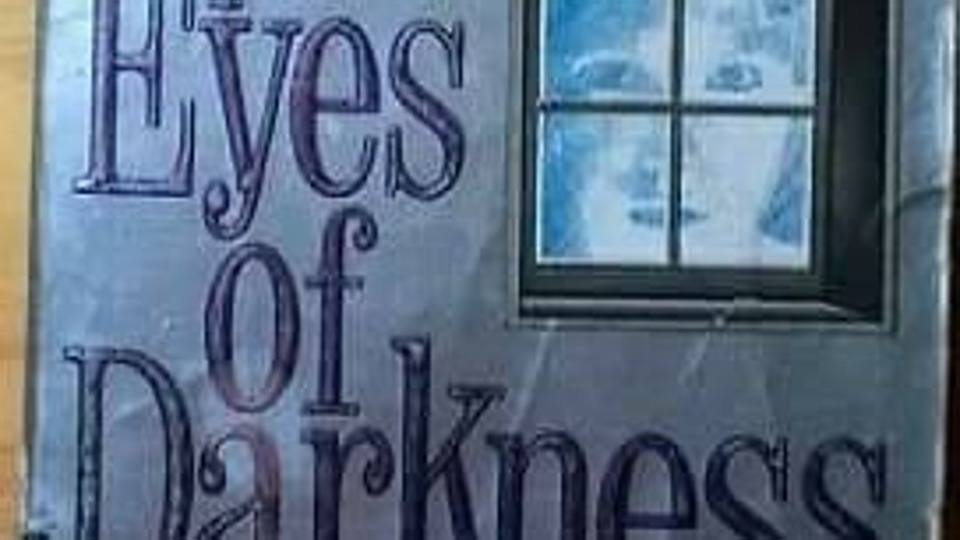
Manish Tewari asked people to read The Eyes of Darkness, a 1981 thriller by best-selling American suspense author Dean Koontz. The book tells a story of a Chinese military lab that creates a virus as part of its biological weapons programme.
“Is Coranavirus a biological Weapon developed by the Chinese called Wuhan -400? This book was published in 1981. Do read the excerpt,” Manish Tewari tweeted on Sunday.
ALSO WATCH | Coronavirus scare: Separating facts from fiction
Tewari also tweeted a photograph with the name of the scientist circled and few lines marked from the book.
“They call the stuff “Wuhan-400” because it was developed at their RDNA labs outside of the city of Wuhan, and it was the four-hundredth viable strain of man-made microorganisms created at that research center,” the lines from The Eyes of Darkness read.
The virus in Koontz’s thriller is considered the “perfect weapon” because it only affects humans and, since it cannot survive outside the human body for longer than a minute, it does not demand expensive decontamination once a population is wiped out.
“And like syphilis, Wuhan-400 can’t survive outside a living human body for longer than a minute, which means it can’t permanently contaminate objects or entire places the way anthrax and other virulent microorganisms can. And when the host expires, the Wuhan-400 within him perishes a short while later, as soon as the temperature of the corpse drops below eighty-six degrees Fahrenheit. Do you see the advantage of all this?” the lines which follow say.
Wuhan, the capital of the central Chinese province of Hubei, is the epicentre of the ongoing Covid-19 outbreak that has so far killed more than 1600 people and infected thousands.
It has spread to at least 25 countries and several deaths outside of China have also been reported.
The similarities between the made-up virus and the Wuhan virus has already been discussed by Twitter users.
And, Koontz has described his book as a “…a modest little thriller about a woman, Tina Evans, who lost her child, Danny, when he was in an accident on a trip with his scouting troop.”
Evans, later in the book, finds out her son was accidentally infected with the virus.
This is not the first time that uncanny similarities between fiction and fact have emerged about virus outbreaks.
Robert Ludlum and Gayle Lynds in their book Hades Factor mentioned a disease called the “acute respiratory distress syndrome” (ARDS).
It was written in 2000 which was three years before the Severe Acute Respiratory Syndrome (SARS) epidemic broke out in China first and then spread across the world.
The symptoms of ARDS and SARS – and for Covid-19 – were similar: Cold, cough, fever and respiratory problems.


