E-Paper



Court’s duty to uphold dignity and autonomy of women: Madras HC
The Madras High Court dismissed a maintenance plea against a mother, emphasizing the need to protect women's dignity and autonomy post-divorce.


Emphasising the judiciary’s duty to safeguard the “dignity, autonomy, and peace of women”, the Madras high court has dismissed a maintenance plea that attempted to “re-entangle” the mother of a 15-year-old boy in fresh litigation more than a decade after her divorce.
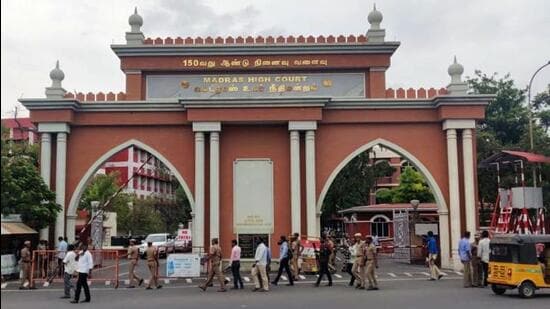
Justice L Victoria Gowri of the Madurai bench of the Madras high court made the remarks on November 13 while dismissing a petition filed in the name of the minor by his paternal grandfather, seeking monthly maintenance from the boy’s biological mother. The court noted that the minor had been reduced to a “mere pawn” in what was essentially an attempt by his grandfather, and by extension, the estranged husband, to reopen “long-closed wounds”.
Justice Gowri said courts must remain vigilant to the vulnerabilities women face, noting that even after lawfully ending a marriage and rebuilding their lives with dignity, women are too often pulled back into hostility in various guises. The judge said that a “woman’s dignity, autonomy and peace” were integral to her fundamental right to life under Article 21 and thus, the same must be protected.
“This court cannot remain oblivious to the persistent vulnerabilities faced by women, who, even after lawfully resolving their marital disputes and rebuilding their lives with dignity, are often dragged back into the shadows of hostility under one guise or another. The court, therefore, stands vigilant to uphold the dignity, autonomy, and peace of womanhood, which are integral to the right to life guaranteed under Article 21 of the Constitution of India,” the bench said in the order, made public on Saturday.
As per the order, the woman and her estranged husband got divorced through mutual consent in 2014. The woman decided not to seek any maintenance. They also agreed that the father would have custody and would alone bear the child’s maintenance expenses. Both the mother and the father have since remarried, settled into their new lives, and that the mother had not interfered in her former husband’s life in any manner.
Despite this, her former father-in-law approached a family court in 2023, seeking an order directing her to pay maintenance, even though the child’s father, a natural guardian under law, was “alive, gainfully employed and earning about ₹1 lakh a month”, the court noted.
The father-in-law’s plea was dismissed by the family court after which he moved the high court in appeal.
The high court upheld the family court order, agreeing that the father-in-law had no “locus standi” to file a maintenance petition when the child’s legal guardian, the father, was alive. The court further said that maintenance proceedings cannot be used as a “backdoor to modify the terms of a binding consent decree”.
“What ought to have been a matter of parental care has been converted into a tool of vengeance,” the bench observed.
The court also rejected the argument that the mother was financially better placed and should contribute to the child’s expenses. “Her remarriage, stability and peace are constitutionally protected aspects of her right to life under Article 21. A woman who has lawfully moved on cannot be forced into repeated litigation at the whims of former in-laws, especially when the arrangement mutually agreed upon at the time of divorce remains intact and the father is fully capable of supporting the child,” the judge said
Calling the revision petition a “misconceived attempt” to disturb the woman’s settled life, the court dismissed it and cautioned against the misuse of maintenance proceedings to “revive matrimonial acrimony”. “True co-parenting must be guided by cooperation, not confrontation; and by respect for finality, not by attempts to weaponise a child in the name of welfare,” it added.