
 E-Paper



Covid 19 scuttles 200-km yearly padyatra to commemorate the lord of Goa
The public holiday on December 3 to mark the feast of St Francis Xavier is celebrated with huge congregations at Old Goa, but this year on account of the coronavirus pandemic, the event has been largely moved online.


December 3 marks the feast of St Francis Xavier, a 16th century Spanish Jesuit who travelled to the then Portuguese held territories in India and other parts of Asia to evangelize and is now revered as Goencho Saib (Lord of Goa).
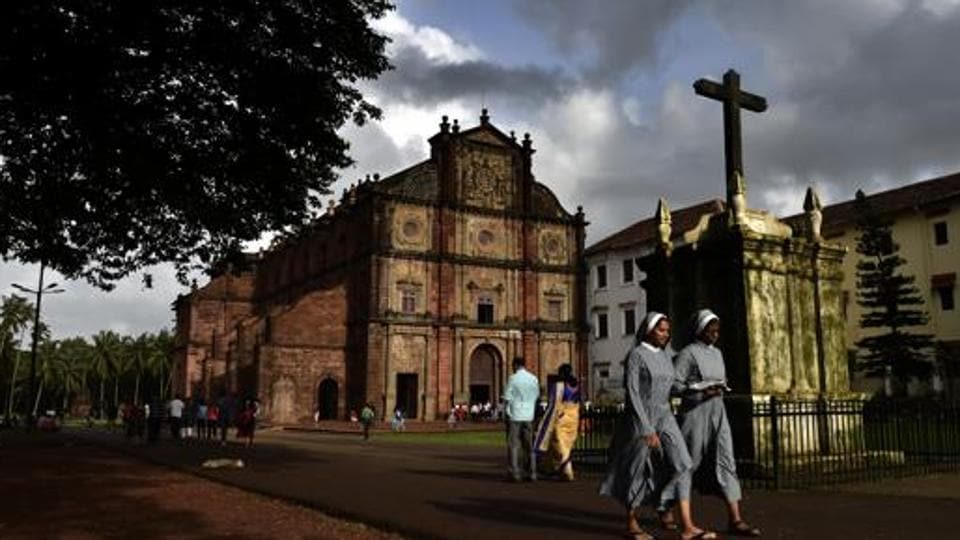
The public holiday is marked with huge congregations at Old Goa, but this year on account of the coronavirus pandemic, the event has been largely moved online.
For the hundreds of people from the villages of the hilly and thickly forested upper reaches of the Western Ghats-- now falling in North Western Karnataka and South Western Maharashtra-- who would make the 150-200 kilometres walk from their town to Old Goa every year on the occasion, the pandemic has meant that their pilgrimage cannot be held this year.
Catholics residing in the neighbouring districts, who trace their roots back to Goa, known as ‘Bardeskar’-- their ancestors having had to migrate from the Bardez taluka in Goa to escape religious and cultural persecution, epidemics and continuous Portuguese-Maratha skirmishes -- had begun a tradition of walking across five days to reach Old Goa by December 2, the eve of the feast of St Francis Xavier.
“The tradition had become a part of the lives of the people of these villages who have great reverence and devotion for Goencho Saib. This (restriction due to the pandemic) became a deep source of sorrow to many of the devotees who have been walking every year,” Fr Joseph Monetiro, the parish priest of Gadhinglaj in Kolhapur district of South Maharashtra, said.
The pilgrimage, modelled on Maharashtra’s Varkari cult’s ‘padyatra’ to Vithoba, the presiding deity at Pandharpur, is undertaken with the hope that various favours will be granted that could include help in getting rid of an alcohol habit, a new job, healing from chronic diseases, etc.
The devotees would walk across the ghats, making their way through the forested stretches and traditional pathways to reach Old Goa by December 2 each year.
Gadhinglaj and the neighbouring towns of Azra in Kolhapur district, Sindhudurg district of Maharashtra and Belgaum district of Karnataka are home to hundreds of families of ‘Bardeskar’ who have formed Catholic settlements centuries ago, but continue to hold on to their links to Goa and the village associations that they belong to.
The tradition dates back to 1982, when a Jesuit priest Swami Prabhudar began walking from Azra, a village in the Kolhapur district of Maharashtra with just seven people. It soon gained popularity and now involves hundreds of people with some marching from as far as Ahmednagar district in Maharashtra to Goa.
Also Read: Old Parrikar video threatens to derail railway line doubling project in Goa
Instead this year, on account of the risks associated with large gatherings, the villagers from Gadhinglaj decided to have a smaller scale pilgrimage involving fewer people and a march from Gadhinglaj to Nesari, a distance of 22 kilometres every day for nine days until December 3, when the feast will be celebrated.
“We are doing this to ensure that the tradition is not broken besides to also enable those who wish to participate, seeking the intercession of St Francis Xavier for various favours can fulfil their devotion,” Fr Monteiro said.
The feast of Francis Xavier is being celebrated at a low key level this year with physical gatherings being discouraged and the celebrations being live streamed instead for the benefit of the devotees.


