
 E-Paper



Covid-19 will make tackling of natural disasters difficult: WMO
“Extreme weather has increased, and it will not go away because of the coronavirus. On the contrary, the pandemic exacerbates the challenge of evacuating people and keeping them safe from tropical cyclones as we saw with Category-5 strength Harold in the South Pacific...,” said WMO secretary-general Petteri Taalas.

 Prefer HTon Google


The Covid-19 pandemic will make tackling climate-related hazards very difficult as overstretched health systems may be unable to cope with the additional burden of patients due to natural disasters like severe heat waves in the coming months, the World Meteorological Organisation (WMO) has warned.
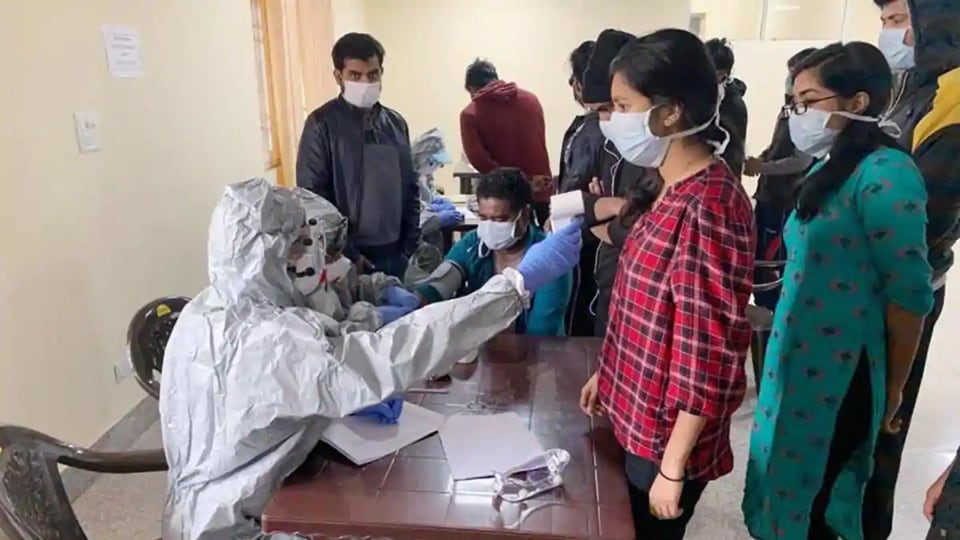
“Extreme weather has increased, and it will not go away because of the coronavirus. On the contrary, the pandemic exacerbates the challenge of evacuating people and keeping them safe from tropical cyclones as we saw with Category-5 strength Harold in the South Pacific...,” said WMO secretary-general Petteri Taalas, referring to the tropical cyclone that struck Vanuatu, an archipelago of 83 islands near Fiji, this month.
Taalas said governments need to do more to strengthen warning systems to cope with multiple hazards.
The April-May-June season is likely to be warmer than normal in most parts of the country, according to Indian Meteorological Department’s seasonal outlook released on March 30. The frequency of heatwaves is also likely to be slightly above normal during the season, it added.
Gandhinagar’s Indian Institute of Public Health director Dilip Mavlankar said above-normal heatwave could mean extremely difficult conditions for people living in small houses in the Covid-19 containment zones. “We have to monitor those in slums in very small units especially if their movement is restricted. Additional water should be diverted by municipalities to these areas to deal with the heat and for handwashing. In the West, water is rationed from swimming pools or gardens to deal with heat episodes.”
In a statement on Tuesday, the WMO said Covid-19 may result in a temporary reduction in carbon dioxide (CO2) emissions with the suspension of vehicular and air traffic, but new global mean temperature record is likely to occur in the next five years.
The WMO said CO2 concentrations in the atmosphere have risen in March compared to last year. The monthly average of atmospheric CO2 concentrations at Mauna Loa observatory in Hawaii last month was 414.50 parts per million, compared to 411.97 ppm in March 2019.
The WMO also released a report on the global climate between 2015 and 2019, which said that the past five years were the warmest on record. The global average temperature has increased by 1.1 degree C compared to the pre-industrial levels, and by 0.2 degree C compared to 2011-2015 period. Since the 1980s, each decade has been warmer than the previous one, the WMO statement said.
US space agency NASA’s earth observatory on Tuesday showed a massive drop in pollution levels over India since the lockdown to check the spread of Covid-19 was imposed on March 25.
The agency’s satellite sensors have also observed that aerosol levels have been at a 20-year low for April in North India.
“We knew we would see changes in atmospheric composition in many places during the lockdown. But I have never seen aerosol values so low in the Indo-Gangetic plains at this time of year,” said Pawan Gupta, a scientist at NASA’s Marshall Space Flight Centre.
NASA has put out maps showing aerosol optical depth (AOD) over India. AOD is an indirect proxy for air quality, which shows how solid and liquid particles in polluted air block sunlight and leads to smog.
Experts said heavy rains in North India could have also helped clear aerosols. In parts of South India, however, aerosol levels have not decreased. They seem to be slightly higher than in the past four years which could also be because of meteorological factors, NASA researchers said.


