
 E-Paper



Critiquing law a tool to further cause of justice, says justice Chandrachud
Justice Dhananjaya Y Chandarchud distinguished law and justice, adding there would be several instances to demonstrate what is legal is probably unjust, whereas what is just may not be legal.


Critiquing the law is a strong tool to advance justice, Supreme Court judge Dhananjaya Y Chandrachud emphasised on Saturday, adding that there continue to be laws which push the marginalised deeper into the pockets of marginalisation.
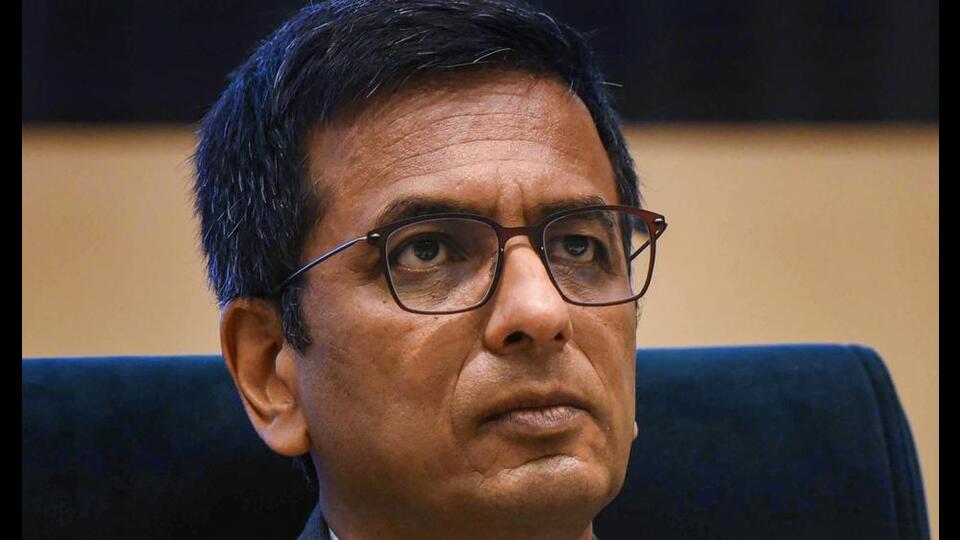
Delivering an address at the convocation of Gujarat National Law University in Gandhinagar, Justice Chandrachud distinguished law and justice, adding there would be several instances to demonstrate what is legal is probably unjust, whereas what is just may not be legal.
The senior Supreme Court judge buttressed his point by referring to the denial of the legal joint-heir right to women in ancestral properties until 2005 when a law was finally enacted to end the discrimination or the criminalisation of consensual gay sex between adults under section 377 of the Indian Penal Code (IPC), which was held to be unconstitutional by the top court only in 2018.
“Remember to not confuse law and justice. A lot of work which leads to achieving justice within the law also happens outside the law in terms of social movements, shaping politics and cultural understanding...There continue to be laws as well as lack of regulations which push the marginalised deeper into the pockets of marginalisation,” the judge lamented.
Imploring the young law graduates to work towards social justice and furthering rights, Justice Chandrachud urged them to remember the importance of differentiating between law and justice and critiquing the law as a step to advance justice.
“Of course, you will encounter people who will tell you the situation is much better than before or better than the situation in other places. However, the journey to justice does not stop at a midpoint or where we feel that we are finally being less unjust than the others,” he said.
Addressing the issue of intolerance, Justice Chandrachud said that in today’s world, with polarising opinions and conflicting actions, legitimising and balancing thought can only be termed as a grave responsibility of each citizen – young and old. He invoked Voltaire to state that the adage “I disapprove of what you say, but I will defend to the death your right to say it” must be incorporated into life.
At the same time, the judge was quick to clarify that tolerance of distinct opinions must not translate into supporting hate speech. “Make no mistake – being accepting and tolerant of the opinions of others by no means translates into blind conformity, and it does not mean not standing against hate speech. Stepping into the world as fresh graduates, amidst the increasing noise and confusion of political, social and moral clashes of ideology, you must be guided by the paths of your conscience and equitable reason,” he said.
Justice Chandrachud told the law graduates, “Speak truth to power, maintain your composure in the face of unspeakable social injustices and utilise your good fortune and privileged positions to remedy them. It may seem idealistic, but as young wide-eyed graduates, you must aspire to attain utopia - for the harbingers of change are often hopeless dreamers.”
The legal profession, the Supreme Court judge said, enables its practitioners to create a world that uplifts the collective along with the individual and assists the disenfranchised, suggesting the young graduates to not let go of their emotional side.
“In our profession, it is very easy over the years to forget that each case you are dealing with defines the trajectory of the life of the individuals involved in that case, even though it may just be one of the multiple cases you are dealing with for that day. I do want to clarify that the characterization of emotions as a force that warps and degrades judgment is incorrect... And I hope that as you sail through your career, you will continue to stay in touch and be guided by your emotional side as well,” said Justice Chandrachud.


