E-Paper



CWC revises forecast as Yamuna breaches 207m in Delhi for 5th time since 1963
The Delhi government has stepped up evacuation efforts, shifting over 10,000 people as precautionary measures intensified across the city

 Prefer HTon Google


New Delhi: The water level of the Yamuna river in Delhi continued to rise on Wednesday, crossing the 207-metre mark for only the fifth time since 1963, as per data from the Irrigation and Flood Control (I&FC) department.
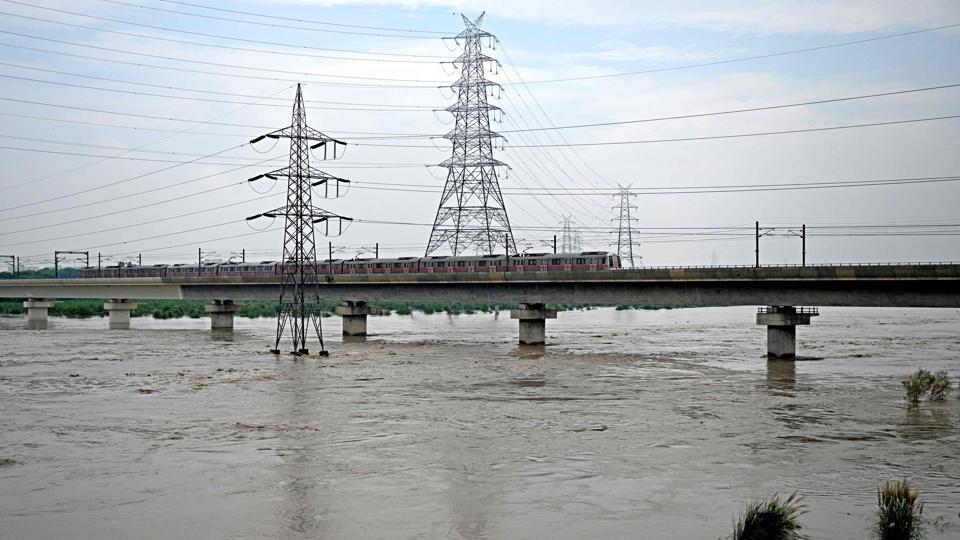
At 3 pm on Wednesday, the river was flowing at 207.09 metres — inching close to the 2010 level of 207.11 metres — prompting the Central Water Commission (CWC) to revise its forecast upward, warning that levels may reach 207.40 metres by 8 pm.
“The river touched 207 metres at 1 pm; 207.04 metres at 2 pm, and at 3 pm, was flowing at 207.09 metres. Based on the current trend, this is likely to become the third highest level of Yamuna ever recorded in Delhi,” an official said.
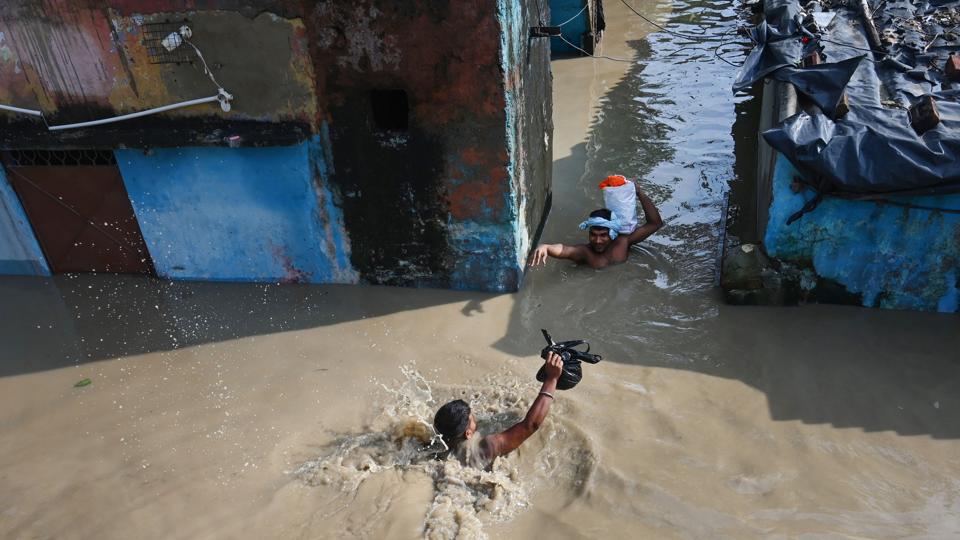
The Delhi government has stepped up evacuation efforts, shifting over 10,000 people as precautionary measures intensified across the city.
An earlier forecast, issued in the early hours of Wednesday, had said the river may stabilise and marginally dip to touch 206.76 metres by 8 pm.
In 2013, it had touched 207.32 metres. In 1978 — Delhi’s second-highest flood level — it reached 207.49 metres, and in 2023, which was Delhi’s worst-ever flood, it touched a record high of 208.66 metres. While agencies have assured that a repeat of 2023 is unlikely, other records may tumble.
“This is a worrying sign. Over 1 lakh cusecs is still being discharged every hour, for a third straight day. At this rate, the river will keep swelling and even more parts of Delhi will be impacted,” Bhim Singh Rawat, associate coordinator at the South Asia Network on Dams, Rivers and People (SANDRP), said.
Also Read: Delhi traffic police issue advisory amid rain. See which routes to avoid
On Tuesday, the Delhi government began evacuating families from low-lying areas, with over 10,000 people moved to higher ground across 28 temporary camps set up in the city. The Old Railway Bridge (Loha Pul) was also closed for traffic operations from 4 pm onwards, until further orders.
Delhi’s Irrigation and Flood Control (I&FC) department, on the same day, closed down four of its 22 drain regulators to prevent flooding in the city. This includes the Vijay Ghat drain, Qudsia drain, Metcalfe, and Tonga Stand.