
 E-Paper



Day 1 of ‘no PUC certificate, no fuel' rule sees long queues at Delhi pumps; vehicles turned away
Motorists without valid documents were turned away, with some making phone calls in an attempt to seek help or clarification.

 Prefer HTon Google


Delhi on Thursday tightened enforcement of anti-pollution measures, intensifying checks on vehicle emissions at city borders, toll plazas and fuel stations. The drive follows the implementation of the ‘no PUC certificate, no fuel’ rule and a ban on the entry of non-Delhi private vehicles that do not meet BS-VI emission standards, both of which came into effect from today.
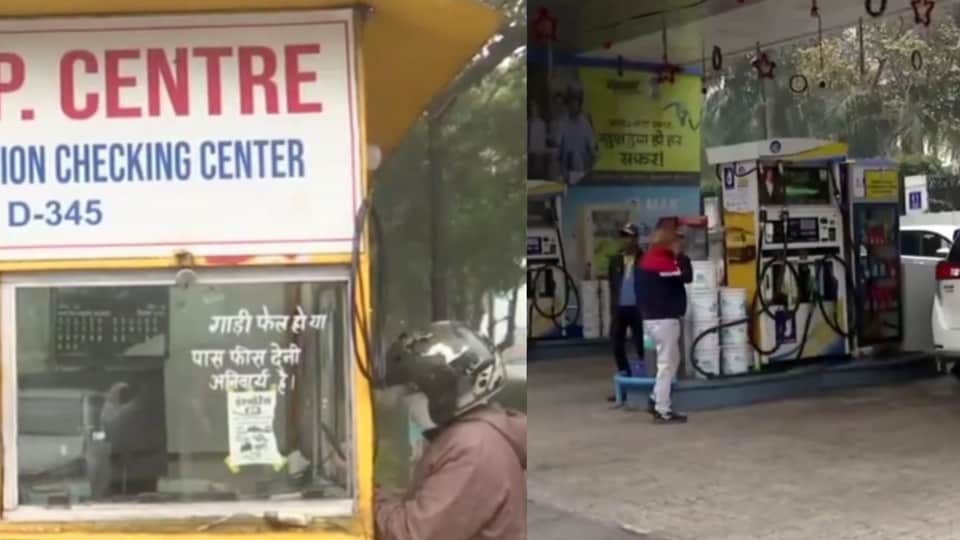
Teams from the traffic police and transport department were deployed across key entry points and petrol pumps to verify pollution-under-control (PUC) certificates and ensure compliance with BS-VI norms. Officials were also stationed at major intersections, where smart number plate reader devices were used to check vehicle details and issue challans to violators.
Also read| Delhi-NCR air pollution measures a 'total failure': Supreme Court
Motorists without PUC turned away
At several petrol pumps across the capital, vehicles were seen lining up as staff verified PUC certificates before dispensing fuel. Motorists without valid documents were turned away, with some making phone calls in an attempt to seek help or clarification.
Commuters response
As Delhi implements stricter anti-pollution measures, commuters have expressed mixed reactions to the new rules. Some commuters, appreciate the necessity of the rules but urge consideration for those who purchased vehicles with their hard-earned money. Others fully support the move, emphasising its importance in curbing the capital’s rising pollution levels.
At a petrol pump in Janpath, commuter Mukesh Kumar said he understood the intent behind the stricter rules but raised concerns about the impact on people who had purchased vehicles with their savings. “The rules are justified, but there should be some consideration for ordinary citizens,” PTI news agency quoted Kumar as saying.
Another commuter welcomed the move, stating that such measures were necessary to curb pollution levels in the city.
Also read| As Delhi anti-pollution rules kick in, here's who is exempt from the latest curbs
Enforcement drive to continue
Authorities said the enforcement drive will continue in the coming days as part of broader efforts to reduce vehicular emissions and improve air quality in the national capital.
A DTC in-charge, JD Sharma, deployed at a petrol pump, said checks were being carried out manually as cameras were not available at the location. “We are checking pollution certificates and noting down vehicle details, which will be shared with the concerned department,” he added, according to PTI.
At the Delhi–Noida border, DTC sub-inspector Jitendra Kumar was seen checking vehicles for BS-VI compliance and valid PUC certificates. “The number of such vehicles is low today due to increased awareness,” Kumar said, adding that fines worth around ₹10,000 had been imposed for PUC violations since morning.
Spike in PUC certificates
The number of Pollution Under Control certificates issued in the capital city rose by nearly 76 per cent on December 17, a day before the 'no PUCC, no fuel' rule came into force, per PTI.
According to official data, 31,197 PUC certificates were issued on December 17, compared to 17,732 on December 16. This marked an increase of 13,465 certificates, or a 75.9 per cent rise within 24 hours.
A total of 1,56,993 challans, each carrying a fine of ₹10,000, were issued during this year’s GRAP (Graded Response Action Plan) period, which ran from October 14 to December 15.
(With PTI inputs)


