
 E-Paper



Deaths spike, vaccination dips—the story from India’s states
These inferences are based on health ministry’s Covid and vaccination data for May 15 and population projections for 2021 by the Census Commissioner of India, and come at the time when some state governments are being accused of hiding actual Covid deaths

 Prefer HTon Google


Uttarakhand, Goa and Delhi have highest Covid deaths for one lakh population (DPL) whereas Gujarat, Madhya Pradesh, Uttar Pradesh, Bihar and Odisha have lower DPLs, shows government’s data on Covid deaths. The health ministry’s data also shows that less than two percent of the population in Uttar Pradesh, Madhya Pradesh, Bihar and Jharkhand, states accounting for one-third of the country’s population, have been fully vaccinated, even as several smaller population states such as Tripura, Sikkim and Arunachal Pradesh have done much better.
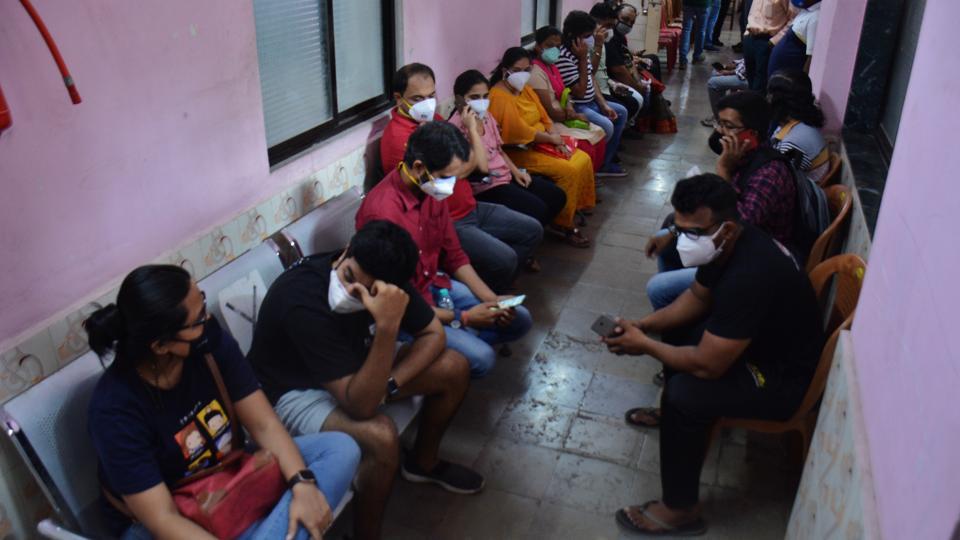
It is in this twin story — of a higher number of deaths in many pockets (which official numbers haven’t, it appears, been able to capture), and a dip in vaccination in other pockets — that is a key feature of the management of the second wave of the pandemic in India.
These inferences are based on health ministry’s Covid and vaccination data for May 15 and population projections for 2021 by the Census Commissioner of India, and come at the time when some state governments are being accused of hiding actual Covid deaths.
The story of mortality
According to health ministry data, Uttarakhand, where mass gathering of people was allowed for Mahakhumbh in March and April, has highest (151) deaths for one lakh people (DPL) followed by Goa, 131, and Delhi, 101. “We have been transparent in reporting Covid cases and deaths. Our death numbers also include outsiders who came for Kumbh,” said Uttarakhand chief secretary Om Prakash.
Gujarat, which has been repeatedly accused of hiding Covid deaths, has much lower DPL of 12.95. Divya Bhaskar, a Gujarati daily newspaper, had on Friday reported that the state government has issued 121,000 death certificates between March 1 and May 10 this year, 61,000 more certificates than in the same period last year. Although the Gujarat government did not deny the figures, junior home minister Pratapsinh Jadeja said it was “mischievous” to compare death certificates with Covid-19 and accused the newspaper of trying to be sensational.
Also Read | 5th phase of lockdown begins in Delhi as positivity rate down to 10.4%
Gujarat’s neighbouring state of Maharashtra, which has reported high Covid cases since March, had DPL of almost 70, highest among big population states. Karnataka has DPL of 32, Chhattisgarh 39.30, Punjab 38.54, Andhra Pradesh 17.56 and Tamil Nadu 22.72.
Uttar Pradesh has DPL of 2, second lowest to only Mizoram among states, with 4,623 total Covid deaths reported so far, even as there have been reports of over 800 dead bodies found buried on banks of river Ganga in Kanpur, Gazipur and Unnao districts. UP government has refuted charge of hiding data, saying Covid deaths were being reported as per the Indian Council for Medical Research (ICMR) guidelines that prohibits recording of Covid deaths of persons with co-morbidities. “We are strictly following ICMR guidelines,” said UP’s additional secretary, information, Navneet Sehgal.
Madhya Pradesh, where burials and cremations as per Covid protocol in major cities such as Indore, Bhopal and Jabalpur were almost double the Covid deaths reported, had DPL of 8.18 with 6,913 total deaths reported. In Bhopal, close to 1,400 people were cremated with Covid protocol since April 1, even as official Covid deaths were only 425, said Bhopal-based social activist Seema Kurup, claiming the situation was similar in Indore and Jabalpur. State health minister Prabhuram Chaudhary said, “We did door-to-door survey to identify Covid positive cases and our timely action is the main reason behind low death rate.”
However, a recent report by the Seattle-based Institute for Health Metrics and Evaluation (IHME) at the University of Washington in Seattle, estimated that actual Covid deaths in India as on May 6 may be 0.654 million (6.54 lakh), almost three times the official count of 0.221 million (2.21 lakh). The IHME, which comes out with annual Global Burden of Disease study, has been using an updated methodology to project Covid deaths in various countries in the world. With this methodology to assess “excess deaths”, the IHME estimates that nearly seven million people have died worldwide as direct victims of the virus. This is about double the number of casualties reported on the basis of official or verifiable sources.
The story of vaccination
Health ministry data also showed that less than two percent of the population of Uttar Pradesh, Madhya Pradesh, Bihar and Jharkhand population, states accounting for 35% of the country’s population, has been fully vaccinated. Several smaller states such as Tripura, Sikkim and Arunachal Pradesh have much better vaccination numbers.
Several state governments have slowed down vaccinations since April 15 due to short supply of vaccines from two Indian manufacturers – Serum Institute of India and Bharat Biotech – and as many as 12 states have floated global tenders for vaccines.
Also Read | Portals of Kedarnath temple open amid strict Covid-19 protocol
According to the ministry, 2.5% of India’s people have got both doses of vaccination while 9.3% have got a single jab as on May 16, 121 days after vaccination started on January 16. Till May 16, the ministry said, 98.8 million people had got a single dose and 41.7 million both doses of Covid vaccine.
The data showed that the progress of vaccination was abysmally low in Bihar, UP and Madhya Pradesh, which account for 32.2% of India’s population. These states combined have so far vaccinated only 1.51% of the population with both doses. Only 5.91% people in these states have been vaccinated with single dose.
Another five states, Jharkhand, Punjab, Assam, Tamil Nadu and Telangana, which account for 16% of the national population, have given both doses to 2.32% of its population and single dose to 8.4% of their population got single dose. “If we take the above mentioned 8 states together, they represent 48.2% of India’s population and only 1.78% of their population has got both doses of covid vaccine,” James Wilson, a researcher who has extensively studied health data over the past year, said.
Smaller population states such as Ladakh and Tripura have vaccinated more than 12% of their population with both doses, and 29.05% and 23.13% of population, respectively, with single dose. Sikkim & Lakshadweep vaccinated 8.8% & 9.54% of their population with both doses, data shows.
(With inputs from state bureaus)


