
 E-Paper



Decoding the political significance of the EWS quota
The legislation introduced a new paradigm to reservations in 2019. Hailed by the State and even the Opposition at the time, experts weigh in on its implications, as it is set to come before a constitutional bench of the Supreme Court in September

 Prefer HTon Google


New Delhi: In January 2019, just a few weeks ahead of the general elections, the Narendra Modi-led government passed a politically significant legislation seeking to grant 10% of reservation in jobs and higher education to members of economically weaker sections (EWS) among the general category. The move, by several political observers, was perceived as a “political stunt” to consolidate the upper caste vote bank — a major support base of the Bharatiya Janata Party (BJP).
More strikingly, for the first time, the law introduced a new paradigm in reservations: Caste was not made a criterion to access reservations under this 10% EWS quota.
The Opposition questioned the Union government’s “haste” in pushing the bill through, just months ahead of the 2019 general election. However, a majority of them, including the Congress, later supported the legislation considering its political importance.
While the government maintained that the move is “to ensure that economically weaker sections of citizens get a fair chance of receiving higher education and participation in employment in the services of the State”, experts believe that it was introduced only to appease the upper castes.
The Ministry of Social Justice and Empowerment notified The Constitution (103 Amendment) Act, 2019, via gazette notification on January 14, 2019. The Act amends Articles 15 and 16 of the Constitution, by adding a clause which allows states to make “special provision for the advancement of any economically weaker sections of citizens”.
These “special provisions” relate to their admission to educational institutions, including private educational institutions, whether aided or unaided by the State, other than the minority educational institutions. On January 17, the government issued a notification specifying the income limit at ₹8 lakh per annum for EWS reservations.
The reservation was introduced in addition to the existing 50% reservation in educational institutions and government jobs for the members of socio-economic backward classes, including Scheduled Castes, Scheduled Tribes, and Other Backward Classes.
The 10% EWS quota was welcomed by upper-caste groups across the country. This is in stark contrast to the Opposition by the upper castes to the OBC reservation recommended by the Mandal Commission in 1990.
Among the major castes to benefit from the quota are Brahmins, Rajputs, Jats, Marathas, Bhumihars, Vaishyas (trading castes), along with Patidars or Patels, Gujjars, Kappus, and Kammas, depending on which caste group is listed in a state under which category.
Experts say that the 10% EWS quota was an act of “appeasement of the upper caste” as income-based quota was one of their long pending demands. Satish Deshpande, a professor at the department of Sociology at the University of Delhi (DU), said that as per the legal history of reservation, any reservation given exclusively based on economic criteria alone is “unconstitutional”.
“It was an attempt to buy the upper caste vote. It is well known that the core support of the BJP is in the upper caste base. Reservation is not supposed to be a welfare programme. It is for representation of underrepresented groups and upper castes are anything but underrepresented. There could have been an argument for economic measures like giving scholarships,” he said. Deshpande added that the Opposition also supported because “they all wanted to appease the same vote bank”.
Apoorvanand, a professor at the Hindi Department at DU, said that the reservation with no social aspect associated with it is meaningless. “It distorts the definition of reservation by introducing this EWS category. The ₹8 lakh per annum limit is as irrational as the category itself. How can you have an EWS category if you are appointing someone, let's say at the associate professor position? One cannot become an associate professor without becoming an assistant professor. And if you are an associate professor, you automatically cross that threshold,” he said. “So, it is irrational and illogical with the sole purpose of appeasing the upper castes. It is kind of an ideological victory for the upper caste,” he said.
Days after being notified, the legislation was challenged in a public interest litigation (PIL) filed before the Supreme Court. The petition was filed by a non-profit, Youth for Equality, contending that the amendment alters the “basic structure” of the Constitution and annuls previous binding judgments of the apex court. The petition states that the quota breaches a 50% cap fixed by the top court in the M Nagaraj case in 2006. The Centre had last year formed a panel to review the ₹8 lakh income limit for the quota. The committee in its report said that the existing ₹8 lakh income criteria was not “over inclusive”, and the government, in January this year, informed the Supreme Court that it will continue with the existing limit.
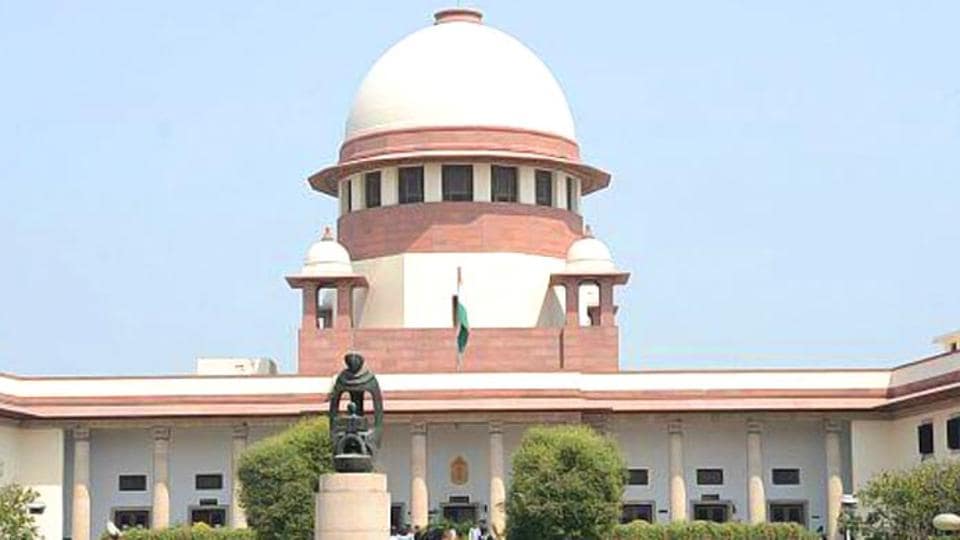
The matter is still sub-judice and will come before the constitutional bench of the Supreme Court in September.
Analysts say that the apex court’s decision will be significant ahead of the 2024 general elections. While the BJP has been trying to consolidate the vote bank among the marginalised social groups, it wouldn't want to do that at the cost of the upper caste vote bank.


