
 E-Paper



App-based cab trips may get costlier in Delhi, road tax likely to be hiked
Transport minister Kailash Gahlot said revising the road tax and levying a congestion fee are means devised by experts and officials to provide the funds required to push the demand for electric vehicles in the city by offering a variety of incentives.

 Prefer HTon Google


Ride hailing services and buying a car in city are likely to get costlier as the Delhi government may soon impose a congestion tax and increase road tax on vehicles registered in the city in a bid to decongest roads, tackle air pollution and promote electric vehicles, senior government officials said on Saturday.
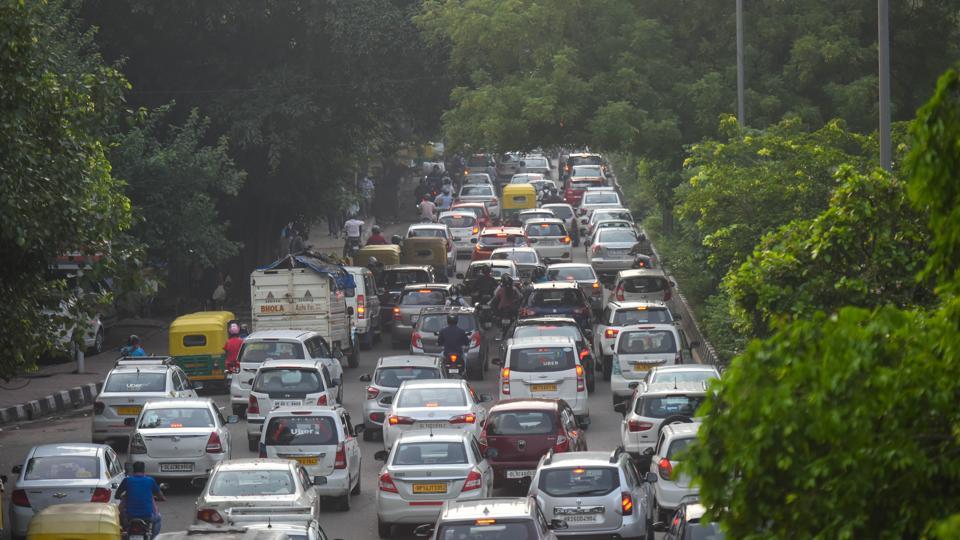
The move is mandated under the Delhi Electric Vehicle Policy, 2020, which was notified and launched by chief minister Arvind Kejriwal on Friday.
According to the policy, a ‘congestion fee’ is to be levied on all trips made by cabs to and from Delhi. Senior government officials said this is likely to result in cab rides becoming expensive in the national capital since the private cab operators and aggregators are likely to pass on the charges to the passengers.
“An appropriate congestion fee shall be levied on all trips originating or terminating within the NCT of Delhi and taken using cab aggregator and ride hailing services. This tax shall be waived for rides taken in e-two wheeler, e-auto or e-cab. Tax due shall have to be deposited with the GNCTD every month and shall be allocated to the State EV Fund,” reads the Delhi EV Policy, 2020.
Transport minister Kailash Gahlot said revising the road tax and levying a congestion fee are means devised by experts and officials to provide the funds required to push the demand for electric vehicles in the city by offering a variety of incentives. He clarified that imposing the new taxes and surcharges could take a month’s time since first the State EV Board, an EV Cell and a State EV Fund have to be set up after which the rates and the method of collection will be finalised.
“The idea is to levy additional road tax on diesel and petrol vehicles, especially luxury cars. The revised tax shall be based on a sliding scale with expensive diesel vehicles paying the highest additional road tax and low cost two-wheelers incurring only a small increase in the tax,” Gahlot said.
He said the revised road tax rates, in line with this principle, will be notified by the state transport department.
“The entire revised road tax amount will not be allocated to the State EV Fund. Only the additional incremental amount will go to the EV Fund,” the minister said.
At present, the average road tax for four-wheelers in Delhi ranges between ₹18,000 and ₹20,000, depending on the cost of the car. The road tax slab differs for various categories of four-wheelers — 4% (petrol and CNG) and 5% (diesel) on cars up to ₹6 lakh, 7% (petrol and CNG) and 8.75% (diesel) on cars above ₹6 lakh and up to ₹10 lakh, and 10% (petrol and CNG) and 12.5% (diesel) for cars priced above ₹10 lakh.
With the latest move, expensive diesel vehicles are likely to see the steepest increase in road tax.
Anumita Roychowdhury, executive director (research and advocacy), Centre for Science and Environment (CSE) said increasing the road tax and levying a congestion fee is a very important application of ‘polluter pay principle’ to fund the EV transition at a scale.
“Higher road tax and congestion tax will also de-incentivise polluting internal combustion engines (ICE) and promote EVs to make them competitive. This is needed to meet the 2024 target of 25% electrification of the total registered vehicles in Delhi as set by the Arvind Kejriwal government,” she said.
Mobile application based cab aggregator Uber declined to comment on the matter as it said that the company is still reviewing the EV policy. Cab aggregator Ola also refused to comment.
Now that the EV policy is notified, those buying electric vehicles will be exempt from paying road tax and registration fee. In addition, a subsidy of ₹5,000 per kWh of the battery capacity up to ₹30,000 will be given on the purchase of each electric two-wheeler, auto-rickshaw, rickshaw and freight vehicle. For the first 1,000 e-cars or electric four-wheelers, a subsidy of ₹10,000 per kWh will be given, capped at ₹150,000 per vehicle. To push people to shift to EVs, the policy also has a “scrapping incentive” for those who make the switch.
The government is also in the process of setting up the State EV fund, which will encompass all the expenditure of the EV Policy. A State Electric Vehicle Board is also to be constituted for effective implementation of the EV policy and managing the EV fund, and the chairman of the board will be the transport minister. Besides, a dedicated EV cell will also be constituted.


