
 E-Paper



Delhi AQI today: Bawana, Vivek Vihar among city’s most polluted pockets | Check top 10 worst-hit areas
Bawana, Vivek Vihar and Wazirpur record ‘severe’ to ‘very poor’ air quality as Delhi continues to choke under haze on Saturday morning.


Delhi’s overall air quality remained in the ‘very poor’ category on Saturday morning with an AQI of 335, according to the Air Quality Early Warning System for Delhi. The city woke up to a thick layer of haze as winter began to set in, worsening pollution levels across several parts of the national capital.
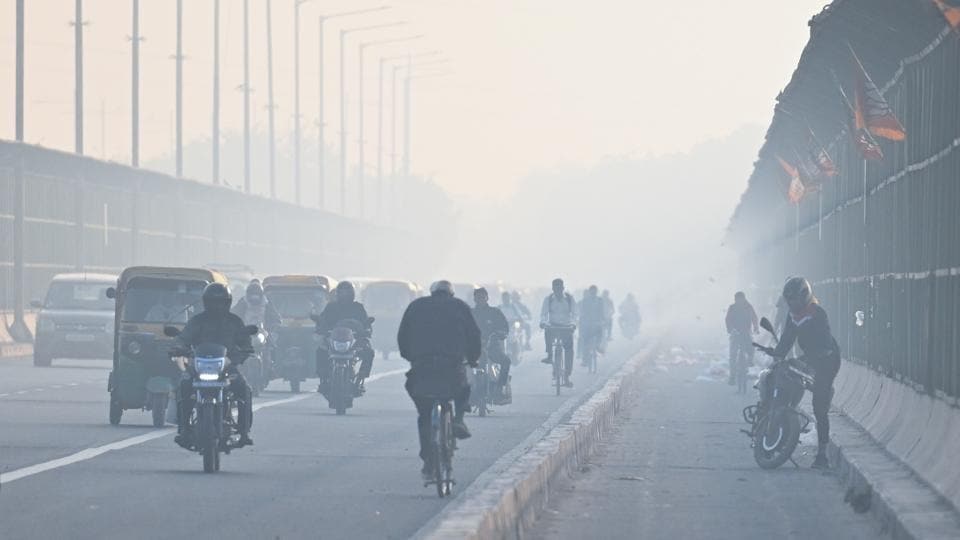
This came after Delhi’s 24-hour average AQI stood at 322 on Friday, placing the city in the ‘red zone’ and making it the most polluted urban centre in the country, Central Pollution Control Board (CPCB) data showed.
According to CPCB data as of 8:00 am today, Bawana (403) recorded the worst air quality in the city, entering the ‘severe’ category. It was followed closely by Vivek Vihar (387) and Wazirpur (381). Areas such as Mundka (375), Punjabi Bagh (375), Burari Crossing (374) and ITO (373) also reported dangerously high pollution levels.
Jahangirpuri (365) , Sonia Vihar (365) and Ashok Vihar (360) also remained in the 'very poor category.
Area-wise AQI of Delhi as of 8 am on Saturday, according to CPCB
| Area | AQI | Category |
|---|---|---|
| Bawana | 403 | Severe |
| Vivek Vihar | 387 | Very Poor (bordering Severe) |
| Wazirpur | 381 | Very Poor |
| Mundka | 375 | Very Poor |
| Punjabi Bagh | 375 | Very Poor |
| Burari Crossing | 374 | Very Poor |
| ITO | 373 | Very Poor |
| Jahangirpuri | 365 | Very Poor |
| Sonia Vihar | 365 | Very Poor |
| Rohini | 361 | Very Poor |
| Ashok Vihar | 360 | Very Poor |
| Pusa, Delhi | 359 | Very Poor |
| CRRI Mathura Road | 359 | Very Poor |
| Narela | 358 | Very Poor |
| Anand Vihar | 356 | Very Poor |
| Alipur, Delhi | 353 | Very Poor |
| Patparganj | 352 | Very Poor |
| Chandni Chowk | 352 | Very Poor |
| North Campus, DU | 347 | Very Poor |
| Sirifort | 343 | Very Poor |
| Mandir Marg | 342 | Very Poor |
| Dr. Karni Singh Shooting Range | 339 | Very Poor |
| Okhla Phase-2 | 338 | Very Poor |
| R K Puram | 337 | Very Poor |
| Dwarka Sector-8 | 318 | Very Poor |
| Jawaharlal Nehru Stadium | 322 | Very Poor |
| Major Dhyan Chand National Stadium | 322 | Very Poor |
| Sri Aurobindo Marg | 301 | Very Poor |
| Shadipur | 299 | Poor |
| DTU | 291 | Poor |
| Najafgarh | 286 | Poor |
| Aya Nagar | 281 | Poor |
| IGI Airport (T3) | 271 | Poor |
| IHBAS, Dilshad Garden | 224 | Poor |
| Lodhi Road | 235 | Poor |
| NSIT Dwarka | 211 | Poor |
Notably, the CPCB defines AQI ranges as follows: 0-50 is good, 51-100 satisfactory, 101-200 moderate, 201-300 poor, 301-400 very poor, and 401-500 severe.
Also Read | Top 10 Indian cities with worst AQI: Delhi tops the chart, NCR close behind
‘Very poor’ likely to persist
The Decision Support System (DSS) for air quality forecast reported that PM2.5 remained the key pollutant on Friday. According to a report in news agency PTI, stubble burning accounted for 8.6% of Delhi’s pollution but is projected to rise sharply to 30.9% on Saturday and 31.2% on Sunday, according to DSS estimates.
Satellite data showed 351 farm fire incidents in Punjab, 35 in Haryana, and 200 in Uttar Pradesh on Thursday. Alongside stubble burning, Delhi’s transport sector is estimated to contribute 15% on Saturday and 14% on Sunday to PM2.5 levels.
The Air Quality Early Warning System predicted that the city’s air quality will remain in the ‘very poor’ range over the next few days.
Since Diwali, Delhi’s AQI has swung between ‘poor’ and ‘very poor’, with several pockets already breaching into the ‘severe’ zone.


