
 E-Paper



Delhi rejects Centre’s ‘rejection’ of ration plan, says grounds frivolous
The two sides have been locked in a standoff over the scheme since March, and the matter has come to a head in recent weeks with Lieutenant Governor Anil Baijal raising objections against the plan, and Delhi chief minister sending back the file to the L-G with clarifications and counter-objections.

 Prefer HTon Google


Deputy chief minister Manish Sisodia on Wednesday said the Union government has rejected the Delhi government’s ambitious doorstep delivery of ration scheme even though no proposal was sent for the Centre’s approval in the first place, and described some of the reasons given in the letter as “frivolous”.
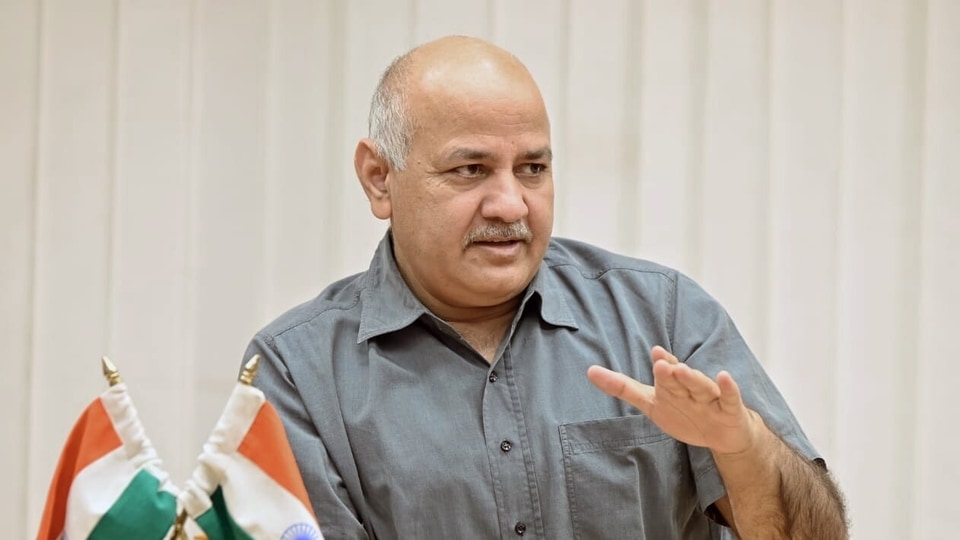
The two sides have been locked in a standoff over the scheme since March, and the matter has come to a head in recent weeks with Lieutenant Governor Anil Baijal raising objections against the plan, and Delhi chief minister sending back the file to the L-G with clarifications and counter-objections.
“Yesterday (Tuesday), Prime Minister Narendra Modi sent a letter to the Delhi government through the Union food and consumer affairs ministry saying that our doorstep delivery of ration scheme has been rejected. The excuses given for rejecting the scheme are so frivolous and funny that it reflects how the PM wants to pick up a fight with someone or the other,” Sisodia on Wednesday said in a digital press briefing.
“They are saying that this scheme has been rejected, but we never sent it to them for approval. So, how can they reject it?” he added.
Later, Kejriwal tweeted some of the reasons cited by the central government in its letter. “The Centre’s letter has come. It is very disappointing. They gave such reasons to reject our ration scheme: what if the van carrying the ration for delivery gets stuck in traffic or breaks down on its way; how will the ration be delivered if a beneficiary lives on the third floor; how will the delivery van go in narrow lanes - India of the 21st century has reached the moon, and you’re stuck on the third floor,” he said in a tweet in Hindi.
“It is not right to fight with everyone every time - Twitter, Lakshadweep, Mamata didi, Maharashtra, Jharkhand, Delhi government, farmers, traders, and even with the chief secretary of West Bengal. How will the country progress if you keep fighting so much and keep doing politics all the time? The doorstep delivery of ration scheme is in national interest. Do not fight over this,” he added in a second tweet.
In its letter to the commissioner of Delhi’s food and supplies department, the Union ministry wrote that the proposal doesn’t meet the statutory and functional requirement of the National Food Security Act (NFSA), and therefore, “can’t be accepted”.
Flagging “concerns and shortcomings” regarding the scheme, the ministry said that the Delhi government has not mentioned the prices of ration under home delivery. It asked whether people who opt for home delivery can later revert to taking ration from the fair price shops. It also raised concerns about how the Delhi government will ensure continued home delivery of ration if the beneficiary changes their address and how such a database will be maintained as most of them “keep changing their temporary accommodation”.
The Centre’s letter, written by DK Gupta, director (public distribution), stated that “every beneficiary shall expect the vehicle in front of their door” and if that is not done, “there may be issues of favouritism and nepotism”.
“Free movement of the delivery vehicle may be hindered. Moreover, doorstep delivery may not be successful in multi-storey buildings with multiple floors. Thus, these constraints may defeat the whole purpose of the ‘home delivery’ and in fact, the beneficiaries may actually be called to come till the van/vehicle and collect their packets,” read the letter, a copy of which was seen by HT.
It also questioned how the Delhi government will coordinate with the beneficiaries during the time of delivery as most of them are daily wagers, labourers, household job (holders) and so on. “…timely delivery at a fixed date/time may be hampered due to tackling traffic congestion, breakdown of delivery vehicles etc. Absence of beneficiaries during home delivery date/time/trips of van shall impact their food security, as compared to choosing their own convenient date, time and cost of lifting food grains… Food items loaded on the delivery vehicles for doorstep delivery may be subjected to variable weather conditions such as rain, heat, mist, dust, pollution, humidity, etc resulting in wastage,” said the letter.
Responding to the points, Sisodia said that the Centre could have simply asked the Delhi government about the prices involved in this scheme. “We would have told them... Distribution of ration under the NFSA is the preparative of the state government. We assure the Centre that the cost to the beneficiary for availing the scheme will not be more than the rates prescribed by it,” he said.
He added that it was in these narrow lanes of Delhi that pizzas are getting delivered. “When people can get pizzas delivered to their houses; fridges, clothes, food and any other consumable item can be delivered by Amazon, why can’t the poor get their ration delivered? How do these things reach the third floor? I want to tell the PM, this is young India. Today the youth of our country have the capacity to deliver ration even to the moon.”
The Centre also suggested in its letter that the Delhi government first start the scheme on a pilot basis. It further sought clarity whether there will be a single contractor for the whole of Delhi or multiple contractors and how they will be made accountable under NFSA.
This is the third time this year that the scheme has been stalled due to differences between the Delhi government and the Centre. On June 16, Kejriwal wrote a note to Lieutenant Governor (L-G) Anil Baijal in response to the L-G’s comments asking the CM to reconsider the proposal and seek the Centre’s approval citing an ongoing court case in the matter.
In his note to the L-G, Kejriwal addressed the price issue as flagged by the Centre, saying that any beneficiary who avails doorstep delivery of ration will have to pay ₹2 per kg only for processing the wheat into flour, and that this does not include services such as cleaning, packaging and transportation, and is based on a letter issued by the Union government’s department of food and public distribution on November 3, 2014.
The scheme was to be launched on March 25, but the Union food and consumer affairs ministry wrote to the Delhi government on March 19 raising two objections— the use of the term “mukhyamantri (chief minister)” for a scheme involving the distribution of food grains allocated under the National Food Security Act (NFSA), and that any change in the delivery mechanism requires an amendment in NSFA that can be done only by Parliament. The Delhi government, on March 24, passed a Cabinet decision to remove the name “Mukhyamantri Ghar Ghar Ration Yojna” for the scheme and to implement doorstep delivery of ration as part of the existing NFS Act, 2013.
Delhi currently has around 1.78 million ration card-holder households, which according to government records, translate to 7.2 million beneficiaries. Ration is currently distributed to them through a network of 2,000-odd fair price shops.
Anjali Bhardwaj, member of the Right to Food campaign, said it is very unfortunate that at a time when people are facing the double whammy of a health disaster and economic distress, and millions are in dire need of rations, the central and state governments are indulging in politics over food.
“They should both focus on increasing food security net in Delhi. Only 37% (72 lakh people) have ration cards while many more need ration. Last year, under the e-coupon scheme, the Delhi government had to provide rations to nearly 70 lakh people without ration cards. The Delhi government can issue temporary ration cards and use home delivery for non-PDS delivery by starting a state level scheme to avoid getting into a tussle with central government,” said Bhardwaj.


