
 E-Paper



Democracy without dissent a contradiction: Justice Surya Kant
Justice Surya Kant also spotlighted India’s global leadership in using public interest litigation (PIL) as a judicial tool to redress collective harm.


Democracy without dissent is a contradiction and that silence in the face of injustice is not neutrality, but complicity, Supreme Court judge justice Surya Kant has asserted as he invoked India’s constitutional ethos and the top court’s role in defending civil liberties.
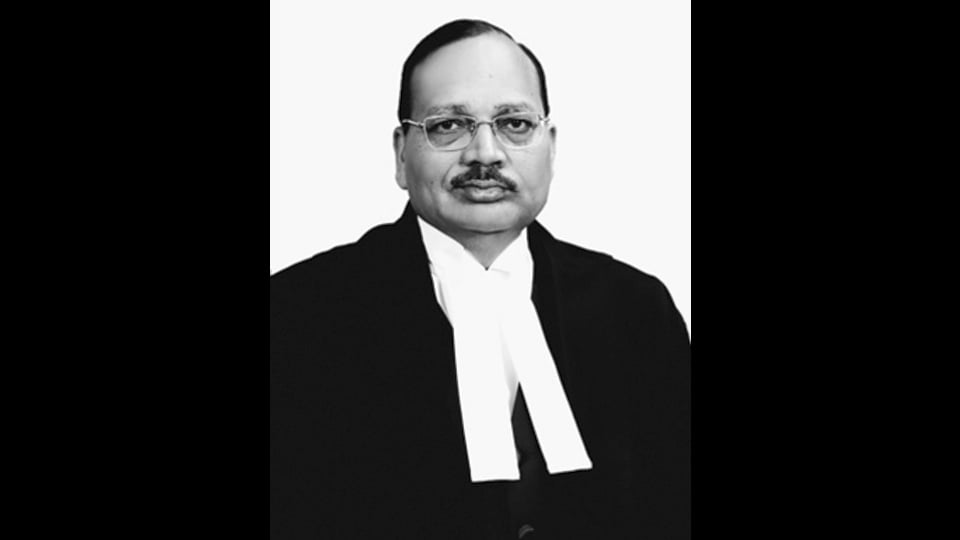
Justice Kant, who is in line to take over as the Chief Justice of India (CJI) in November this year, was speaking at the Washington Supreme Court as part of an international judicial exchange.
In his address earlier this week that underscored the shared constitutional commitments of India and the United States, the judge said: “Democracy without dissent is a contradiction, and that silence in the face of injustice is not neutrality, but complicity…These are not merely legal precedents; they are constitutional declarations.”
Justice Kant highlighted that the right to free speech, protected under Article 19(1)(a) of the Indian Constitution and the First Amendment in the US, has been “zealously defended” by courts on both sides of the Atlantic.
Drawing parallels with the US Supreme Court’s protection of student protest in Tinker Vs Des Moines (1969), he recalled how India’s top court, much earlier, had established the primacy of expression in Romesh Thappar and Brij Bhushan cases in 1950, ruling against pre-censorship and vague notions of public order.
“In both countries, the judiciary has consistently pushed back against the temptation to suppress dissent under misguided and deceptive notions that the executive may hold,” he noted.
Reaffirming the foundational nature of constitutional supremacy in both democracies, Justice Kant highlighted that the basic structure doctrine in India that asserts Parliament cannot amend away core constitutional values mirrors the American principle that “even the majoritarian will must bow” before foundational ideals like liberty, federalism, and equality.
“These doctrines reflect a shared understanding that tampering with these principles would cause a rift so immense that it would threaten the very heart of our existence,” he warned.
ALSO READ | Free speech, democracy, and the epidemic of hurt feelings
Justice Kant also spotlighted India’s global leadership in using public interest litigation (PIL) as a judicial tool to redress collective harm. Citing the Vishaka judgment (1997) where the Indian Supreme Court laid down workplace sexual harassment guidelines in the absence of legislation, he said: “Though structurally distinct, both approaches reflect a shared judicial philosophy: that justice must not be confined to individual litigants but must be responsive to collective harm and systemic failure.”
In contrast, he acknowledged the role of class action lawsuits in the US, such as Lois Jenson Vs Eveleth Taconite Co (1993), where female workers collectively challenged workplace abuse.
Addressing the evolution of due process jurisprudence, Justice Kant recalled how the Indian Constitution initially adopted “procedure established by law” over the American-style “due process,” but eventually evolved the latter through judicial interpretation.
“In the seminal Maneka Gandhi case (1978), the Indian Supreme Court read into the phrase the requirements of justice, fairness, and reasonableness -- effectively harmonizing our doctrine with the Fourteenth Amendment of the U.S. Constitution,” he added.
Justice Kant concluded his address on a note of judicial kinship, stating: “It is my firm belief that our countries, and our legal systems, share a kindred spirit rooted in the pursuit of justice, liberty, and the rule of law… The law must be a shield for the weak, not a sword for the powerful.”


