
 E-Paper



Between placards and Parliament: What a ‘pressure group’ is, and where Abhijeet Dipke’s CJP fits
In political science, a pressure group tries to influence policy without contesting elections. History shows the line often moves.

 Prefer HTon Google


Cockroach Janta Party (CJP) founder Abhijeet Dipke told reporters in his hometown, Chhatrapati Sambhajinagar, on Wednesday that the outfit will function as a "pressure group" to seek institutional accountability, and that its members will travel to Ranchi to back job aspirants protesting alleged irregularities in the Jharkhand Public Service Commission recruitment exams.
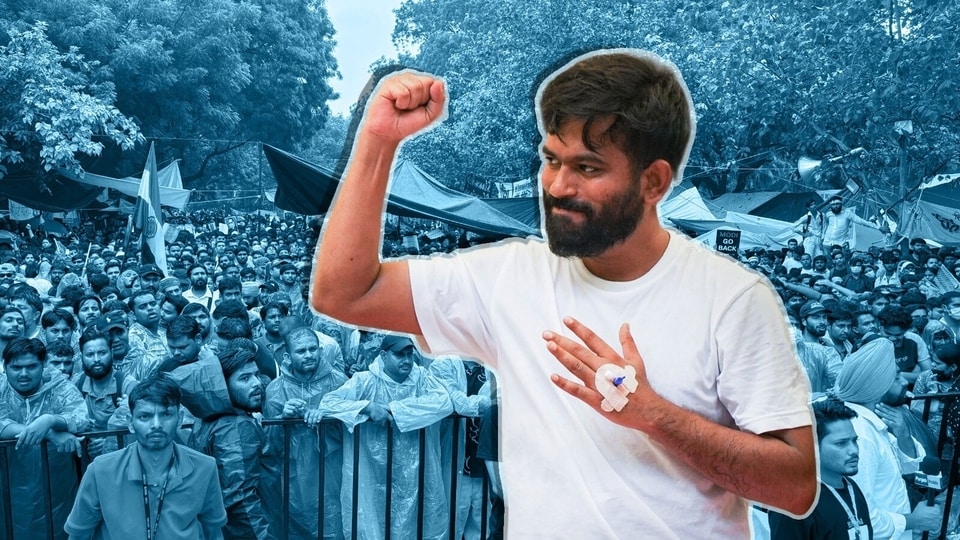
Asked whether the CJP will contest elections, Dipke said the media appeared more excited about the prospect than the outfit was.
"For now, CJP will be a pressure group, as what India needs now is a pressure group," he said.
In political science theory, a pressure group is any body that tries to influence public policy without contesting elections or running for office. A political party wants to run the government. That distinction sets everything else — how each is organised, how it raises money, and how it picks its battles, according to the NCERT Class 10 Democratic Politics-II textbook, which included a chapter titled 'Popular Struggles and Movements'. That book was in syllabus until 2023.
In practice, though, the line between pressure groups and political parties often frays. Parties in opposition, for instance, can behave like pressure groups on certain issues, and pressure groups sometimes turn into parties, or spin one off.
India has seen both patterns.
Popular imagery of 'pressure groups' might evoke the image of an outfit with placards, sit-ins and hunger strikes — the CJP end of the spectrum – but even industry federations such as Ficci, CII and Assocham are considered pressure groups, going by the same academic definition. They differ from an agitational outfit in method, not in category: they lobby quietly through pre-Budget consultations and committee submissions rather than through the streets. So do trade unions, farmer unions, professional associations and most non-governmental campaigns.
A working taxonomy
Political scientists sort pressure groups three ways.
The first is sectional versus promotional. Sectional groups speak for a defined constituency — a trade union for its workers, an industry chamber for its member firms.
Promotional groups push a cause with no fixed membership — such as corruption, the environment, or exam reform. CJP, in this categorisation, would fall here.
The second approach comes from a framework first outlined by Gabriel Almond and James Coleman in The Politics of the Developing Areas (1960), and later developed by Almond and G. Bingham Powell in Comparative Politics: A Developmental Approach (1966). It sorts groups by how they organise.
Almond and Powell identified four types: anomic (spontaneous, unstructured protest), non-associational (kin, caste or ethnic groupings), institutional (bodies formed for other purposes, such as bureaucracies or religious hierarchies, which also lobby) and associational (formal membership organisations).
The Jantar Mantar sit-in this June-July was anomic. The Sambhajinagar meeting to build a core team may be a step towards the associational end.
The third is from Wyn Grant, a British political scientist who, in a 1978 Warwick working paper, 'Insider Groups, Outsider Groups and Interest Group Strategies in Britain', split groups into insiders — those routinely consulted by government — and outsiders, who campaign through the streets, the media and the courts.
Ficci and CII, by this analysis, are insiders by design. The Chipko movement of the 1970s and the Narmada Bachao Andolan (NBA) were outsiders.
Groups can also move between the two: the Mazdoor Kisan Shakti Sangathan (MKSS), which began in 1990 in rural Rajasthan, agitating for wage records, went on to play a central role in advocating for the 2005 Right to Information (RTI) Act.
How they work
Pressure groups have five main tools.
Quiet lobbying and pre-legislative consultation — the primary channel for insiders. Litigation, which in India was amplified by the public interest litigation (PIL) route that the Supreme Court opened up from the late 1970s onward. Media work and agenda-setting. Mass mobilisation, of which sit-ins, marches and hunger strikes are the visible forms. And electoral pressure short of contesting: endorsements, voter-education, or the credible threat of a splinter party.
The CJP's July mobilisation used the fourth of these. The outfit was joined at Jantar Mantar by environmentalist and education activist Sonam Wangchuk, whose hunger strike infused momentum into the protest.
The CJP's chief spokesperson, Saurav Das, said on Wednesday that Wangchuk will continue as the outfit's mentor and that it will seek his advice, PTI reported.
Every pressure group runs on money, and how it raises that money often decides how far it can go.
Sectional groups typically live on member dues — trade unions on worker subscriptions, industry chambers on company membership fees. Promotional groups have fewer such levers. They raise money through individual donations, corporate and philanthropic grants, crowdfunding, and — more controversially in India — foreign contributions.
Besides a string of non-profits, the CJP has faced questions about its funding, with a Surat activist claiming that he has filed complaints with several authorities seeking investigations into the outfit, its legal registration status and a proposed legal-defence fund for arrested student agitators.
Across history, in India and abroad
India has a long history of pressure groups, some dating pre-Independence.
Social reformer Gopal Krishna Gokhale set up the Servants of India Society in 1905.
The All India Trade Union Congress (AITUC) was founded in October 1920 with Lala Lajpat Rai as its first president. Assocham was set up the same year by a group of chambers led by the Calcutta Traders Association. Ficci followed in 1927, on Mahatma Gandhi's advice.
The Confederation of Indian Industry (CII) traces its origin further back, to five engineering firms in the Bengal Chamber of Commerce that formed the Engineering and Iron Trades Association in 1895. The existing CII name is from 1992.
The four large labour federations that still dominate organised-worker politics — the Indian National Trade Union Congress, the Bharatiya Mazdoor Sangh, AITUC and the Centre of Indian Trade Unions — came to be aligned with a political current: the Congress, the Rashtriya Swayamsevak Sangh, the Communist Party of India, and the Communist Party of India (Marxist), in that order.
Two Indian promotional pressure groups sit at opposite ends of the party question.
The Chipko movement started at Mandal village in the upper Alaknanda valley of what is now Uttarakhand in April 1973, after the forest department denied a local cooperative permission to fell ash trees for farming tools and gave the allotment to a sports-goods company instead.
Chandi Prasad Bhatt, a Gandhian activist who had founded the Dasholi Gram Swarajya Sangh in 1964, led villagers into the forest to hug the trees. The following year, women of Reni village, led by Gaura Devi, turned back loggers in the movement's most-remembered episode. Sunderlal Bahuguna carried the campaign to national and global attention on a foot march.
Chipko never contested an election, never registered as a party and never split into one. It stayed a pressure movement.
The Narmada Bachao Andolan (NBA), founded in the mid-1980s by Medha Patkar and Baba Amte to oppose the Sardar Sarovar and other dams on the Narmada river, is another landmark case.
The NBA combined public-interest litigation in the Supreme Court, cross-state marches, hunger strikes and international media pressure that eventually prompted the World Bank to withdraw funding from the Sardar Sarovar project in 1993. The court stayed dam work in 1995 and allowed it to resume in 2000 with conditions on rehabilitation. The Sardar Sarovar dam was eventually built to its full 138.68-metre height and inaugurated by Prime Minister Narendra Modi on September 17, 2017.
The NBA has kept campaigning through and after that — on rehabilitation and compensation for displaced families in Madhya Pradesh, Maharashtra and Gujarat, on submergence of villages, and on the wider Narmada Valley Development Project's downstream effects. It is a pressure group that evolved into a displacement and rehabilitation watchdog.
The NBA case also illustrates how the pressure-group/party line can fray at an individual leader's level while the organisation itself stays put.
Patkar contested the 2014 Lok Sabha election from Mumbai North East on an Aam Aadmi Party (AAP) ticket, lost, and later left the party to return to activism. The NBA itself never officially ventured into politics.
Other Indian pressure movements have crossed the line completely.
The Jayaprakash Narayan-led agitation of 1974 in Bihar broadened during the 1975-77 Emergency and produced the Janata Party in January 1977, which then formed the Union government.
The Anna Hazare-led India Against Corruption (IAC) campaign of 2011 split. Arvind Kejriwal and others formed the AAP in 2012 and went on to govern Delhi and Punjab.
The Samyukta Kisan Morcha, a coalition of farmer unions that led the year-long agitation against the 2020 farm laws, later spawned an electoral wing — SKM (Non-Political) — that contested the 2022 Punjab assembly election.
In the US, the American Association of Retired Persons — since branded AARP — was founded in 1958 and now claims tens of millions of members, most of them over 50. It is an institutional insider that neither runs candidates nor formally endorses parties, and lobbies on social security and Medicare.
The National Rifle Association, founded in 1871, is a single-issue insider pressure group deeply aligned with one party while remaining formally independent of it. It opposes gun-control legislation and lobbies for gun rights, advocating for or against lawmakers and funding election campaigns.
The debate & where CJP sits
Academics have argued two sides on pressure groups.
Robert Dahl's 1961 book Who Governs? Democracy and Power in an American City treated them as the mechanism by which scattered interests are channelled into policy — a democratic feature. Mancur Olson's 1965 book The Logic of Collective Action took the opposite view: because organising costs money and time, small and well-resourced groups dominate the field, while the large and diffuse — consumers, taxpayers, the poor — get systematically less voice.
Dipke's Wednesday statement would place the CJP in the promotional, outsider, associational quadrant, with Wangchuk as mentor and the Ranchi agitation as its next target. Whether the outfit stays there is a separate question.


