
 E-Paper



Denial of effective legal aid to accused violates Article 21: Supreme Court
The bench held that in every criminal trial, the public prosecutor has a role to ensure the trial is conducted fairly and lawfully.

 Prefer HTon Google


The Supreme Court on Monday held that denying effective legal aid to an accused infringes upon the fundamental right of citizens to get a fair trial under Article 21 of the Constitution, as the bench passed a slew of guidelines on what comprises effective legal aid while acquitting a man in a 2009 rape and murder case from Uttar Pradesh.
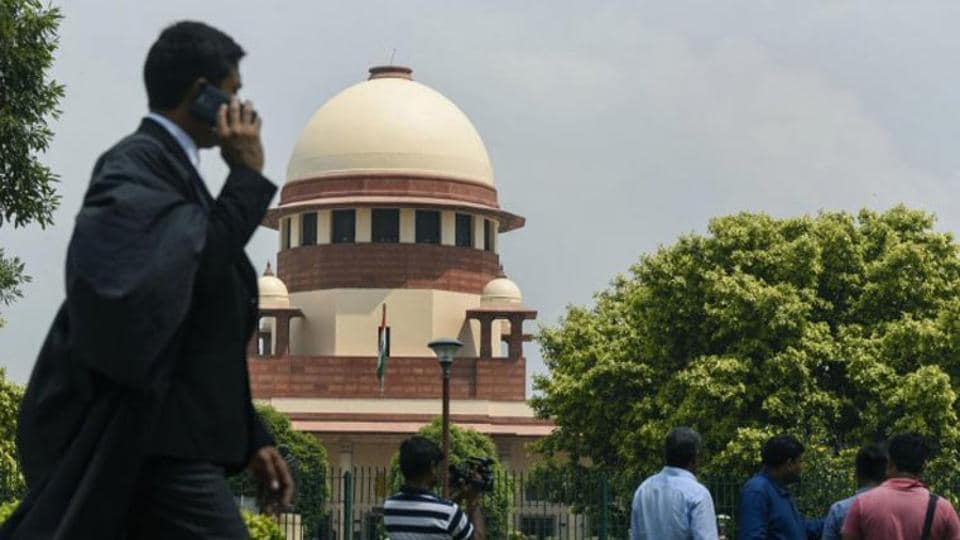
“The right of the accused to defend himself in a criminal trial is guaranteed by Article 21 of the Constitution of India. He is entitled to a fair trial. But if effective legal aid is not made available to an accused who is unable to engage an advocate, it will amount to infringement of his fundamental rights guaranteed by Article 21,” a bench headed by justice Abhay S Oka said. Besides, Article 39A of the Constitution casts obligation on the state to provide free legal aid to all accused.
The court acquitted the accused, Ashok, as it noted glaring loopholes during the trial. No lawyer represented him during crucial stages of trial and even the legal aid lawyer provided to him was absent from several hearings when the trial was conducted. Going through the records, the bench noted that the legal aid lawyer did not put the relevant questions during the cross-examination of witnesses with the legal aid lawyer getting changed thrice during the entire trial.
The evidence of more than one prosecution witness was recorded in the absence of the legal aid advocate. Even the statement of the accused recorded under Section 313 of the Code of Criminal Procedure (CrPC) was done in the absence of a lawyer. This is the stage when incriminating material is put to the accused by the prosecution.
“As there is a constitutional right to legal aid, that right will be effective only if the legal aid provided is of a good quality. If the legal aid advocate provided to an accused is not competent enough to conduct the trial efficiently, the rights of the accused will be violated,” said the bench, also comprising justices Ahsanuddin Amanullah and Augustine George Masih.
The bench held that in every criminal trial, the public prosecutor has a role to ensure the trial is conducted fairly and lawfully. He plays a dual role in not just ensuring that the guilty gets punished but also that there are no infirmities in trial that could prejudice the accused, the court said, adding that the public prosecutor is under an obligation to remain present to assist court when the examination of the accused is made.
Despite procedural lapses, the bench expressed shock that the trial court in December 2012 awarded death penalty to the accused. The Allahabad high court, on appeal, upheld the conviction but converted the sentence to that of life sentence. After remaining incarcerated for nearly 13 years, the top court granted him bail in May 2022.
“Imposing capital punishment in such a case shocks the conscience of this court,” the court held, adding that the appellant will be entitled to acquittal on the sole ground of failure to put incriminating material to him in his examination under Section 313 of the CrPC. “We are surprised to note that both the trial court and high court have overlooked non-compliance with the requirements of Section 313 of the CrPC. Shockingly, the trial court imposed the death penalty in a case which ought to have resulted in acquittal.”
The court had appointed senior advocate Shoeb Alam and advocate Talha Abdul Rehman to assist as amicus curiae. Based on the gaps in the case at hand, they proposed a slew of suggestions which were incorporated in the order. For legal aid to be effective, the bench said, “Advocates appointed to espouse the cause of the accused must have good knowledge of criminal laws, law of evidence and procedural laws apart from other important statutes.” If the case involved complex legal issues, the judgment required appointment of a senior advocate having minimum 10 years of experience in conducting criminal trial.
The court further insisted on language as it held, “If the material circumstances appearing in evidence are not put to and explained to the accused, in a language understood by him, it will cause prejudice to the accused.”
In the present case, no material circumstances appearing in evidence were put to the accused as it is based on this that an accused decides whether he wants to lead any defence evidence. In this case, not even the date and place of the crime was put to the appellant.
While the court mulled the option of sending the matter back to the trial court, it rejected that option as it said, “The incident is fifteen and a half years old. After such a long gap it will be unjust if the appellant is now told to explain the circumstances and material specifically appearing against him in the evidence.”
The incident involved a 10-year-old girl who was allegedly raped and murdered in a tubewell cabin in a field on May 27, 2009. It was alleged that the accused worked as the operator of the tubewell who took the girl inside the cabin when she approached him seeking water. The most crucial evidence against him was the statement of the victim’s cousin who had seen the accused forcibly taking her inside the tubewell cabin from where her body was later recovered.
The court directed a copy of its judgment to be circulated to all state legal service associations for taking necessary action based on this judgment.


