
 E-Paper



Deterrence messaging behind INS Arihant’s N-missile launch
The successful operationalization of submarine launched ballistic missile (SLBM) by Strategic Force Command’s INS Arihant and the announcement of return of diesel attack INS Vela submarine after nearly nine-month deployment is a signal to India’s adversaries to stay clear of Indian Ocean.

 Prefer HTon Google


On October 14, the Narendra Modi government quietly announced the successful launch of Submarine Launched Ballistic Missile (SLBM) from India’s first sub-surface ballistic nuclear (SSBN) INS Arihant. The firing of an undisclosed name and range nuclear ballistic missile—India has a 750 km range K15 and 3500 km range K-4—from the nuclear powered and armed submarine in the Bay of Bengal and the Indian Ocean was done by the Strategic Force Command and was attended by Commander-in-Chief of the command Vice Admiral R B Pandit.
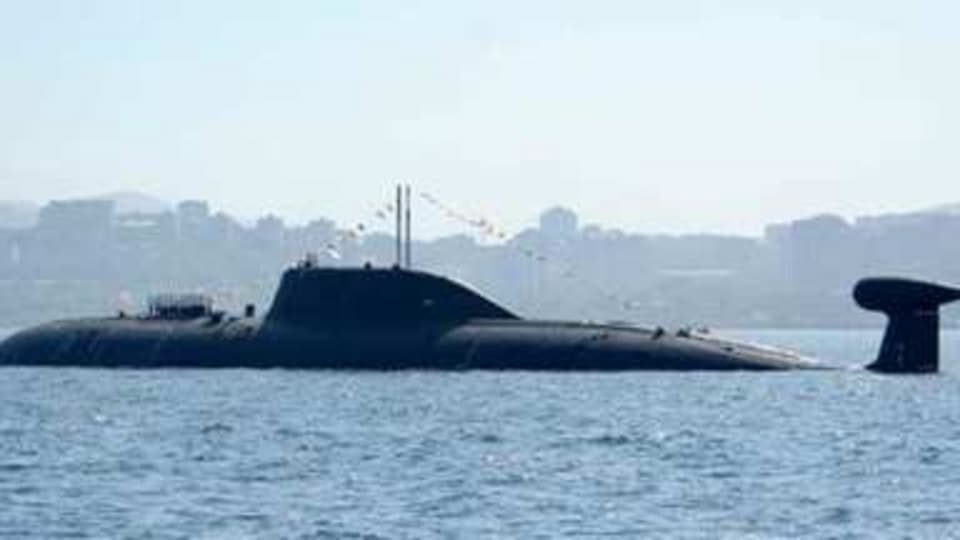
A day later, the Western Naval Command announced the return of the latest Kalveri Class diesel attack missile firing submarine INS Vela from an eight-and-a-half month deployment from its base port The Twitter handle of Western Naval Command said that the submarine recorded many achievements through her sustained operations at sea and completed an extremely successful mission-based deployment across the Indian Ocean Region (IOR).
The two statements are mutually exclusive but clubbed together, they are a part of deterrent messaging to China and Pakistan. With China threatening to use underwater drones against aircraft carriers in the Indo-Pacific and send its own aircraft carriers in the comings months to the Indian Ocean, the operationalization of the SLBM is clearly a message to PLA Navy that India has both the capacity and capability to counter any threat in the Indian Ocean and beyond. It is also a message to allies of China like Sri Lanka, which has given the Hambantota Port on lease to Beijing for 99 years by this very President of the Island Nation.
INS Arihant: The ghost of Indian Ocean
| Nuclear and diesel attack missile firing submarines are a very potent weapon in equatorial waters of the Indian Ocean as they are most difficult to detect due to the huge difference of temperature at the surface and in depth. Due to the large difference in temperature, a physical phenomenon called total internal reflection is caused because of which the submarine appears to be at a different place that where it actually is. |
|---|
While the nuclear assets of India are highly classified, there are indications that India’s second SSBN INS Arighat will be commissioned later this year with the third one INS Aridhaman being fitted out before sea trials. India has also the capacity to roll out the 5000 km K-5 missile the moment the Modi government gives approval. The Arihant and Arighat range are limited only to food and crew changer over and both have the capacity to defend Indiia’s national interest in the Indo-Pacific. While the DRDO has tested both the K-15 and K-4 missiles, the October 14 firing by SFC was the announcement of operationalization of the weapon system.
“ The successful user training launch of the SLBM by INS Arihant is significant to prove crew competency (to fire the missile) and validate the SSBN program. A robust, survivable, and assured retaliatory capability is in keeping with India’s policy to have a credible minimum deterrence that underpins its No First Use commitment,” the defence ministry press release said.
Behind this diplomatese is a simple but tough message: India is ready in the Indo-Pacific.
Although the Indian Navy send its submarines on routine patrols, the announcement of return of INA Vela from nearly a nine-month deployment is a message to Pakistan that India closely monitors its western sea board from Mumbai to Makran Coast to Persian Gulf to Gulf of Aden.
The Indian maritime domain awareness has increased manifold after the use of American Predator drone from INS Rajali down south with the unmanned vehicles being able to monitor from Lombok Straits in South-East Asia to Gulf of Aden.
Between SFC’s INS Arihant and Indian Navy’s INS Vela, the message to India’s adversaries is loud and clear: You are being watched, stay clear.


