
 E-Paper



DMK moves court against Centre for “usurping state power” through Dam Safety Act
DMK Lok Sabha MP S Ramalingam has moved the Madras High Court with a petition challenging the constitutional validity of the recent legislated Dam Safety Act, 2021 on the grounds that it “is contrary to the federal structure” and reduces the state’s power

 Prefer HTon Google


DMK Lok Sabha MP S Ramalingam has moved the Madras High Court with a petition challenging the constitutional validity of the recent legislated Dam Safety Act, 2021 on the grounds that it “is contrary to the federal structure” and reduces the state’s power.
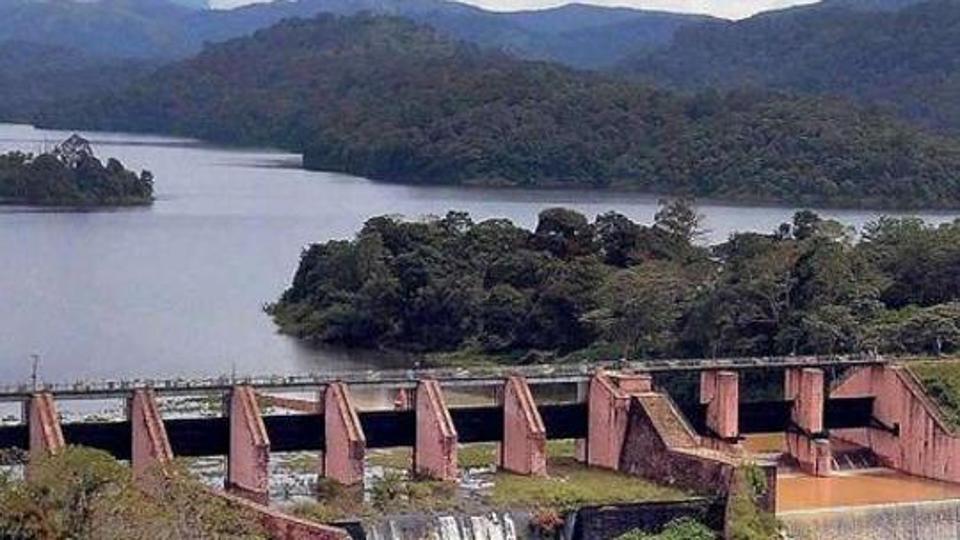
The first bench of the Madras High Court on Tuesday accepted a request by senior advocate and DMK MP P Wilson for an urgent hearing and listed the matter for on January 10. Wilson submitted that the writ petition is challenging the vires of the Act on various grounds including that the Parliament has no legislative competence to legislate the Act which is in the domain of the state. Further, he said that the Act has the effect of taking control over all major dams in the state.
Ramalingam seeks for the Act to be struck down calling the union government’s actions arbitrary and discriminatory in reducing the state’s powers in the regulation and administration in the safety of the dams. “I state that the impugned Act is a legislation passed by the Union through brute majority to blatantly usurp the states’ power, in broad daylight when the legislators like me were helpless to prevent the violence done to the Constitution,” Ramalingam’s petition read. “However, I have the utmost faith and belief that the Constitutional Courts will certainly annul unconstitutional laws exercising the power of judicial review.”
He drew in sections which envisage the forming of a National Committee on Dam Safety and National Dam Safety Authority which reveals that there is no proportional representation of representatives of State Governments. “The representatives of the State Governments are the better persons to judge and understand the needs and interests of the particular State in which the specified dam is situated. Only the representatives of that particular State will have local knowledge, insight as to the safety of the dam, keeping in mind the irrigation requirements of the surrounding lands, the impact of storage of water on the agriculture and agriculturists,” he said.
“The Union representatives, who will be sitting in some other corner of country will not have the expertise nor the practical awareness to take such decisions and hence this renders the entire process futile.” He said that in case of emergent situations like flood, cyclone the life and safety of the people surrounding the dam who are likely to be affected will be at peril if no immediate decisions are taken related to Dam safety.
“Further in case of a disagreement between the representatives of Union and State Government, the interests of the State Governments would be overruled by representatives of the Union Government due to the State Representatives being in the minority. Such a scenario destroys the Federal structure of the Constitution and completely curtails the voice of the State Governments even in cases where the State Government itself is the owner of the dam.”
The petitioner cited the example of the recent farm laws that were repealed in December 2021, a year after protests against it. He said that only after interference by the Supreme Court through interim orders, that the Union acceded to the states’ contention that the farm laws violated the federal structure and trenched upon the states’ domain. “Thus the concept of cooperative federalism cannot be discarded and such action of the Union in bulldozing and appropriating the powers of the States flowing from List II of 7th Schedule of the Constitution cannot be countenanced in law,” the petition said.
In his 41-page petition, Ramalingam also drew on certain definitions in the Act. He pointed out that “specified dams” defined in the Act are dams with height of more than 15 metres or height between 10 to 15 metres with certain design and structure. “If this definition is followed, almost all dams in the country will come under the purview of the Impugned Act,” the petition said. Further, he said under section 4 of the Act, phrases such as “the dam has especially difficult foundation problems” and “the dam is of unusual design” are used. “The said definition is purposefully vague and gives unabridged power to the Union to treat any dam as a “specified dam” due to the vagueness in the description of foundation or of the design of the Dam,” he said.


