
 E-Paper



Donald Trump puts 25% tariff plus penalty on India. Who is at risk?
The relative appeal of Indian markets has begun to fade with neighbours like Vietnam and Indonesia securing trade deals with the US at lower tariff rates.

 Prefer HTon Google


US President Donald Trump's imposition of 25 per cent reciprocal tariffs on Indian goods and an unspecified penalty over purchases from Russia, which will take effect on August 1, could damage several sectors -- from textiles to pharmaceuticals.
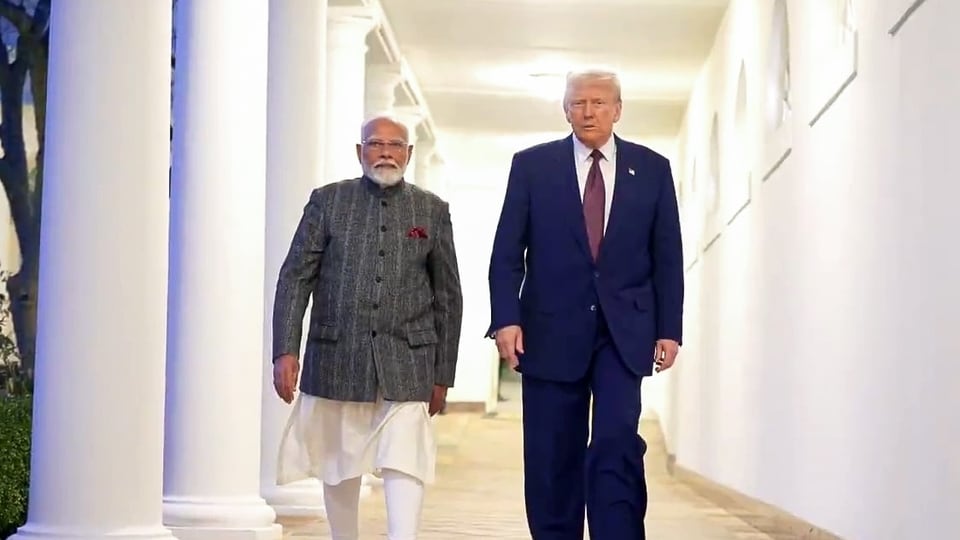
In a post on Truth Social, Trump said that India's tariffs were "among the highest in the World", adding that New Delhi has the "most strenuous and obnoxious non-monetary Trade Barriers of any country". He also threatened a penalty due to India's energy and military purchases from Russia, against the backdrop of the war in Ukraine.
The US's total goods trade with India stood at an estimated $129.2 billion in 2024. India's exports to the US totalled $87.4 billion in 2024, a 4.5 per cent increase from 2023.
ALSO READ | Centre responds to Donald Trump’s 25% tariff announcement: ‘Our national interest’
India's trade surplus with the US, which is its largest export market, stood at 1.2 per cent of the GDP in 2024.
While there’s no clarity right now on sectoral rates and the penalty level, pharmaceutical, textile, gems and jeweller are among the industries that potentially stand exposed to the Trump tariffs.
Here's who could be at risk:
Pharmaceuticals
India is the largest exporter of non-patented drugs to the US at an approximate value of $8 billion per year. US accounts for nearly one-third of India's pharma exports -- around $9 billion in FY2024.
Shares of some of India's biggest companies, including Sun Pharmaceutical Industries Ltd., Dr Reddy's Laboratories Ltd. and Cipla Ltd., fell on Thursday as they earn at least 30 per cent of their revenue from America.
However, drugmakers still hold the hope for a lower rate on these items.
Namit Joshi, chairman of Pharmaceuticals Export Promotion Council of India, told Bloomberg News, "Tariff on Indian generic pharmaceuticals would pose huge challenges for US pharma supply chain. May be it will attract only a base tariff of 10 per cent."
ALSO READ | Trump’s tariffs on India could damage trade, political support: Suhas Subramanyam
He further said that Pharma companies have been preparing themselves for years for some kind of levy that the US could impose by acquiring assets in America.
According to IQVIA, four out of every 10 prescriptions in the US in 2022 were supplied by Indian pharma companies. Overall, medicines from India saved the American health care system nearly $220 billion in 2022 and a total of $1.3 trillion in the decade through that year.
Textiles
Indian home fabrics, apparel and shoe makers serve the global supply chains of massive American retailers, including Walmart Inc., The Gap Inc., Pepe Jeans and Costco Wholesale Corp.
Shares of textile firms like Vardhman Textiles Ltd. were down six per cent, Welspun Living Ltd. 6.5 per cent, and Indo Count Industries Ltd. fell 7.4 per cent.
ALSO READ | India's gem and jewellery industry faces crisis as US tariff jumps to 25%
This poses a "stiff challenge" for the textiles and apparel sector, said the Confederation of Indian Textile Industry in a statement.
"It will seriously test the resolve and resilience of India’s textile and apparel exporters as we will not enjoy a significant duty differential advantage," they added.
Gems and Jewellery
India's Gem and Jewellery Export Promotion Council said in a statement late Wednesday that the tariff is a "deeply concerning development" that could obstruct supply chains and threaten the livelihoods of thousands of people, with the gems sector being "severely impacted".
America accounts for more than $10 billion worth of India's gems and jewellery exports. The trade group said that a blanket tariff will "inflate costs, delay shipments, distort pricing, and place immense pressure on every part of the value chain” from workers to large-scale manufacturers.
Electronics
India's smartphone exports to the US increased almost fivefold in the past three years. The nation overtook China to become America's top source for smartphones, after Apple Inc. moved to assemble more of its iPhones in India.
The smartphone exports of India rose by 55 per cent to USD 24.14 billion in 2024-25 from USD 15.57 billion in 2023-24 and USD 10.96 billion in 2023-23. The top five nations where India registered the highest growth were the US, the Netherlands, Italy, Japan, and Czech Republic.
ALSO READ | Rahul Gandhi backs ‘dead economy’ remark on India: ‘Glad Donald Trump stated a fact’
Exports to the US alone surged from USD 2.16 billion in 2022-23 to USD 5.57 billion in 2023-24 and USD 10.6 billion in 2024-25.
However, Trump's reciprocal tariff could put the smartphone exports at risk. "Apple's US iPhone sourcing strategy from India to circumvent China tariffs could be meaningfully set back if tariffs in India extend to 25 per cent," Bloomberg reported, citing its intelligence analysts.
"A 25 per cent surcharge would most likely force Apple to revise this plan," they added.
The impact would not be as straightforward as the Trump administration had in April placed smartphones, computers, and other electronics under exemption from reciprocal tariffs.
After this, the US Commerce Department used Section 232 of the Trade Expansion Act to launch probes into sectors that are essential for national security, such as semiconductors. Until these investigations are complete, smartphone exports to the US will not face any tariffs.
If Trump decides to use his powers under Section 232 to impose duties on iPhone imports to the US, then it could force Apple Inc. to limit suppliers, including those in India.
Oil Refining
The proposed penalty on Russian oil imports, if imposed, could hurt the major Indian refineries. Shares of state-run refiners like Indian Oil Corp., Bharat Petroleum Corp. and Hindustan Petroleum Corp. fell, with those of private firms like Reliance Industries Ltd. dropping 2 per cent.
India gets around 37 per cent of its oil imports from Russia. The barrels from Moscow come at a discount to market rates and have played a key support role for gross refining margins. If Russian oil is no longer available, the cost of imports will surge, hurting the refiners' profits.
Earlier this year, Reliance signed a deal to purchase as much as 500,000 barrels per day from Russia to become India's largest buyer of Russian crude.
Auto components
Among other sectors that take the most hit is 'auto components'. Though Indian automakers do not have much exposure in the US, parts makers like Bharat Forge and Sona BLW stand vulnerable in the face of Trump tariffs on India.
Meanwhile, Tata Motors' Jaguar Land Rover unit is protected under the US-UK/EU trade arrangements.
Capital goods and chemicals might also be hurt by the Trump tariffs. Companies like Cummins India, Thermax and KEI Industries reportedly have 5-15 per cent US exposure.
(with inputs from agencies)


