E-Paper



Economy could hit $7 trillion by 2030: Govt
India is projected to become the world's third largest economy with a GDP of $5tn within three years and could reach $7tn by 2030.

 Prefer HTon Google


India is on course to become the third largest economy in the world with a GDP of $5 trillion in the next three years, and can “aspire to become a $7 trillion economy in the next six to seven years (by 2030)” according to a document released by the finance ministry two days before the last budget (an interim one) of the current government.
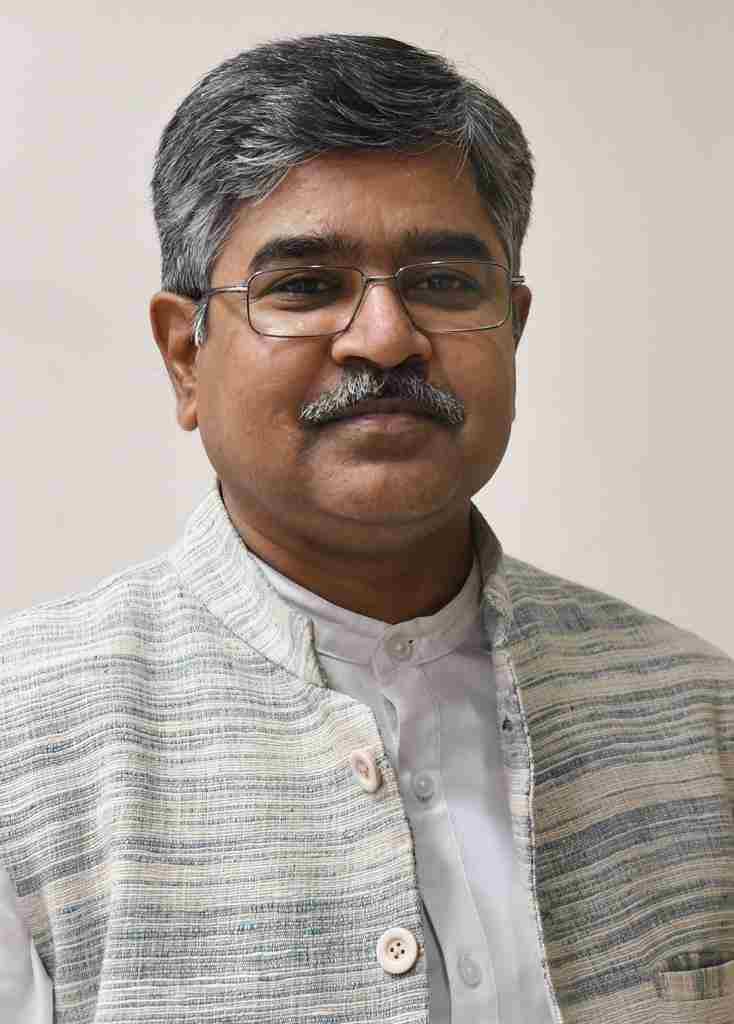
Ten years of the Narendra Modi government “has been a journey from fragility to stability and strength” for the Indian economy, chief economic adviser (CEA) V Anantha Nageswaran said in the report, whose estimates are based on a “reasonable set of assumptions with respect to the inflation differentials and the exchange rate”.
The document “Indian Economy — A Review”, which was released by the CEA’s office, is a commentary on the state of the economy and its future prospects and can be seen as a partial substitute to the customary Economic Survey which is released a day before the Budget and lays down the economic narrative of the government. The 2023-24 Economic Survey will only be released when the new governments will present the Final Budget for 2024-25 in July. The report does not, however, replace the Economic Survey, CEA clarified. “That will come before the full budget after the general elections,” he said. The full budget for FY25 is expected to be presented after the 2024 General Elections in July; an interim budget is only a Vote on Account, presented in an election year to cover expenditure for a brief period to keep the government functioning.
The document argues that the government’s commitment to reforms, economic management and overhaul and expansion of the welfare net have unlocked energies which will lead to the Indian economy doing much better than what international agencies such as IMF expect it to do.
READ | Budgets that guided India’s rise as an economic power
These energies can help India achieve a sustained 7% GDP growth and help realise its objective of becoming a developed economy when it completes hundred years of independence in 2047, it claims. IMF’s December 2023 report of Article IV consultation with India – a mandatory process based on consultation with the government and its IMF representative – has put India’s medium term potential growth rate at 6.3%. Potential growth rate is the rate at which the economy can grow without overheating and rising inflation. To be sure, IMF’s 6.3% number was criticized by India’s executive director to the IMF Krishnamurthy Subramanian, who was Nageswaran’s predecessor. Subramanian has projected a potential growth rate of 7.1% for the Indian economy.
The report says that the Indian growth story is only getting started and the best is yet to come. “The government has, however, set a higher goal of becoming a ‘developed country’ by 2047. With the journey of reforms continuing, this goal is achievable,” it said, while celebrating India crossing the $5 trillion and $7 trillion GDP thresholds.
“Today, many young Indians not only aspire to a better life but are also confident that it will happen in their lifetime. They feel that they have a better life than their previous generations and that succeeding generations will do better than them,” Nageswaran said in his preface to the report.
Nilaya Varma, CEO and co-founder of Primus Partners, a consultancy, said four key drivers will help India grow to a $7 trillion economy: “First, the pick-up in brown field investments is expected to move towards greenfield as capacity utilisation’s peaks. Second, the multiplier effect of the capital expenditure on physical infrastructure done so far and future pipeline planned by the government which is expected to increase productivity. Third, the de-risking of supply chains which is expected to continue to bring investments and drive exports as companies realign value chains. Finally, the vibrant digital services ecosystem created by the digital infrastructure put in place by the government which will lead to India specific solution which can be deployed globally.”
Accounting for the two terms of the Modi government, the report said: “This 10-year journey is marked by several reforms, both substantive and incremental… These reforms have also delivered an economic resilience that the country will need to deal with unanticipated global shocks in the future.” India, which was the 10th largest economy in the world with a GDP of $1.9 trillion at current market prices in 2013-14, is now the 5th largest with a GDP of $3.7 trillion (estimate for FY24), despite Covid pandemic and “despite inheriting an economy with macro imbalances and a broken financial sector”, it said.
“The strength of the domestic demand has driven the economy to a 7% plus growth rate in the last three years… the robustness seen in domestic demand, namely, private consumption and investment, traces its origin to the reforms and measures implemented by the government over the last 10 years,” it said. The report added that the government’s policies also strengthened the supply side with investment in physical and digital infrastructure to boost output. “Accordingly, in FY25, real GDP growth will likely be closer to 7%,” the report said. Despite global headwinds such as conflicts in Ukraine and Gaza and the Red Sea trade disruption, India’s first advance estimates of growth released on January 5 projected a higher-than-expected GDP growth of 7.3% in FY24.
Experts also pointed to challenges to the GDP target.
“India needs to grow over 11% per annum compounded, to achieve the $7 trillion goal. Besides monsoons, we need the externalities like global oil prices to be favourable. We need to enhance the employment generation as also reskins of existing work forces at an accelerated and wider magnitude,” said Amit Kapur, joint managing partner, JSA, a leading a law firm.
The report also makes the case that India is a bright spot in what is increasingly looking like a gloomy global economic environment. “Between 2023 and 2028, the Fund’s (IMF) projected growth for the world economy is around 3.1%. Further, data from the World Trade Organisation (WTO) show that, in value terms, world trade barely grew in either period (2012-19 or 2014-19). In volume terms, the growth rate averaged 2.4%. Despite this insipid backdrop for global economic growth and trade growth, between 2014 and 2019, the compounded annual growth rate of the Indian economy at constant price was 7.4%,” it said. “In other words, these data demonstrate the internal strengths of the Indian economy, which bestow on it the ability to grow notwithstanding unfavourable global economic conditions.”
To be sure, the report is careful to underline that India’s present economic performance should be seen as different from its growth in the past. “It is one thing for India to grow at 8-9% when the world economy is growing at 4%, but it is another thing to grow at or above 7% when the world economy is struggling to grow at 2%. One unit of growth in the latter circumstance is qualitatively superior to the former. The marginal utility of growth in the second scenario is much higher,” Nageswaran wrote, making a subtle case that even though GDP growth could have been higher during some years of the United Progressive Alliance (UPA) government than what it is today, India’s relative advantage in the global economy is much greater today.
The report also said that collaboration between the Centre and states would help in accelerating India’s growth and making it more equitable, referring to one fault line that has emerged – a threat to fiscal federalism. “The reforms will be more purposeful and fruitful with the full participation of the state governments. The participation of the states will be fuller when reforms encompass changes in governance at the district, block, and village levels, making them citizen-friendly and small business-friendly and in areas such as health, education, land and labour in which states have a big role to play,” it said. In order to accelerate growth the government must focus on future reforms in areas such as skilling, learning outcomes, health, energy security, reduction in compliance burden for micro, small and medium enterprises (MSMEs), and gender balancing in the labour force, the report added.
Experts also suggested levers that could amplify India’s growth.
“A key catalyst for this growth is the establishment of a robust digital public infrastructure, complemented by the impressive expansion of e-commerce. The integration of rural populations into the banking system and increased internet access are pivotal steps toward achieving self-sufficiency during the Amrit Kaal,” said KC Ravi, Chief Sustainability Officer, Syngenta India.