E-Paper



Elephant poaching in Odisha at all-time high after 13 cases of unnatural deaths emerge
The poaching of the two tuskers is among the 13 cases of unnatural deaths of elephants in Odisha forests in the last 2 months making it the biggest casualty of the pachyderms in a short span in more than a decade


On July 29, a 25-year-old tusker in Narasinghpur East range of Athagarh forest division of Cuttack district with at least five pellet injuries on its ear and head died of organ failure. The veterinary doctors who treated the tusker unsuccessfully suspected that one of the pellets may have pierced deep into its head. The wounded elephant, likely to be a victim of a gang of local poachers in Athagarh division, was first sighted by local people on July 23 who tipped off wildlife activists and later the chief wildlife warden.
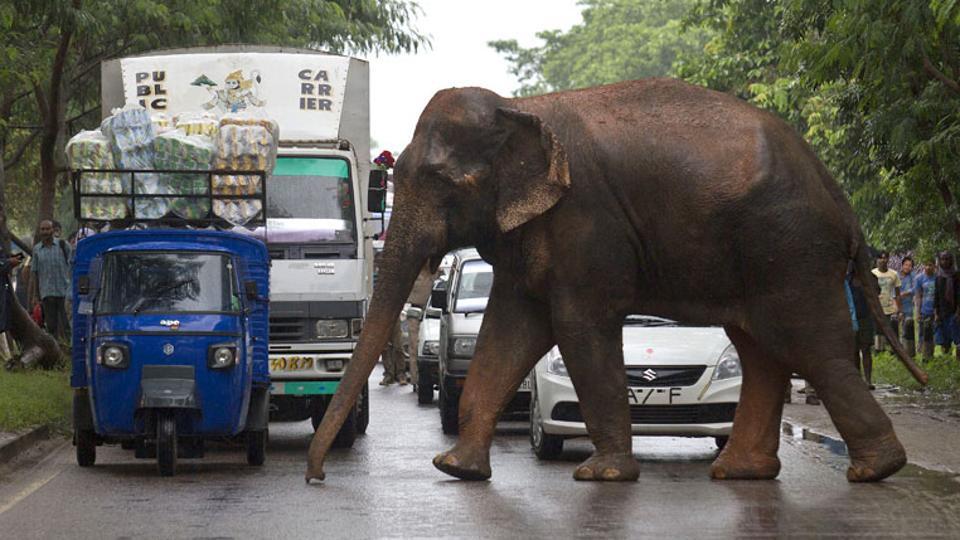
It was tranquilised on July 25, but it was too late as the wounds caused by the pellets had triggered septicemia.
The death of the tusker was a re-run of a similar poaching of a tusker in June first week when another tusker with at least 5 pellet injuries on its trunk, face, legs and body was found writhing in pain in the same forest range by local people. A team of vets from Nandankanan Zoo in Bhubaneswar was rushed to treat the elephant after former BJD minister and local MLA Debi Prasad Mishra drew the attention of state forest minister Pradip Amat to the tusker in his Facebook post. The elephant died a week later.
The poaching of the two tuskers is among the 13 cases of unnatural deaths of elephants in Odisha forests in the last 2 months making it the biggest casualty of the pachyderms in a short span in more than a decade. Of the 13 deaths, at least 5 are due to poaching including that of a 40-year-old tusker whose decomposed carcass with gunshot injury was found from a cashew orchard in Jagannath Prasad forest range in Ghumsur North Division of Ganjam district late last month. On Saturday, forest department officials seized a tusk of that elephant from a latrine pipe in the district and arrested 2 people. In June and July, the special task force of Odisha police found bones and carcasses of five elephants including a tusker from Athagarh forest range, one of which was shot dead and allegedly buried by the forest department staff to conceal their deaths.
The last time a major uproar in Odisha forests over poaching of wildlife had happened was in April and May 2010, when the carcasses of 14 elephants were recovered in Similipal Tiger Reserve of Mayurbhanj district by an independent inquiry committee of the National Tiger Conservation Authority. The inquiry team found that the field staff had burnt and destroyed the carcasses to destroy evidence.
While the state forest department took swift action in Similipal poaching case, suspending several officials, in case of the burning and concealment of carcasses in Athagarh division this year, 10 forest department officials including a forester have been arrested while two rangers booked on charges of suppression of information. The government has also constituted a special investigating team comprising forest and CID officials to probe rising elephant deaths and allegations of cover-ups, but there seems to be no end to poaching.
Last week, senior Congress MLA Santosh Singh Saluja alleged in the state Assembly that a total of 245 wild elephants have died of unnatural causes in Odisha in last three years of which half could be due to poaching.
“Elephants are not safe in Odisha. In Athagarh, the skeletal remains of elephants were exhumed by the Crime Branch STF. This means the elephants were poached for their tusks before being buried. These tusks are being sold in foreign countries,” alleged Saluja.
Wildlife activists working on ground said that poachers are running amok as the forest department has failed to take stringent action or achieve a single conviction in wildlife crime cases during past two decades.
There is a seven-year imprisonment term for killing any elephant as it is protected under Schedule I to the Wildlife (Protection) Act, 1972, but not a single poacher or ivory trader has been convicted in last 20 years. While denying bail to a notorious poacher Afzal Baig arrested in 5 cases of elephant poaching, the Orissa High Court in 2015 had remarked the largescale poaching for ivory trade is causing an alarming situation. “Even though the elephant Census Report 2015 of indicated that population of elephants in Odisha increased from 1930 in 2012 to 1954 in 2015, the poaching is causing an alarming situation. Such activity is no less than a violent and brutal crime,” said the HC.
Elephant conservationist Biswajit Mohanty alleged that it was only the STF of state Crime Branch that has been tracking cases of elephant deaths through its network of informants on the ground in last 2 years. “The forest department despite having a huge network of officials ranging from forest guard to DFOs and RCCFs have no real way of gathering intelligence about these poachers or patrolling activities,” he said.
As per official statistics, at least 970 elephants have died in Odisha since 2010, of which 426 passed away due to natural reasons. In over 200 cases, the reason of death could not be known as the bodies were highly decomposed. Mohanty alleged that at least 133 elephants were either poached or poisoned while 144 were electrocuted.
The biggest evidence of poaching have come from Special Task Force of Odisha Crime Branch whose officials have seized at least 27 tusks in last 2 years from different parts of the state. “Though we are not sure if there is an organized gang operating in the state, we believe there are smalltime poachers who are looking to hunt the animals for the lucrative tusks. We are able to seize the tusks due to our army of informants,” said an STF official.
On July 24, STF officials had recovered partially-burnt and unburnt bones as well as ashes from Tabalei-Deogaon reserve forest and Kolgaon forest in Sambalpur district after being tipped off about it. “While one spot had bones scattered in the other, most of the bones were disposed-off elsewhere. From the size of the bones they appeared to be that of large adult males who were poached for ivory,” said a senior STF official.
Chief wildlife warden Shashi Paul did not respond to questions about why the department was unable to come hard on poaching.
Wildlife activists alleged that as the forest department staff are slow in pursuing cases of elephant poaching, they have now taken to concealing the elephant deaths. “In last 5 years, the forest department managed to pursue 47 of the 89 elephant poaching cases. As the finding of an elephant body whose death is unnatural would mean filing a case, investigating and trying to apprehend the culprits, they are resorting to concealment of the deaths,” alleged honorary wildlife warden Subhendu Mallick.
Activists alleged that though there is a government circular issued in 2012 by the Odisha government, which holds DFOs accountable for each and every unnatural death of elephants, the same has remained on paper till now.
Noted wildlife activist Belinda Wright said the rising elephant deaths due to poaching as well as concealment of carcasses is surely a bigger wildlife crisis than the government is willing to admit. “The Odisha forest department will not be able to investigate these shocking suspected crimes against some of their colleagues, if they keep the matter under wraps. For the honour of Odisha and the department itself, the investigation should be transparent and involve known independent experts, from outside the department,” she said.
The rising elephant deaths have come at a time when human-elephant conflict is at its peak in the state. Union minister for environment, forest and climate change, Bhupender Yadav told the Lok Sabha last month that of the 1,578 people killed in elephant attacks in India between 2019-20 and 2021-22, maximum number of deaths were from Odisha, that accounted for 322 casualties. Jharkhand with 291 cases and West Bengal with 240 were second and third on the list.
Many fear that the rising poaching and concealment of the carcasses may lead to disappearance of the males. In Ganjam district where 11 adult tuskers were counted in May 2017 census, 10 died either by electrocution or poaching in the last 5 years. “Ganjam appears to have already reached a critical stage.If the remaining male also falls prey to poaching or electrocution, it could spell doom for Ganjam elephants,” said a senior forest official, unwilling to be quoted.
In Odisha the last elephant census was carried out in May 2017 during which 1,976 jumbos were counted. Of the total 1976 elephants, 344 were found to be adult males. Since then the state has lost 104 male elephants above the age of 15, mostly to poaching and unnatural deaths like electrocution, poisoning, train kill and road kill.
Wildlife conservationist Mohanty said once the tuskers are gone, it would be a matter of time before the entire elephant population in the state meets the fate of tigers in Similipal tiger reserve where their numbers came down from 100-odd to less than 20. “Without a male elephant, how would the population rise,” asked Mohanty.