E-Paper



Eminent jurist, and senior advocate Fali S Nariman passes away at 95
A Padma Vibhushan recipient, Nariman, often referred to as “Bhishma Pitaamah” (father figure) of the Indian judiciary, was at the forefront of landmark judgments

 Prefer HTon Google


Eminent jurist and senior advocate Fali S Nariman passed away on Wednesday morning. Nariman, 95, was suffering from multiple ailments, including cardiac issues.
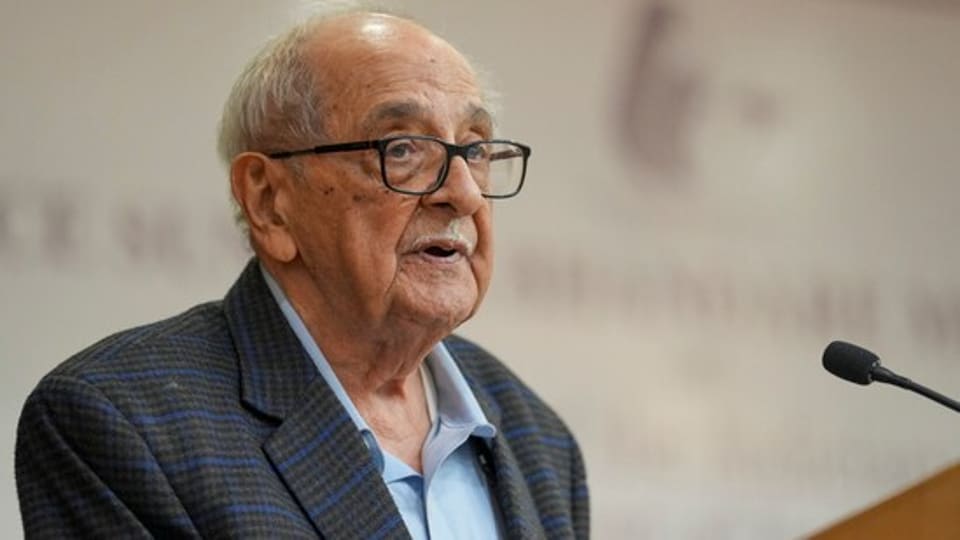
A Padma Vibhushan recipient, Nariman, often referred to as “Bhishma Pitaamah” (father figure) of the Indian judiciary, was at the forefront of landmark judgments that aided the Supreme Court in breaking new grounds.
With his exceptional oratory skills and sharp advocacy, Nariman appeared in an array of Constitution bench cases that went a long way in helping the apex court interpret the provisions of the Constitution and redefine the legal fabric.
Some of the key cases that Nariman was a part of as a lawyer included the Golak Nath case (even constitutional amendments are amenable to judicial review), the TMA Pai case (right of minorities to establish institutions of their choice), and SP Gupta and NJAC case (where he stood for the independence of the judiciary in the appointment of judges).
A former Rajya Sabha member, Nariman was also a prolific author. He authored books including “Before the Memory Fades”, “The State of the Nation”, “India’s Legal System: Can it be Saved?” and “God Save the Hon’ble Supreme Court”.
Nariman was born in Rangoon on January 10, 1929, in then British India. He was enrolled as an advocate of the Bombay high court in November 1950 and was designated a senior advocate in 1961.
Nariman practised law for more than 70 years initially in the Bombay high court and later in the Supreme Court. He was appointed additional solicitor-general of India in May 1972, but resigned a day after the imposition of the Emergency on June 26, 1975. His son, Justice Rohinton F Nariman, is a former judge of the Supreme Court.
In a post on X, senior advocate Abhishek Manu Singhvi called Nariman a living legend who will forever be in the hearts and minds of those in law and public life. “Above all his diverse achievements, he stuck to his principles unwaveringly &called a spade a spade, a quality shared by his brilliant son...,” he said in the post.
Solicitor-general Tushar Mehta said that not only the legal fraternity, but the nation has lost a towering figure of intellect and wisdom. “The country has lost an epitome of what righteousness stood for. A doyenne, paragon and a legend in his own lifetime has left us leaving the jurisprudence enriched by his immense contribution. I have always learnt something new by merely appearing even against him,” Mehta said in his message.
He added that such intellectual giants do not die. “They remain immortal through their contribution. There cannot be and will not be another Fali Nariman.”