
 E-Paper



Every journalist entitled to protection from sedition: SC
Sedition is punishable with either imprisonment ranging from three years to a lifetime, or a fine, or both.

 Prefer HTon Google


Every citizen has a right to criticise the government’s policies so long as it does not incite people to violence or creates public disorder, the Supreme Court said on Thursday while quashing a sedition case.
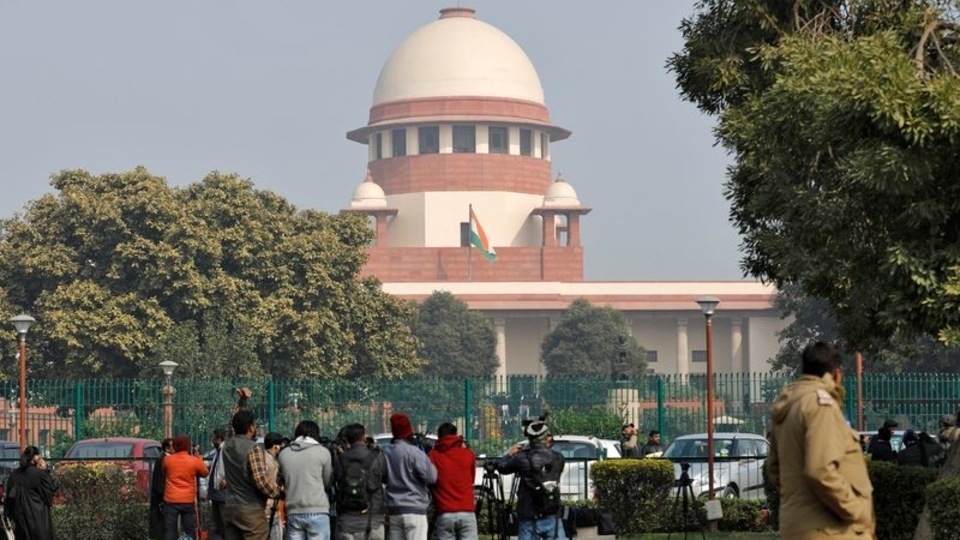
The bench of justices Uday U Lalit and Vineet Saran underlined a 1962 constitution bench judgment in Kedar Nath Singh’s case to assert that a journalist could not be prosecuted under Section 124A (sedition) of the Indian Penal Code (IPC) for “disapprobation of actions of the Government and its functionaries”, and quashed a case registered last year against journalist Vinod Dua in Himachal Pradesh over a YouTube show.
“A citizen has a right to criticise or comment upon the measures undertaken by the government and its functionaries, so long as he does not incite people to violence against the government established by law or with the intention of creating public disorder,” said the court, referring to the Kedar Nath’s case while highlighting the basic requirements for registration of a first information report (FIR) under Section 124A.
Sedition is punishable with either imprisonment ranging from three years to a lifetime, or a fine, or both. It is only when the words or expressions have pernicious tendency or intention of creating public disorder or disturbance of law and order, said the bench, that Sections 124A and 505 (statements creating or promoting enmity) of the IPC must step in.
“Every journalist will be entitled to protection in terms of Kedar Nath’s judgment, as every prosecution under Sections 124A and 505 of the IPC must be in strict conformity with the scope and ambit of said Sections as explained in, and completely in tune with the law laid down in the judgment,” it said.
The bench emphasised its 1962 judgment that laid down the fundamental requirements before registration of a sedition case, as it turned down Dua’s plea for constitution of a committee in every state for approving FIRs against persons belonging to the media with at least 10 years of standing in the profession. Dua pleaded that every state should have a committee comprising the chief justice or a judge of the high court concerned, the home minister of the state, and the leader of the Opposition. But the bench said that constitution of such a panel will amount to encroachment upon the rights of the legislature.
The ruling came two days after another bench of the SC expressed concerns over the misuse of India’s sedition law, stating that it will define the contours of the colonial era penal provision to indicate what does and does not constitute sedition.
On April 30, another bench led by justice Uday Lalit had agreed to examine constitutional validity of the penal law on sedition in India and sought assistance of attorney general KK Venugopal. In this case, journalists Kishorechandra Wangkhemcha and Kanhaiya Lal Shukla challenged the validity of Section 124A. This case will be heard next in July.



