
 E-Paper



Family of British victim in Air India plane crash given ‘wrong body’: Report
One family of a British national killed in the Air India plane crash in Ahmedabad reportedly received the wrong body, causing distress.

 Prefer HTon Google


The family of a British national, who died in the London-bound Air India plane crash, has allegedly been sent the wrong body, according to a report by DailyMail. In this case, a funeral had to be abandoned after it was discovered that the coffin contained the remains of someone else.
In another instance, the bodies of two victims were reportedly “commingled” in the same coffin and had to be separated before burial, the report said.
James Healy-Pratt, a lawyer representing several bereaved British families, said the mishandling of remains had left relatives “distraught”.
Also Read | Air India completes check of all Boeing planes, says no issues found
“I have been sitting down in the homes of these lovely British families over the last month, and the first thing they want is their loved ones back,” DailyMail quoted Healy-Pratt as saying.
“But some of them have got the wrong remains, and they are clearly distraught over this. It has been going on for a couple of weeks, and I think these families deserve an explanation.”
Healy-Pratt said the family who received the wrong body had been left “in limbo”.
Also Read | Air India plane's tail catches fire after landing at Delhi airport; passengers safe
He added that they were awaiting formal responses from Air India and its emergency response contractor, Kenyons International Emergency Services.
“The families are also directly in contact with their MPs, the FCDO, and the offices of the Prime Minister and Foreign Secretary — ahead of Prime Minister Narendra Modi's visit to London,” the report stated.
Responding to queries about the 'commingled' bodies, India's external affairs ministry said that all the established protocols were followed in identification of victims, but they would work with UK authorities to resolve any issues.
"We have seen the report and have been working closely with the UK side from the moment these concerns and issues were brought to our attention. In the wake of the tragic crash, the concerned authorities had carried out identification of victims as per established protocols and technical requirements. All mortal remains were handled with utmost professionalism and with due regard for the dignity of the deceased. We are continuing to work with the UK authorities on addressing any concerns related to this issue," MEA spokesperson Randhir Jaiswal said.
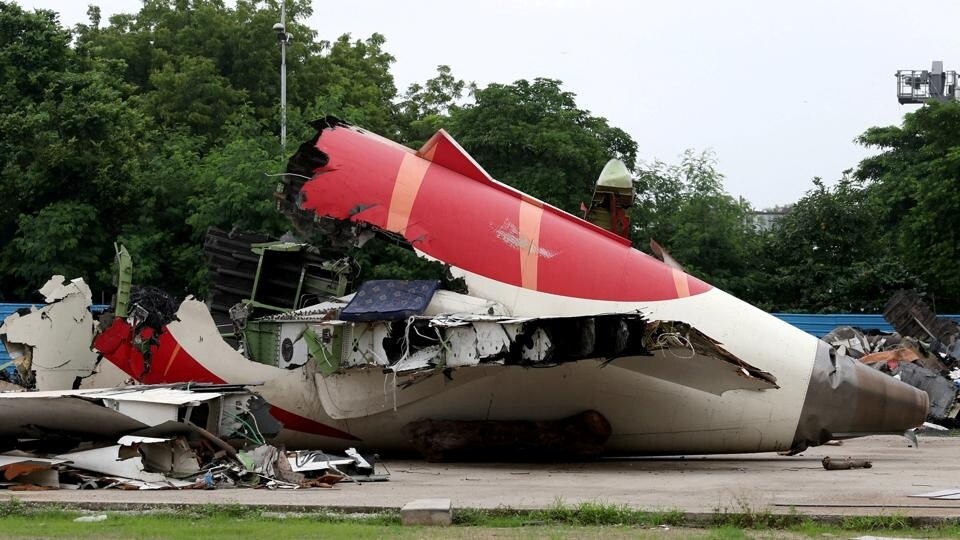
Air India flight AI 171, operated by a Boeing 787-8, crashed shortly after takeoff from Ahmedabad en route to London Gatwick on June 12, killing 241 of the 242 passengers onboard, along with 19 people on the ground. Among the dead were 52 British citizens.
Also Read | 'Assigning blame before...': Indian pilots body dissatisfied with Air India crash report
The errors were reportedly identified by Dr Fiona Wilcox, the Inner West London coroner.
“If [it] isn’t their relative, the question is, who is it in that coffin? Presumably it’s another passenger and their relatives have been given the wrong remains. The coroner also has a problem because she has an unidentified person in her jurisdiction,” Healy-Pratt said.
The report added that the remains recovered from the crash site were severely burnt, mutilated, or fragmented. Some were identified through DNA testing, while others were matched using dental records.
What NFSU in Gujarat said on DNA matching
The National Forensic Sciences University (NFSU) in Gujarat had a difficult task of performing DNA segregation and matches for bodies of the deceased and their family members.
Officials privy to the matter had earlier said the extraction process would be challenging as some bodies were completely charred and extracting bone samples would take time.
“Under usual circumstances, the extraction process and profiling take barely 30-40 minutes. However, here the extraction will take time, as there will hardly be any bone left on some of the charred bodies. It is challenging to find bone samples from the ashes. In some cases, nearly two-thirds of the body is burnt. Thus, the process has to be repeated three-four times,” ThePrint quoted Dr SO Junare, NFSU Gandhinagar campus director, as saying.


