From 17 to zero: Goa is India’s first state to eradicate rabies deaths
In 2014, when Mission Rabies, a UK-based charity, first began a pilot project to vaccinate stray dogs in the state, Goa had recorded 17 human deaths due to rabies
On May 17, animal husbandry director Agostinho Mesquita issued a notification declaring Goa a “rabies-controlled” state. For Murugan Appupillai, the India Education Director of Mission Rabies, it was a day he was long waiting for. In 2014, when Mission Rabies, a UK-based charity, first began a pilot project to vaccinate stray dogs in the state, Goa had recorded 17 human deaths due to rabies. The last human death due to rabies was recorded in September 2017. No fresh case of rabies in humans has since been recorded, making Goa the first in the country to be declared a rabies-controlled state. It is on its way to becoming the country’s first rabies-free state.
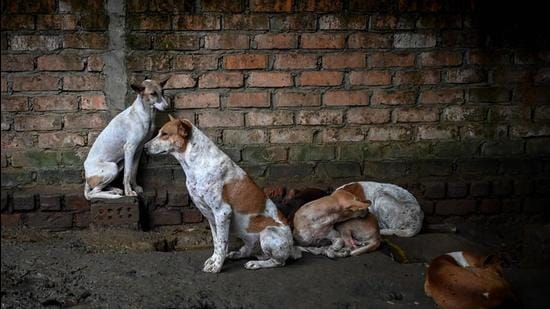
Representational Image. (File photo)
“We cannot yet call ourselves a rabies-free state because there are still some cases of dogs being detected with rabies especially in the border talukas of Goa, but we are getting there,” Appupillai said.
Mission Rabies, in its first year of operation in Goa, vaccinated 20,400 and sterilised around 20,000 dogs, proving it was possible with greater manpower and dedication to vaccinate over 70% of them in the state. With the government agreeing to collaborate and fund the project to make Goa a rabies-free state, the non-profit organisation embarked on a mission to vaccinate 70% of the state’s dog population, including stray canines. It vaccinated over 100,000 dogs each year for three years in a row.
The government notified a special scheme under which it bore the cost of the entire programme. This included purchases of syringes and rabies test kits, lab charges, the salaries of the drivers, dog catchers, and other expenditure heads. The government spent over ₹1.65 crore over three years on the scheme.
“We recruited volunteers and trained them. A team visited a locality and caught as many dogs as possible. The next day a second team would visit the same locality and try to catch the dogs that were missed the first time,” said Appupillai.
Jaigar O’Neill of Mission Rabies said, in a blog post, “Over 500 vets from 16 different countries arrived in India to volunteer alongside local vets, animal handlers, and skilled dog catchers. Working together, we caught and vaccinated as many dogs as we could. Over 63,000 vaccinated dogs in 30 days.”
Under Mission Rabies, 540,593 rabies vaccinations were administered to dogs. Nearly a million people were educated about dog bite prevention. 24-hour rabies surveillance, including an emergency hotline, rapid response team, and a support team, were set up for dog bite victims.
“The reason why rabies was not tackled earlier was that it is a neglected disease. Rabies is not a new disease. In fact, it goes back to more than 3,000 years ago. India is the global hotspot for rabies with more than 20,000 rabies deaths each year which is the highest recorded by any country annually. It is a shame for India more so because a vaccine is available and has been available for more than 100 years since the days of Louis Pasteur,” Appupillai said.
“In the western world, it has already mostly been eliminated but in India, it is endemic because nothing was done methodically.”
There is no reason to celebrate just yet. While there may be no cases of humans dying of rabies, but dogs continue to contract the disease. “The number of (recorded) rabies cases in dogs were just seven a year when the pandemic...struck. In neighbouring Maharashtra, where the (Covid-19) lockdown was in force for several months, and restaurants were closed there has been a migration of dogs from across the border in search of food and they are mixing with local dogs,” Appupillai said
As a result, the surveillance teams of Mission Rabies noticed a rise in cases of rabies among dogs. Over the last year, 24 cases of rabies among canines were found, more than three times the previous year’s seven recorded cases.
As cases began to rise, Mission Rabies began revaccinating dogs in the border talukas to prevent a recurrence of the disease and keep the virus under check.
In June 2021 (last month), 30 necropsies (autopsies on animals) were performed, and two dogs were confirmed positive for rabies. Although one of the positive dogs was from Maharashtra, the other dog was from Mollem in Dharbandora (Goa). The vaccination teams are now undertaking intensive vaccination across Dharbandora.
“We have to ensure that more than 70% of the dogs are vaccinated as beyond that herd immunity kicks in and the virus remains in check,” Appupillai . He added their “maintenance” project needs to be continued to ensure that the gains over the last few years are not squandered.
He hoped that more states will be willing to come forward to replicate the project. So far, only Bengaluru city officials have asked for a similar exercise.
But with Goa becoming the first state to eradicate rabies, Appupillai expects things will change.
O’Neill said the people of Goa will take pride in what their state has managed to achieve and take action to support rabies control. “Other states will see that Goa has made rabies control possible in India and be encouraged to do the same. This change in Goa is a momentous moment in the fight against rabies, in India and across the world. However, there is still a lot of work to do to stop rabies from re-emerging in Goa and declare it rabies-free.”
Signages have now been installed across Goa informing both visitors and locals that Goa is a rabies controlled state. “More boards will be placed on beaches and at prominent tourist sites over the coming weeks. To mark Goa as a rabies controlled area, all pets entering the state are now required to be vaccinated against rabies,” Appupillai said.
Chief minister Pramod Sawant too congratulated Mission Rabies.
“We have now achieved 5,40,593 vaccinations against rabies in dogs and educated nearly one million people in dog bite prevention across Goa as well as we have set up 24-hours rabies surveillance involving an emergency hotline and rapid response team for dog bite victims,” Sawant said. “We are happy to say that in the last three years we do not have a single case of rabies in Goa.”

 E-Paper