
 E-Paper



From Neptune Spear to Wooden Leg: India’s Operation Sindoor joins history’s bold counterterror strikes
Throughout history, several nations have conducted similar operations when confronted with terrorism beyond their borders.


India’s Operation Sindoor, which targetted nine terrorist facilities in Pakistan and Pakistan-occupied Kashmir (PoK), joins the ranks of decisive cross-border military actions against terrorist threats. Throughout history, several nations have conducted similar operations when confronted with terrorism beyond their borders.
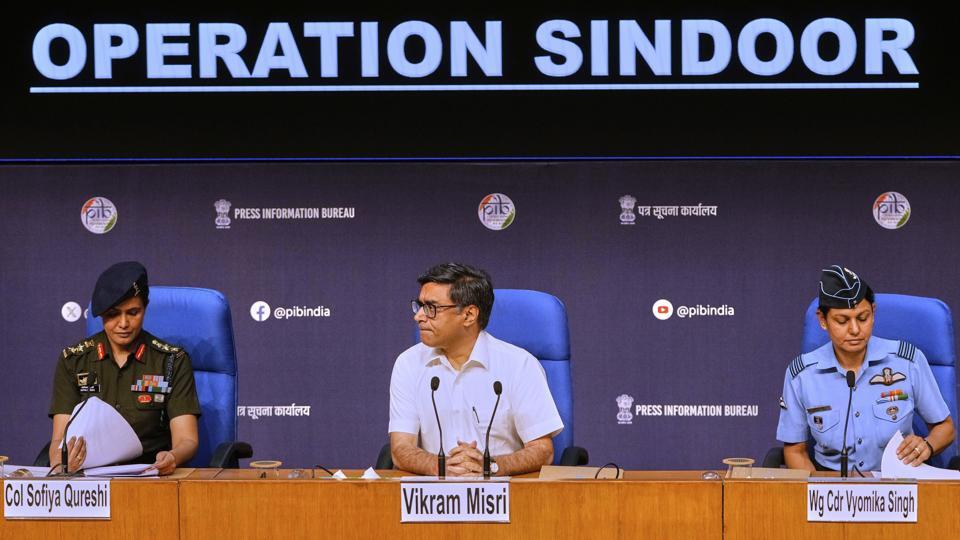
Like these precedents, India’s Operation Sindoor struck terrorist infrastructure with precision. The coordinated strikes destroyed camps linked to Lashkar-e-Taiba, Jaish-e-Mohammed, and Hizbul Mujahideen, targetting facilities responsible for attacks including the April 22 Pahalgam terror attack that killed 26 people. Military officials have emphasised that the operation avoided civilian casualties while dismantling terrorist training and staging areas up to 100km inside Pakistani territory.
US: Operation Neptune Spear (2011)
On May 2, 2011, the United States conducted Operation Neptune Spear, in which SEAL Team Six killed Osama bin Laden at his compound in Abbottabad, Pakistan. The operation targetted bin Laden as the leader of al-Qaeda and mastermind behind the September 11 attacks. This raid involved US forces operating without Pakistani authorisation roughly 120 miles (193km) inside Pakistani territory.
US: Operation Infinite Reach (1998)
Operation Infinite Reach was the code name for American cruise missile strikes on al-Qaeda bases launched on August 20, 1998. The US Navy targetted the al-Shifa pharmaceutical factory in Khartoum, Sudan, and terrorist training camps in Khost Province, Afghanistan, in retaliation for the bombings of American embassies in Kenya and Tanzania. These strikes represented the first major American response to al-Qaeda terrorist attacks.
Israel: Operation Entebbe (1976)
On July 3-4, 1976, Israeli commandos conducted a hostage rescue mission at Entebbe Airport in Uganda, where terrorists had been holding 106 Israeli and Jewish passengers from a hijacked Air France flight. Israeli transport planes flew 100 commandos over 4,000 kilometers to Uganda, successfully rescuing 102 hostages. The operation targetted members of the Popular Front for the Liberation of Palestine and German Revolutionary Cells, who had demanded the release of Palestinian prisoners.
Israel: Operation Spring of Youth (1973)
The 1973 Israeli raid in Lebanon (known as Operation Spring of Youth) took place on April 9-10, 1973, when Israeli special forces attacked several Palestine Liberation Organization targets in Beirut and Sidon. The operation specifically targeted three senior PLO officials: Kamal Adwan, Mohammed Youssef Najjar, and Kamal Nasser, who were killed in retaliation for the 1972 Munich Olympics massacre.
Russia: Operations in Chechnya/Georgia
In August 2002, Russia conducted a series of airstrikes on purported Chechen separatist havens in the Pankisi Gorge in Georgia. Russia accused Georgia of allowing Chechen militants to operate on Georgian territory and permitting the flow of fighters and materials across the border. These cross-border operations were part of Russia’s broader counter-insurgency campaign against Chechen separatists.
Colombia: Operation Phoenix/Operación Fénix (2008)
Operación Fénix (Operation Phoenix) was an attack by the Colombian military against a camp of the Revolutionary Armed Forces of Colombia (FARC) 1.8km over the border in Sucumbíos Province, Ecuador, on March 1, 2008. The operation specifically targetted and killed Raúl Reyes, a high-ranking member of FARC’s leadership council. This was a significant blow to the FARC organisation and caused diplomatic tensions between Colombia and Ecuador.


