E-Paper



Geopolitical situation’s spillover needs global attention: Sitharaman
Sitharaman started her keynote address at ICRIER’s G20 conference on “India’s G20 Presidency: Crafting an Indian Narrative on Resilient, Inclusive and Sustainable Economy (RISE),” with a disclaimer that India’s official priorities have not been finalised yet.

 Prefer HTon Google


New Delhi: The “spillover” of the geopolitical situation needs global attention, finance minister Nirmala Sitharaman said on Tuesday, proposing eight key priorities for the Indian presidency of G20 – reform multilateral institutions, resolve debt entrapment, support sustainable development goals, resume quality urban infrastructure agenda, promote digital revolution, and ensure food and energy security.
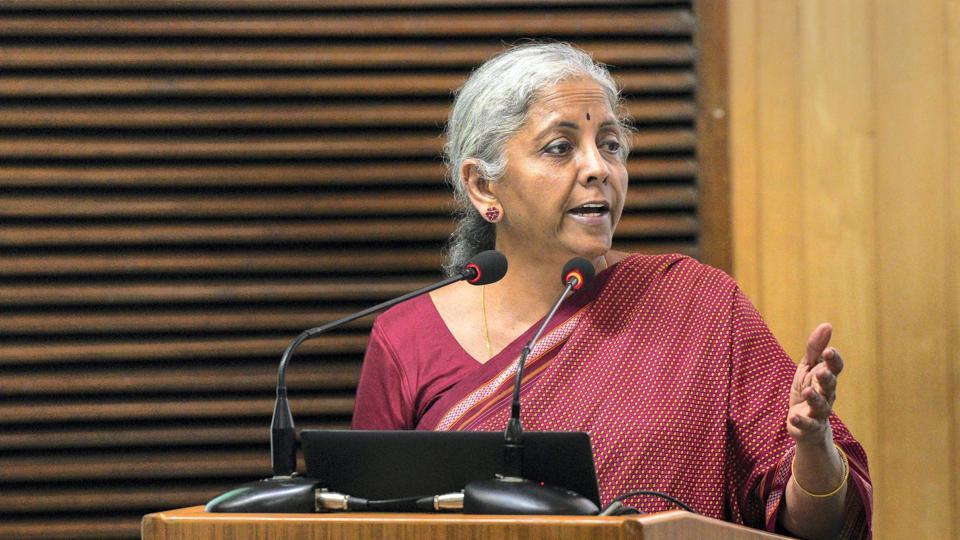
Sitharaman started her keynote address at ICRIER’s G20 conference on “India’s G20 Presidency: Crafting an Indian Narrative on Resilient, Inclusive and Sustainable Economy (RISE),” with a disclaimer that India’s official priorities have not been finalised yet.
“We are almost at the fag-end of all the consultations and discussions, and officially to release what would be India’s priorities,” she said. “So, everything that anyone of us are speaking here are subject of additions and deletions.”
India is assuming the presidency of the G20 from Indonesia on December 1, and will lead its affairs till November 30, 2023. The G20 is a forum for international economic cooperation that counts Argentina, Australia, Brazil, Canada, China, France, Germany, India, Indonesia, Italy, Japan, South Korea, Mexico, Russia, Saudi Arabia, South Africa, Turkey, the UK, the US and the European Union as its members.
Also read: 'I look at it not as rupee sliding but dollar strengthening': Nirmala Sitharaman
Underscoring the disclaimer, the finance minister put forth the context that India is taking over the presidency at a time when Covid-ravaged world is facing turbulence due to current geopolitical reasons – the Ukraine war and high inflation because of supply chain disruptions of essential commodities such as food and fuel.
Sitharaman said at this turbulent time, India is in a comparatively better situation. “Our macroeconomic fundamentals are fine,” she said, clarifying that it is fine in comparison to other economies. “India is in a very unique position having very carefully trodden on an independent position in today’s global geopolitical situation,” she said. By that she meant India’s non-aligned position in a multipolar world.
“So, India constantly, very carefully maintaining its position and voicing for the emerging markets, voicing for the low- and middle-income countries, particularly at a time when we are also facing the collateral spillovers” she said. Discussions on spillovers will certainly be one of the priorities, she added.
The finance minister said while many ongoing measures already undertaken during past presidencies would get place on priorities, the Sherpa track would also bring forth many developmental issues. On the Finance track, she said resolution of global taxation issues would be “the topic of great relevance” and the G20 has been proactive on such matters on the basis of consensus. Such consensus is also possible on pandemic preparedness fund, where suitable resource could be available to low-income countries during such crisis in future, she said.
Sitharaman highlighted eight key areas that may get place in the G20 discussions, reiterating that these are not India’s official priorities for the forthcoming presidency.
The finance minister said multilateral institutions, particularly multilateral finance institutions, need to be reformed to meet the needs of countries in these changing times so that they can “serve with greater vigour” and unlock their potential. She said the tone has been already set by Prime Minister Narendra Modi, who wants reforms of multilateral institutions such as the United Nations, the World Bank and the International Monetary Fund (IMF).
Many countries are facing debt-related stress after the pandemic and there were some solutions to provide them relief, but it reignited the debate on sustainable development goal as more borrowings to achieve these goals could be “unsustainable” leading to bigger debt traps, she said. So, process of financing sustainable development goals should be friendlier to such countries, she added.
Climate finance and funding the transition are some issues to be resolved, she added.
Crediting the Japanese and the Italian presidencies of G20, she said “sustainable” and “quality” urban infrastructure is also a long pending global issue, where India is focusing with its PM Gati-Shakti mission to optimise resources.
The next issue is digital revolution, which is one of the strengths of India that has accomplished world’s largest financial inclusion programme, she said. Many G20 members are keen to know about India’s digital inclusion programme and direct transfer of subsidies to intended beneficiaries without any leakage, she said.
She also said the Reserve Bank of India has already started a pilot programme for digital currency. Referring to issues associated with cryptocurrencies, the finance minister said there is a need for global regulation on crypto assets to prevent their misuse for terror funding and money laundering. Various international bodies are working on regulations for crypto assets and they could be brought on the table for a meaningful discussion at the G20, she said. HT on October 30 reported that digital payment and cryptos could be deliberated during India’s G20 presidency.
Also read: On day 1 in DC, Sitharaman critiques advanced nations for extreme policies
The regulation of crypto assets is possible only after there is a common framework, she said, as these are prone to misuse for drug and terror funding, or other kinds of fraud. “We have not come up with any plans as yet,” she said, stressing the need for discussion on this matter by the G20 members.
More than 80% of the global GDP, 75% of global trade, and 60% of the global population are represented by the G20 countries, according to a statement by Indian Council for Research on International Economic Relations.
Speaking at the forum, Amitabh Kant, G20 Sherpa for India, said: “India will take over the G20 presidency at a time when the world is highly polarized, and the global economy is slowing down. It’s a huge opportunity to demonstrate G20 as an organization that can give a direction and drive global growth which is inclusive, resilient and sustainable.”