
 E-Paper



Government expands procurement to include three pulses
Move aims at nudging farmers away from growing surplus food grains, which itself is the result of unlimited federal purchases of cereals at MSPs, which offer growers an assured market


New Delhi: The Centre has readied a policy to expand its procurement programme for farm produce, planning to purchase entire quantities of three key pulses varieties without any cap, in line with a similar policy for cereals, the top bureaucrat in the agriculture ministry said on Friday.
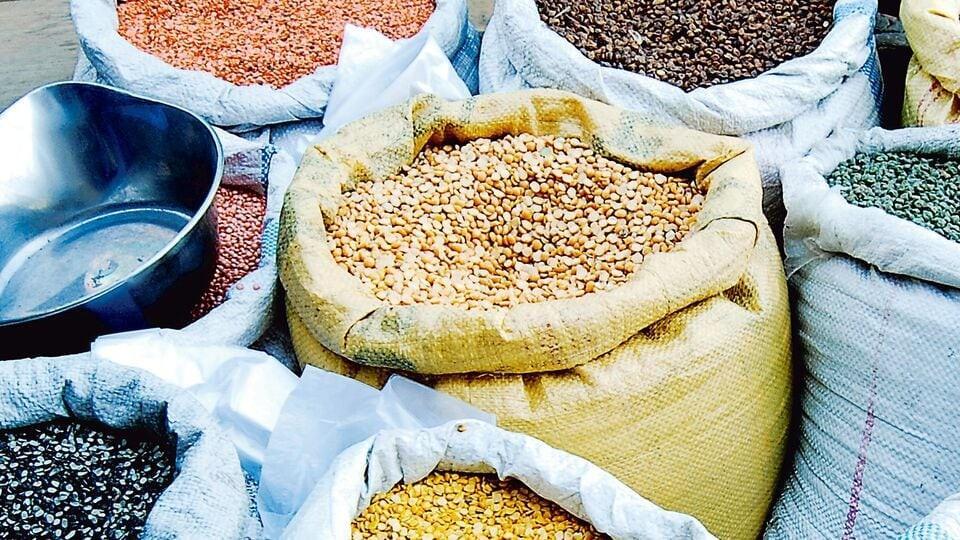
The move aims at nudging farmers away from growing surplus food grains, which itself is the result of unlimited federal purchases of cereals at minimum support prices, or MSPs, which offer growers an assured market. An MSP is a floor rate meant to avoid distress sales, but it has been mostly effective for cereals.
The expansion of state-backed procurement comes amid a new national campaign for self-sufficiency. Buffeted by the US’s steep 50% tariffs, the world’s fifth largest economy is increasingly looking to cut imports and Prime Minister Narendra Modi’s government has given public calls to buy ‘swadeshi’ or homegrown products.
State-backed food agencies, such as NAFED, will buy out 100% of tur (pigeon pea), urad (gram), and masoor (yellow lentils) at federally fixed minimum support prices (MSP), Union farm secretary Devesh Chaturvedi said.
“The procurement for these three varieties will be open-ended. For the rest, the government will procure according to existing norms,” Chaturvedi said. Farmers will need to register on a portal to sell pulses to the government, he said. State governments have been taken on board to implement the programme for necessary arrangements at mandis or state-run market yards.
The plan stems from the Modi government’s move to end the country’s dependence on imports to meet local demand for pulses, despite it being the world’s biggest producer. India also relies on global markets for oilseeds, used to make edible oils.
Overall, the country is a net exporter of food with significant global share of rice, buffalo meat, dairy and a slew of agricultural products. However, increasing weather shocks and mismatches in demand and supply can still necessitate imports of perishables, such as onion.
On Saturday, Prime Minister Narendra Modi is set to launch two schemes aimed at ramping up output of pulses and modernising agriculture in 100 disadvantaged districts.
The focus on pulses, the commonest source of protein for most Indians, is also aimed at guaranteeing minimum assured farm prices, a long-standing demand of farmers.
In 2020, tens of thousands of cultivators from Punjab and Haryana had staged massive protests near New Delhi, demanding guaranteed minimum prices for 23 farm commodities and the roll-back of three farm-reform laws. Farm unions at the time argued that the changes would make them vulnerable to large food corporations. The agitation ended after the PM Modi announced scrapping the legislation on November 19, 2021.


