
 E-Paper



Govt backs subclassification within SC/ST quota, SC told
The Centre backed the idea of earmarking most backward categories within SC/STs to enable the states to frame appropriate policies on subclassification

 Prefer HTon Google


New Delhi The Union government on Wednesday told a seven-judge bench in the Supreme Court that it is committed to the policy of reservation for marginalised communities as a measure of affirmative action even as it favours subclassification within the Scheduled Castes and Scheduled Tribes (SC/STs) to ensure the “trickle-down effect” of quota benefits.
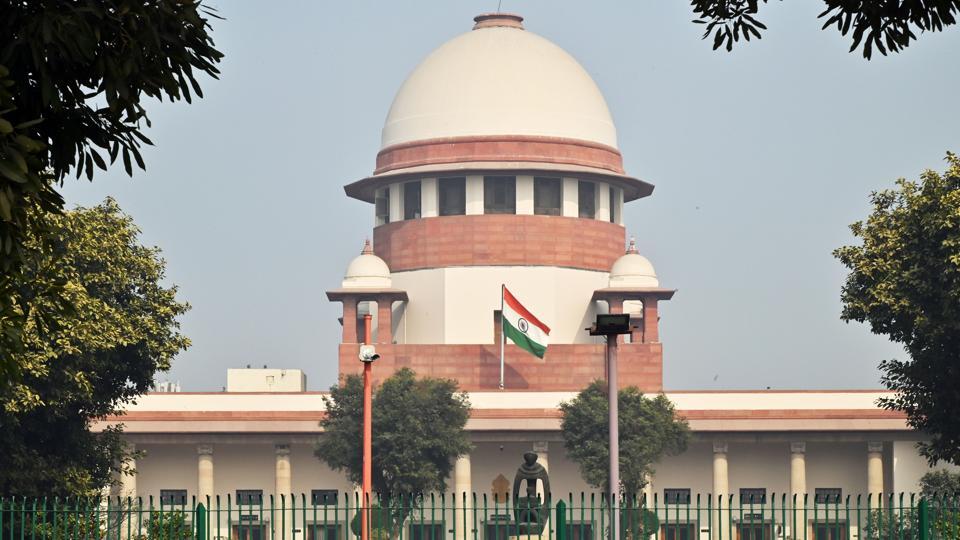
Arguing before the Constitution bench headed by Chief Justice of India (CJI) Dhananjaya Y Chandrachud, the Centre backed the idea of earmarking most backward categories within SC/STs to enable the states to frame appropriate policies on subclassification and rationalisation of reserved seats.
As the bench, which also included justices BR Gavai, Vikram Nath, Bela M Trivedi, Pankaj Mithal, Manoj Misra and Satish Chandra Sharma, heard a clutch of petitions on the permissibility of subclassification within the SC/ST reservation on the second consecutive day, the Centre made it clear that its arguments on subclassification must not be construed as an opposition to quota benefits for the marginalised communities.
“These submissions are limited only to the question referred to this Hon’ble Bench i.e. permissibility of subclassification and may not be treated as any dilution of the reservation policy of the central government and the government continues to subscribe to its obligations of granting reservation as a means of achieving equality by such affirmative actions,” solicitor general (SG) Tushar Mehta, representing the Centre, told the court.
His submissions added that reservation was a measure of affirmative action to bring equality to those who have suffered hundreds of years of discrimination.
The Centre’s statement in the top court came on a day when Prime Minister Narendra Modi, while speaking in Parliament, accused India’s first PM Jawaharlal Nehru of opposing reservation for SC/ST and OBCs in government jobs. Addressing the Rajya Sabha, Modi read out a letter by Nehru to chief ministers in which the late Congress leader suggested that quota in public jobs could lead to inefficiency. Modi added that if the government recruited and promoted the marginalised classes at that time, they would have been uplifted.
On Tuesday, the bench had observed that the Constitution does not postulate that people belonging to the marginalised groups are inefficient while those from other groups are competent, adding reservation for SC/STs and other backward classes (OBCs) is consistent with the need to maintain efficiency in administration.
In the apex court, SG Mehta on Wednesday commenced his submissions by conveying the Centre’s resolve to continue with the reservation policy. “Let me make it clear at the outset that for reservation as a policy, the central government is committed. My submissions are only on the aspect of subclassification,” he said.
Mehta’s written submissions pointed out that subclassification within SC/STs will enable targeted policymaking by the State, rationalising affirmative actions and enabling their implementation for desired results.
“This shall have to be done without compromising the need for reservations and by merely changing the focus towards more backward amongst backwards and without changing the constitutional method even while carrying out subclassification,” he said.
Mehta supported a review of the 2004 judgment by a five-judge bench in EV Chinnaiah Vs State of Andhra Pradesh, which held that subclassification was not permissible because SC/STs form homogenous classes.
“This bundling together of SC/STs by Chinnaiah, which disempowers the State to frame appropriate policy by subclassifying the zone of reservation appropriately, diminishes the constitutional guarantee of equality of opportunity...enabling of subclassification would ensure that benefits are extended to persons more in need of the said benefits by carefully apportioning the reserved quota within the reserved class,” stated Mehta’s submissions.
Mehta, however, clarified that if subclassification was allowed, states could only identify the groups and that such subclassification would only be given effect through a parliamentary legislation, following an approval of the President.
Attorney general (AG) R Venkataramani also argued in favour of reconsidering the 2004 judgment, saying SC/STs cannot be treated as a homogeneous class and that each subgroup deserves a distinguished constitutional treatment. The state governments of Punjab, Tamil Nadu and Telangana have also supported subclassification in the case. The Andhra Pradesh government, however, said that it supports the 2004 judgment and has done away with all subclassifications within the reserved category.
Article of faithAt one point of the hearing, the bench called it an “article of faith” that the Constitution chose not to put restrictions based on educational qualification, gender or assets for contesting elections, adding that the framers of the Constitution were “visionary”.
“We must recognise that our Constitution has not prescribed restrictions relating to property, education or gender. This was an article of faith,” said CJI Chandrachud.
Addressing a proposition that there are no minimum educational qualifications prescribed under the Constitution for a citizen to run for a public office, the bench offered a rationale, applauding the constitutional scheme.
“It was a very visionary provision because ours was one of the first Constitutions which did not make your right to contest election or right to hold an electoral office conditional on your gender property or educational qualification,” it observed.
Although the bench acknowledged the necessity of education for creating a qualified workforce from among the marginalised communities, it appreciated that the Constitution did not disqualify people from democratic processes on account of lack of education or some other factors such as gender or property.
The court will continue hearing the case on Thursday when it is expected to reserve it for judgment.
The matter was referred to the larger bench by a five-judge bench in 2020, observing that the 2004 judgment in the Chinnaiah case may require a reconsideration.
The 2004 judgment by the apex court became the basis for the Punjab & Haryana high court to quash a 1975 notification of the Punjab Government, dividing its existing 25% reservation for SCs into two categories. Half of these seats were to be offered to Balmikis and Mazhabi Sikhs while the rest were for the remaining groups within the SC category. This notification was nixed by the high court in 2006.
Later, the Punjab government passed the Punjab Scheduled Caste and Backward Classes (Reservation in Services) Act, 2006. It introduced “first preference” reservation for the Balmikis and Mazhabi Sikhs, laying down that 50% of reserved seats would be offered first to these two communities before all other SC groups. But in 2010, the high court struck down this provision of the act based on the decision in the Chinnaiah case, leading to an appeal by the state government in the top court.
Finally, in 2020, a five-judge bench referred the matter to a larger bench, noting that the 2004 judgment by the coordinate bench requires to be revisited. While doing so, this bench said: “Reservation was not contemplated for all the time by the framers of the Constitution. On the one hand, there is no exclusion of those who have come up, on the other hand, if subclassification is denied, it would defeat the right to equality by treating unequal as equal.”



