E-Paper



Covid-19 update: Govt charts mitigation plan in case containment strategy fails
As part of a standard protocol, the focus of a mitigation plan usually is on upgrading health infrastructure, adding more intensive care unit (ICU) beds, increasing ventilators and improving oxygen support mechanisms, and increasing testing capacity.

 Prefer HTon Google


The Union health ministry is creating a mitigation plan for the scenario when the coronavirus disease (Covid-19) outbreak cannot be contained, putting together a standard operating procedure (SOP) that focuses on treating the most vulnerable and critical patients in order to reduce deaths.
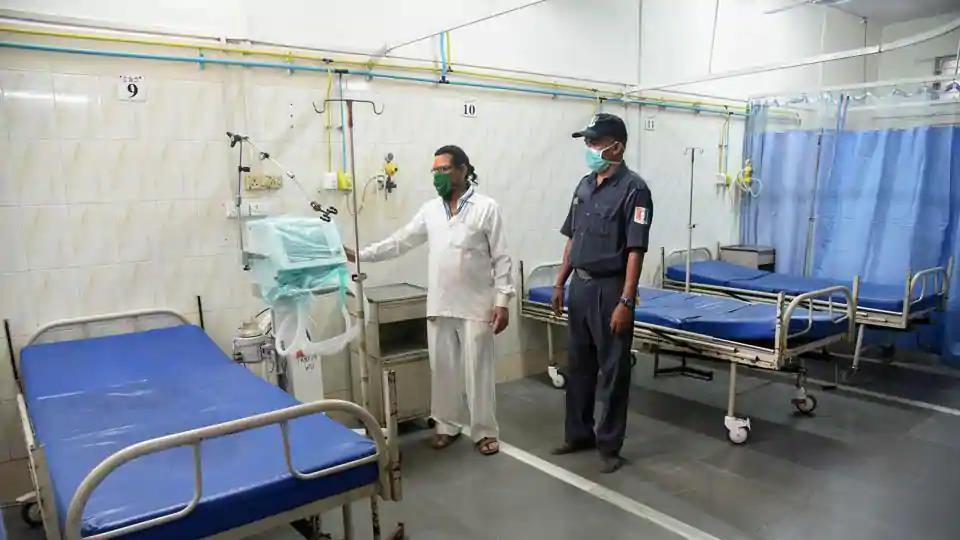
Mentions of a mitigation plan were first made in the government’s containment guidelines for large outbreaks released last month, when officials said the strategy will be in case the number of infections grows to such levels that containment strategies are ineffective – a scenario seen in New York, and parts of Italy and Spain.
“The mitigation plan is usually put in place in an extreme situation when all containment measures seem to be failing, and the spread of infection cannot be effectively controlled. In such a situation the focus shifts on reducing mortality and morbidity, which means the measures are drafted and implemented to reduce the number of deaths due to the disease and to work towards ensuring the disease doesn’t progress to its severe level and fewer people need intensive care,” said a senior government official aware of the strategy, asking not to be named.
As part of a standard protocol, the focus of such a plan usually is on upgrading health infrastructure, adding more intensive care unit (ICU) beds, increasing ventilators and improving oxygen support mechanisms, and increasing testing capacity.
“…if the containment plan is not able to contain the outbreak and large numbers of cases start appearing, then a decision will need to be taken by state administration to abandon the containment plan and start on mitigation activities,” the centre had said in the containment plan released last month.
The strategy will be an extension of India’s Covid-19 Emergency Response and Health Systems, which was being prepared by experts from the health ministry, to “respond to and mitigate the Covid-19’s threat and strengthen national systems for public health preparedness”.
The plan includes revamping hospitals for air borne infection control; improving facilities handling infectious diseases and equipping district hospitals with single occupancy airborne infection isolation rooms (also called negative-pressure isolation rooms) to prevent spread of infections from and between patients.
“Some of it may take time but currently what we are attempting is to ensure quick measures that would be more effective in aiding recovery of patients so that there’s less mortality and morbidity due to the infection,” said the official.
The Union government has also constituted and rushed 20 public health teams that will work at the ground level in 20 districts with the highest cases. These include Mumbai, Thane, Pune, Ahmedabad, Surat, Vadodara, Delhi (South East and central districts), Indore, Bhopal, Chennai, Hyderabad, Jaipur, Jodhpur, Agra, Lucknow, Kolkata, Kurnool, Guntur and Krishna.
Experts say mitigation plan is technically a part of the overarching containment plan.
“It shouldn’t be seen as an exclusive plan as purpose of having a containment strategy in place is also to mitigate or reduce the risks associated with the disease outbreak. However, if despite the containment plan, cases spread to other areas, then one has to move out of containment zone and towards peripheral areas to control the spread,” said Dr LS Chauhan, former head, National Centre for Disease Control.
“And in the containment zone from where there is excess case load, the focus has to shift towards extensive case management as merely detecting all cases won’t be enough. If you are able to successfully trace and treat all positives then next step is to plan for adequate treatment so that fewer lives are lost,” he added.