
 E-Paper



Centre lists curbs to be eased on April 20 amid lockdown 2.0
The guidelines on the restart of the economy , with a sharp rural focus, was described as a giant first step by some analysts.


The Union government on Wednesday conditionally allowed industries in rural areas and economic enclaves to reopen next week, green-lighted work under the federal job guarantee scheme, and permitted daily wagers in some areas to return to work, as it sought to get the country’s economic engine chugging again and lessen the pain of millions affected by the ongoing lockdown to combat the spread of Covid-19.
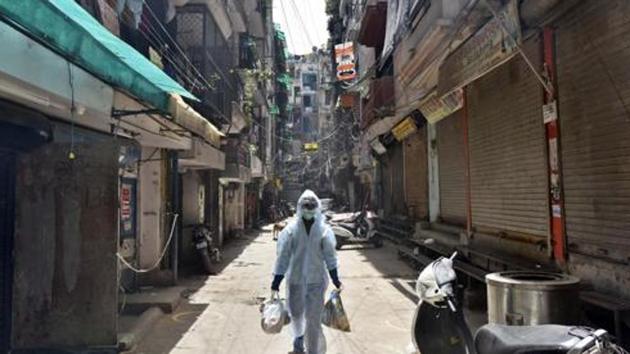
The guidelines on the restart of the economy , with a sharp rural focus, was described as a giant first step by some analysts. It comes after an initial three-week nationwide lockdown to flatten the curve of infections that ended Tuesday midnight was extended by 19 days to May 3.
To be sure, none of the activities will be restarted in so-called containment zones declared by state and local administrations; district magistrates have been empowered to take decisions that work locally.
Also read: Covid-19 cases breach 12,000-mark, death toll at 414
No public transport including planes, trains, buses, metro rail and taxis will be available during the second phase of the lockdown, although courier services have now been allowed and will likely feed into air and rail cargo services, which were also operational during the first phase.
“Select additional activities” are being allowed to “mitigate hardship to the public,” the ministry of home affairs (MHA) said in its order, caveating that “these additional activities will be operationalised by states/union territories/district administrations based on strict compliance to the existing guidelines on lockdown measures”.
The conditional and partial opening-up was welcomed by industry and experts who saw it as striking a fine balance between easing restrictions and ensuring the pandemic doesn’t spread -- especially with local officials being allowed to act quickly and reimpose them if infections flare up or emerge.
“An important redeeming feature of the new guidelines operative from April 20 is the opening up of the agricultural and rural sector including MGNREGA (Mahatma Gandhi National Rural Employment Guarantee Act) activities. MGNREGA works are allowed primarily for irrigation and water conservation works. Farming operations in the fields are allowed fully for farmers and farm workers. This would help save the rabi crop to a significant degree,” DK Srivastava, the chief policy advisor, EY India, said.
Also read: Two firms begin production of antibody rapid test kits in India
The home ministry’s order laid down “National Directives for Covid-19 Management” that made masks compulsory in all public and workplaces; said spitting would be punishable with a fine, and banned the sale of liquor, tobacco, and chewing tobacco (gutka). The guidelines also specified social distancing and sanitation rules for workplaces and factories.
The guidelines also said e-commerce companies would be allowed to operate, although it wasn’t clear whether this was merely an extension of the current situation -- most already operate, delivering essential goods -- or the delivery of non-essential goods would also be allowed.
The stock markets lost all their early gains and closed down (the Sensex by 310 points at 30,379), although experts said this wasn’t because of the guidelines but global factors.
Agriculture and rural sectors
Activities including food processing industries, road construction and industrial projects in rural areas will restart from April 20, as will irrigation projects, construction and other industrial projects, MHA said. The federal job guarantee scheme,the Mahatma Gandhi National Rural Employment Guarantee Scheme (MGNREGS), will restart with a focus on irrigation and water conservation works. Rural Common Service Centres (CSCs), delivering e-governance services to rural India will also be restarted.
The guidelines also said that all farming-related activities will remain operational. With the harvest season on , it added that it will be business as usual in terms of procurement and that mandis (farm markets) operated by Agricultural Product Marketing Committees, satellite mandis notified by states, even direct marketing operations by states or industries to buy directly from farmers will all be allowed.
“Since majority of farm practices, right from sowing, harvesting, grading, loading, cleaning, packaging etc. are done manually, an acute shortage of labourers is posing a challenge for harvesting,” said Shivendra Bajaj of the Alliance for Agri Innovation.
Businesses dealing in agricultural equipment and their repair, and the manufacturing, distribution and sale of fertilizers, seeds and pesticides will go on, the guidelines said. The fisheries and dairy sector will remain operational and the government has allowed sale and marketing of tea, coffee, rubber and cashew nuts -- but with a maximum of 50% workers deployed in these plantations.
Industrial activity
The MHA order allows the restart of certain manufacturing activities from Monday in areas that are not hot spots or containment zones , and in special economic zones (SEZs) and industrial townships. It also allowed export- oriented units (EoUs) to operate.
The order permitted manufacturing of essential goods such as medical equipment and pharmaceutical products, but also said food processing units could operate in rural areas. It allowed the manufacture of IT hardware, packaging material, the mining of coal and other minerals, and oil exploration and refining. However, it wanted employers to arrange transport of employees to the workplace and also suggested that they make “arrangements for stay of workers within their premises as far as possible”.
The order allows construction of roads, irrigation projects, buildings, and all kinds of industrial projects in rural areas and industrial estates. Besides, construction of renewable energy projects and in-situ construction within the municipal limits is also allowed provided workers are available on site and no workers are required to be brought in from outside, it added.
Niranjan Hiranandani, national president of the National Real Estate Development Council (Naredco) and also of the industry body Associated Chambers of Commerce and Industry of India (Assocham) , said the order permitted a “staggered reopening” of stalled construction works from April 20 with certain conditions. “The real estate industry acknowledges the positive impact this will have in handling the migrant crisis and avoid any strain further to the Covid-19 human-economic crisis,” added the Mumbai-based developer.
“With this order, the economic drivers of the country will start moving again, even as we extend the lockdown. Considering the estimated loss of Rs 26,000 crore per day to the Indian economy as a result of the lockdown, this relaxation is a constructive step,” he added.
Federation of Indian Chambers of Commerce & Industry (Ficci) president Sangita Reddy welcomed the government’s calibrated restart of the economy, but also stressed the need for a relief and stimulus package for industry. “It is now crucial to announce a relief and economic stimulus package, which protects wages, employment, and business.” Industry bodies have asked for a financial package of Rs 14 lakh crore to Rs 16 lakh crore to revive the economy, HT reported on Wednesday.
Rumki Majumdar, an economist at Deloitte India said, “Allowing certain economic activities, especially in areas that are not hotspots and have low probability of turning into one, will likely help the vulnerable section of the population in sustaining their livelihood.”
“However, several hot spots are also manufacturing hubs (such as Maharashtra, Tamil Nadu, and Delhi, among others), which makes it difficult to resume factory activities quickly,” Majumdar said.
Urban services
The exhaustive guidelines for services catering to urban India offer no room for recreational activities but focus on ensuring functioning supply chains for essentials.
People can use their private vehicles for emergency situations or procuring essential goods, MHA said; in some parts of the country, the use of private vehicles for this was restricted by local administrations. To be sure, they will have to practice social distancing with only two people being allowed in cars.
The home ministry said all kirana shops, even roadside carts that deal with “food and groceries, hygiene items, fruits and vegetables, poultry, meat and fish and animal feed” will operate.
The guideline said, “all facilities in the supply chain of essential goods, whether involved in manufacturing, wholesale or retail of such goods through local stores, large brick and mortar stores or e-commerce companies should be allowed to operate, ensuring strict social distancing without any restriction on their timing of opening and closure.”
E-commerce companies welcomed the move. “The resumption of economic activity from April 20 is a welcome step that will depend on unhindered availability of labour that is critical to deliver essential products to people across the country and ensure they can stay home safely,” a spokesperson for Amazon India said.
In addition, the MHA order also allowed courier companies to function.
Tighter rules
Even as restrictions are eased in some parts of the country, Covid-9 hotspots will see stricter perimeter control to ensure no unchecked inward or outward movement except for medical emergencies and maintaining law and order.
The government also invoked the Disaster Management Act, 2005 to lay down penal provisions for violations of lockdown measures. For obstructing any officials, misappropriating money or materials and for making false claims, people may face up to two years of imprisonment and fines.
If someone is caught giving a false warning of any disaster, he or she may face a prison term of up to one year. Officials, too will face charges if they fail to perform their duties. The guideline also invoked section 188 of the Indian Penal Code to say that any disobedience of an order promulgated by a public servant can lead to fines and one month’s jail term.
A government statement said the objective of the fresh guidelines is “to consolidate the gains achieved during the 1st phase of lockdown and further slow down the spread of Covid-19 and at the same time provide relief to farmers and labour and daily wage earners.”
It added that the government aims to ensure that “agricultural and related activities remain fully functional, the rural economy functions with maximum efficiency, employment opportunities are created for daily wage earners and other members of the labour force and select industrial activities are allowed to resume their operations with adequate safeguards and mandatory standard operating protocols (SOPs).”
“ At the same time, keeping the imperative of containing the spread of Covid-19 in the country, National Directives for Covid-19 management have been laid down, which shall be enforced by the District Magistrates through fines and penal action as prescribed in the Disaster Management Act, 2005,” the statement said.


