
 E-Paper



Grid failure brings Mumbai to a halt
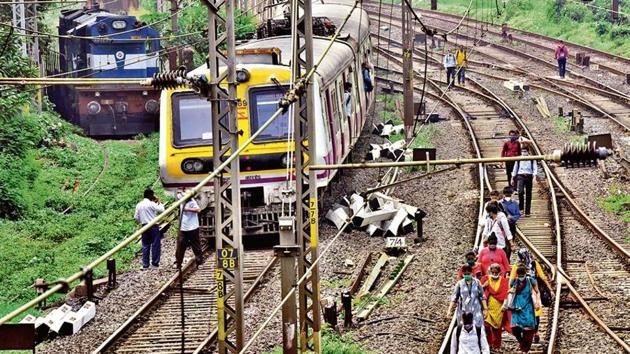
The immediate impact was on the city’s suburban train system. The three main local networks – Western line, Central line and Harbour line – stopped functioning within minutes of each other, leaving thousands stranded during the peak morning hours.


A massive power outage crippled businesses, public transport, schools, colleges, hospitals and water supply in the Mumbai Metropolitan Region (MMR) on Monday, affecting over 20 million residents. The outage, lasting more than eight hours in some areas, was triggered by the tripping of Line 2 at the Maharashtra State Electricity Transmission Company Limited’s 400 KV transmission system in Kalwa in neighbouring Thane district, which supplies 1,600 megawatts (MW) to Mumbai and adjoining areas.
The system has two lines, of which one was shut in the morning for maintenance (there was a voltage fluctuation in this line at 4.33 am that led to it being shut), effectively putting the load on the second line that handles 633 megawatts of load. This line tripped at 9.58 am, which automatically led to a load transfer to the backup 900 MW Pune-Kharghar line. This too tripped at 10 am, leading to the outage that threw life out of gear in India’s financial hub.
Mumbai has a complex power distribution matrix. The Kalwa-Padghe line generates around 50% of the city’s daily demand of 2,500 MW to 3,000 MW, depending on the season. The remainder of the city’s power is brought in from other sources and is supplied to four distributors – private and state-owned. All four could not supply power to their customers.
The immediate impact was on the city’s suburban train system. The three main local networks – Western line, Central line and Harbour line – stopped functioning within minutes of each other, leaving thousands stranded during the peak morning hours. Services – which have been curtailed on account of the Covid-19 pandemic – resumed two hours and 20 minutes later at 12.26 pm. Railway officials said outstation services were not affected by the outage as there were none operating at the time.
Over 700 traffic signals stopped working in the city, leading to traffic moving at a snail’s pace at key junctions. “As CCTV cameras were not functioning, we had to communicate and take updates over the phone,” said a traffic police officer posted at the control room.
Pravin Padwal, additional commissioner of police (traffic), said the entire traffic police force of 2,800 personnel was deployed to manually control the traffic.
Police officers said the force’s emergency response system (100) – which handles 5,500 calls a day – collapsed for nearly three hours.
Health services, especially in civic-run hospitals, were affected as a result of the power outage across the city. Major civic-run cancelled minor surgeries. Resident doctors felt the heat as they had to examine patients in the Out Patient Department in PPE suits in the dark.
Exams at several colleges affiliated to the University of Mumbai had to be rescheduled. In some cases, exams had to be called off after they had begun.
CM Uddhav Thackeray ordered a probe into the power failure.


