
 E-Paper


Follow the latest breaking news, major developments and agenda-setting stories from India and around the world with the newsdesk at Hindustan Times. Operating round the clock, the desk brings together experienced editors, reporters and correspondents to deliver fast, accurate and contextual reporting across subjects that influence public policy, governance, business, society and international affairs. The HT News Desk covers politics, elections, government policies, the economy, business and markets, science and technology, the environment, law and order, infrastructure, education, climate issues and geopolitics, while closely tracking developments across states, institutions and global capitals. The team also leads coverage of major breaking news events, policy announcements, court proceedings, natural disasters, public emergencies and significant international developments. Reports published by the newsdesk are based on information gathered from reporters on the ground, official statements, government agencies, court records, regulatory filings, recognised institutions and other authoritative sources. Stories undergo editorial scrutiny and verification processes to ensure accuracy, fairness and relevance, and are updated as events evolve and additional information becomes available. Whether covering a key political decision in New Delhi, an economic policy shift affecting millions, a landmark court ruling or a major global event, the HT News Desk aims to provide readers with reliable, fact-based journalism that delivers not only the latest developments but also the context and analysis needed to understand their wider implications.
Gujarat election results going down to the wire: BJP, Congress neck and neck in early trends
Gujarat elections 2017: Though exit polls predicted a BJP win, this turns out to be the closest contest Gujarat has seen in years.


With trends for around 150 of the 182 seats in Gujarat now available, the election seems headed to the wire. According to latest available leads, the BJP is leading in 94 seats and the Congress in 82. These numbers are tentative because they are changing by the minute in some constituencies where the difference between the two sides is narrow. For instance, in the past few minutes, the number has changed from 80-70 to 75-75 and back to 80-70.
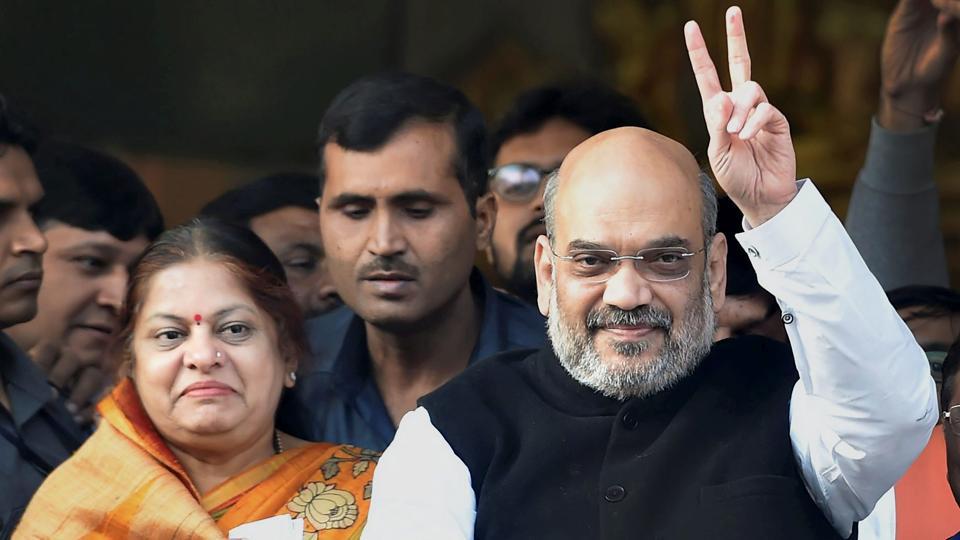
This is the closest election Gujarat has seen in years.
The agrarian crisis, the coalition the Congress built (Patidars, backward classes, Dalits), and anger over demonetisation and the implantation of GST have all turned out to be very real factors in the election. If there are two strands that best illustrate what’s happening on the ground these are: happenings in urban and rural constituencies; and the fate of BJP stalwarts such as chief minister Vijay Rupani, Nitin Patel and Saurabh Patel.
The Congress has managed to almost do as well as it did in 2012 in the rural constituencies (it edged out the BJP), and not lost much; in contrast, the BJP, which swept urban constituencies in 2012, has lost some ground in these, thanks to anger over demonetisation and GST.
Rupani and the two Patel stalwarts from the BJP are all trailing, although it’s still possible that they catch up.


