E-Paper



'Hired crane to pull out siblings': Victims' kin allege delay in help after 15 killed in Gwalior temple tragedy
Victim families claim that police did not help them after the accident, questioned how trucks was allowed at Shitala Mata Temples.

 Prefer HTon Google


Vidyaram Tyagi lost his two sons and younger brother, who were standing in the queue at Shitala Mata Temple in Gwalior as a truck rammed into the devotees on Sunday early morning killing 15 people and leaving 27 injured.
“My two sons and my brother are gone. I want justice. When even two-wheelers were not being allowed in the area, how was a truck allowed? Tyagi asked, questioning the police arrangements.
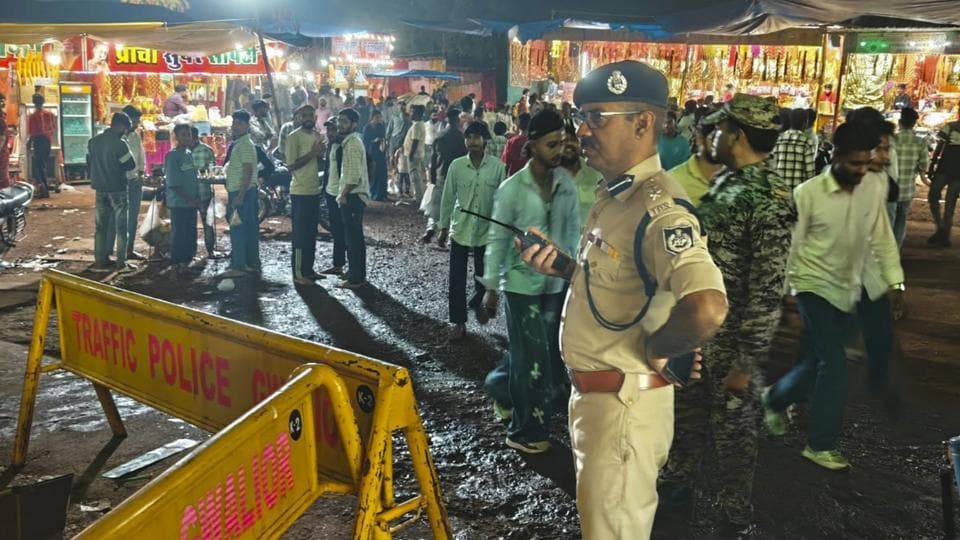
Around 1:30 am on the intervening night of Saturday and Sunday, a paddy-laden truck coming from the Chinor side lost control on the slope, broke through the police barricades and ploughed through devotees and prasad stalls before crashing into the temple’s entrance gate.
Deep Dive

Police quoting the truck driver claimed that the brakes of the truck failed causing the accident. Tyagi, however, questioned the claim saying the devotees died because of failure of the administration. “We want people responsible to be held accountable,” he said.
He was not the only one grieving. Several people from Bhind-Morena area in the Chambal ravines had come to the temple for festivities associated with Saptami puja.
Mother of Gaurav Parihar, 23, from Badagaon Khureri, Kiran Parihar, held the police personnel responsible for her son’s death. “The police killed my son. Where was police security when an out-of-control truck overturned onto my son at midnight? Even after the accident, no help came,” she said.
Gaurav got married four months ago. Her younger son Saurabh Parihar, 15, who witnessed the horror, said, “In a blink, the truck hit my sister, brother and my friend. I just ran away when people shouted. I saw them under the truck. I asked the police for help, but nobody had any answer about when they would remove the truck and rescue them.”
“I started running from the accident site to the Vicky factory on foot. I paid ₹800 and hired a crane to take out my brother and sister. Only around 4 am did the crane reach and bring out the bodies. The police did nothing till 4 am,” he said.
Another eyewitness Kinal Chauhan, who was walking towards the temple with friends, said it happened in seconds. “We were walking towards the temple when the truck’s brakes suddenly failed. It ploughed through the crowd and later hit the wall of the temple,” he said.
“People tried to rescue those trapped themselves. We removed a truck tyre and used a jack to free victims. Between 50 and 60 people were trapped when the wall collapsed,” Chauhan said.
For Savitri Kushwaha, the search for her relative turned into a nightmare. After offering prayers, her group exited the temple but Divyansh, her sister-in-law’s son, was missing.
“We searched everywhere and alerted the police, but could not find him. Only after returning we found them alive,” she said.