
 E-Paper



Hathras horror: CBI files charge sheet against four
After a two-month-long investigation into the crime that galvanised India and sparked street protests, CBI filed the charge sheet in the court of the special judge in Hathras.

 Prefer HTon Google


The Central Bureau of Investigation (CBI) on Friday charged four Thakur men with the gang rape and murder of a 19-year-old Dalit woman in Uttar Pradesh’s Hathras district in September, basing its findings on the dying declaration of the victim and rejecting earlier statements by state government officials and the police that disputed the occurrence of rape.
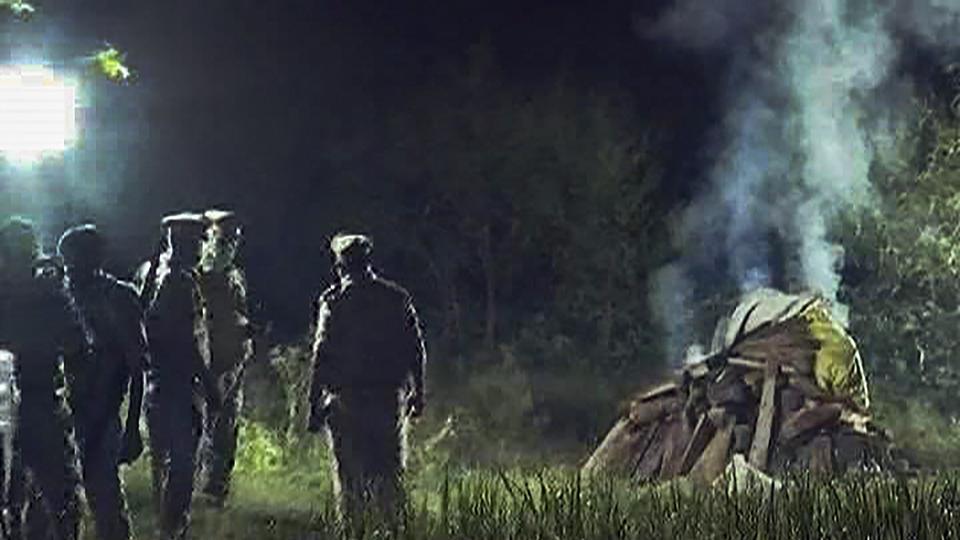
After a two-month-long investigation into the crime that galvanised India and sparked street protests, CBI filed the charge sheet in the court of the special judge in Hathras. The document said the four men — Sandeep, Ravi, Luv Kush and Ramu — allegedly gang raped and murdered the woman when she went to the fields to collect fodder in the early hours of September 14.
They were charged under Indian Penal Code (IPC) sections pertaining to assault, rape, murder and gang rape, apart from those under the Scheduled Caste and Scheduled Tribe (Prevention of Atrocities) Act. The maximum sentence under these charges is death.
“It took time but the truth prevailed. Now, we are getting the impression that justice would be delivered to us,” said the victim’s brother. “My sister’s soul would be at peace when the guilty are punished.”
“It has been a period of agony for us but if CBI finds these four accused guilty of gang rape and murder of my sister, we are optimistic about getting justice in the near future,” added the victim’s brother.
Opposition parties attacked the UP government and blamed senior administration and police officials, who had claimed there was no rape in the case on the basis of medical tests that experts deemed faulty. These comments were also seen as undercutting the investigation, especially at a time when state police was under fire for its alleged delay in responding to the victim, forcibly cremating her body, and blocking media access to the Dalit family even as upper-caste Brahmin and Bania communities held massive gatherings to corral support for the four accused men.
The government rejected the charges.
“In the Hathras case, immediately after the victim’s statement, the UP police altered the sections in the FIR and arrested the four accused and sent them to jail. The chief minister himself announced recommending a CBI probe. On October 3-4, the government sent a letter asking for CBI probe and on October 10, CBI took over the case and began probe on October 11. Before CBI took over the case, the UP government submitted an affidavit in Supreme Court saying that the government wants CBI probe. The government had requested to the SC to get the case probed in whichever way it wants (including under its supervision) by the CBI so that the truth comes out and victim get justice,” said a state government spokesperson.
The woman was gang raped on September 14 and rushed to a hospital in nearby Aligarh town, where she also recorded her statement. As her condition deteriorated, she was moved to Delhi on September 28, and died in the early hours the next day at Safdarjang hospital.
Later that evening, her body was taken to the village, and against the wishes of the family, she was forcibly cremated in the middle of the night by local officials. The next day, the village was barricaded and the family cut off from speaking to the media. The restrictions were only lifted a couple of days later amid growing outrage over the heinous crime and the alleged police laxity.
Senior administration and police officials also disputed that the victim was raped, pointing out that no proof was found in the medical examination. But experts pointed out that the examination was conducted in violation of protocol and too late to find any conclusive evidence.
CBI, whose investigation is being overseen by the Allahabad high court, appeared to have not gone by the statements of the officials and concluded that the victim suffered gang rape. Its findings were based on the dying statement of the woman — in which she named the accused and the crime committed on her — in addition to scientific and forensic evidence, and statements of witnesses and the victim’s family.
“The public is reminded that the above findings are based on the investigation done by CBI and evidence collected by it. Under the Indian law, the accused are presumed to be innocent till their guilt is finally established after a fair trial,” read a CBI statement.
Days after the crime, the state government constituted a Special Investigation Team (SIT) to probe the case, but the matter was handed over to CBI on October 10. On October 27, the Supreme Court asked the Allahabad high court to monitor the probe conducted by CBI. The court took suo-motu (on its own) cognisance of the incident and the controversial cremation and criticised local officials. The UP government is conducting a separate probe into an alleged international plot to defame the state administration.
MS Pundheer, the counsel for the four accused, said, “The charge sheet has been filed against all four accused namely Sandeep, Luv Kush, Ramu and Ravi. The court has taken cognisance.”
The Opposition attacked the government over the case.
“The BJP government, despite its reluctance and resistance, had to refer the Hathras case to CBI because of immense pressure from people, the Opposition and the media. Now, finally, on the basis of the dying declaration of the victim, charge sheet has been filed against four accused. Without struggle, one can’t get anything under BJP rule, be it justice or rights,” said former chief minister Akhilesh Yadav.
Congress general secretary Priyanka Gandhi Vadra, who visited the victim’s family in October along with her brother Rahul Gandhi, said the charge sheet raised serious questions about the Yogi Adityanath government.
“This development raises serious questions on the Adityanath government in Uttar Pradesh, UP police, ADG law and order, district magistrate of Hathras and senior functionaries of the state administration,” said Gandhi Vadra in a statement. “The state left no stone unturned to deny the victim dignity in life and death…however, the entire might of the Uttar Pradesh government and police could not suppress the truth.”


