
 E-Paper



HistoriCity | Chanakya: A look at the folklore and the facts
The figure of Chanakya looms large in traditional accounts of ancient India; a Brahmin sage-statesman, described as the Indian Machiavelli

 Prefer HTon Google


The role of ‘Chanakya Niti’ in guiding modern statecraft, and in shaping the strategic moves of players on the vast chessboard of Indian politics, remains a potent metaphor for the pursuit of political victory in contemporary India. While Home Minister Amit Shah is often characterised as a modern-day Chanakya, another example has emerged from Bihar. Tejashwi Yadav, who suffered a major electoral defeat, had a chief strategist of his own: Sanjay Yadav, who too had been labelled a ‘Chanakya’.
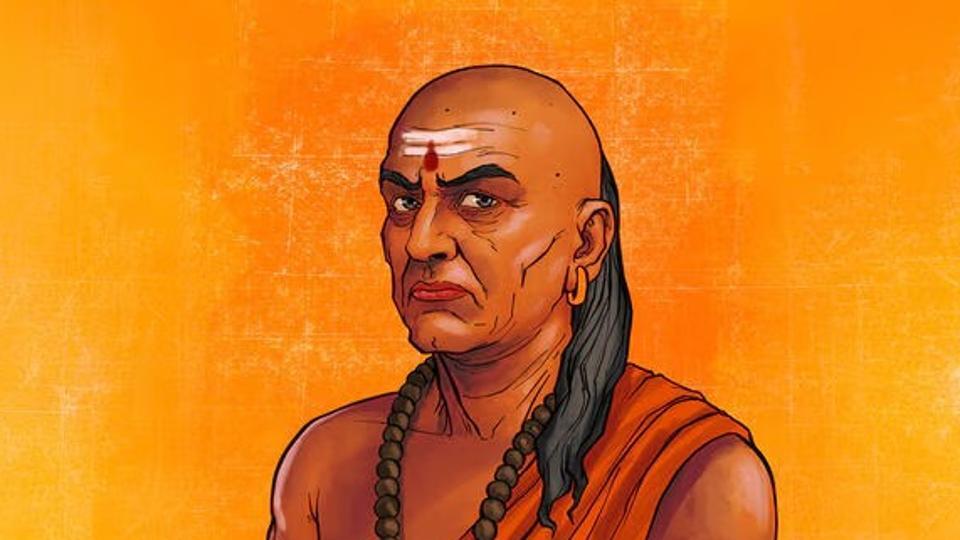
The figure of Chanakya (commonly also known as Kautilya and Vishnugupta,) looms large in traditional accounts of ancient India; a Brahmin sage-statesman, described as the Indian Machiavelli, who masterminded the rise of emperor Chandragupta Maurya (321 to 297 BCE) and authored the Arthashastra. But what is the history, or evidence, behind this narrative?
Historical origins and evidence
As historian Thomas Trautman writes in ‘Kautilya and the Arthasastra’: “Kautilya, or Chanakya as he is more generally called, is a figure of legends which assign him an historical role; the historicity of the person, and much more so of his role, is a matter of some doubt.”
He says that the legends concerning Chanakya are largely to be found in works that are mostly to be dated to the post-Gupta empire, sometimes a millennium beyond the context they refer to. This Chanakya-Chandragupta lore can be derived from four types of accounts, where common elements of the story retained across these texts include that a clever brahmin was insulted and expelled by King Nanda, vows revenge and wanders, learning alchemy and discovering the promising Chandragupta, eventually installing him, and suppressing Nanda’s remaining loyalists.
These versions are: (a) Buddhist Mahavamsa (5th-6th century CE) and its commentary Vamsatthappakasini (in Pali language); (b) Jain: Parishishtaparvan (12th century CE) by Hemachandra, based on 1st-8th century sources; (c) Kashmiri: Kathasaritsagara (11th century CE) by Somadeva, Brihat-Katha-Manjari by Ksemendra; and (d) Vishakhadatta’s version: Mudraraśaka (4th-8th century CE) , a Sanskrit play by Vishakhadatta.
The only substantial narrative about Chanakya’s life is the latter: a Sanskrit drama which is a political play, not a historical chronicle. As historian Romila Thapar observes, Vishakhadatta was probably a commissioned court poet of the Gupta empire, where he also wrote the Devichandraguptam, praising the Gupta emperor Chandragupta II. The Mudraraśaka, she claims, uses Mauryan characters to celebrate Gupta rulers. Notably, the play ends with homage to “King Chandragupta”; Thapar suggests this is a deliberate echo of the Gupta
Chandragupta II, linking him to the legendary Chandragupta Maurya.
Moreover, she notes that Vishakhadatta’s portrayal of Chanakya draws on existing Buddhist lore, where “Chanakya is based on the Buddhist text and the stories in the Buddhist texts.”
Beyond this, Trautmann claims that that only Kautilya known to literature is mentioned in the Puranas as “a brahmin…(who) will uproot them all (i.e., the Nandas) and, after they have enjoyed the earth one hundred years, it will pass to the Mauryas. Kautilya will anoint Chandragupta as king in the realm”.
Authorship of the Arthashastra
In the early 20th, a Tanjore scholar is said to have handed the manuscript of the Kautiliya Arthashastra to R. Shamasastry, chief librarian of the Mysore Government Oriental Library. From 1905, English translations of the text have as well been published.
The dating of the Arthashastra and its attribution to Kauṭilya has generated scholarly controversies. It is now reasonably certain that Kauṭilya was not the author of the work as a whole. Whether he composed any section of it, however--and which section that might be-- remains impossible to establish without additional evidence.
While Trautmann establishes through his study of syntax and grammar that they have been authored by different people over different periods of time, R.P Kangle, in the third volume of study of the study of the text in the 1960s claims that ‘Composition’ of a text had a different connotation in ancient India with its persistent tradition of oral transmission from what it means in modern times”. He also notes that, among the terminal verses in the text, the last is an addition “because it is in a metre otherwise unknown to the work, and because it is the unique instance of the personal name Visnugupta rather than the gotra name Kautilya” being used. The Arthashastra itself contains evidence that it was compiled from other existing sources.
Although many historians have long relied on the Arthashastra to reconstruct the features of the Mauryan state—using it to interpret administrative terminology in the edicts by matching them with similar terms in the treatise—several arguments caution against assigning the Arthashastra to the Mauryan period.
According to Namita Sanjay Sugandhi in ‘Between the Patterns of History: Rethinking Mauryan Imperial Interaction in the Southern Deccan’, among the arguments advanced is the observation that the state depicted in the Arthashastra appears far smaller than the Mauryan empire as generally hypothesised (notwithstanding debates over the latter’s pan-subcontinental extent), and the text contains no mention of the Mauryas or their capital at Paṭaliputra.
It has been countered, however, that as an idealised treatise, the Arthashastra would not be expected to employ specific dynastic or geographical names. A more compelling line of criticism concerns the presence of anachronisms within the text.
For example, in its discussion of the promulgation of edicts, the Arthashastra assumes the use of Sanskrit, something clearly absent from Ashokan inscriptions and not widely attested until the Gupta period. Additionally, geographical references such as Cīna for China, mentions of the Hunas, and the presence of Greek loanwords all point to a composition date later than the Mauryan era.
In assessing the ‘external’ evidence that may be compared with the literary depictions of the Mauryan period found in early Indian traditions, an important source is the account of Megasthenes, the Seleucid envoy to Paṭaliputra under Chandragupta Maurya. His ‘Indika’ is now lost, but its fragments have been recovered through citations and paraphrases by later writers including Strabo, Diodorus, and Arrian. In these fragments, scholars note, the name Chanakya or Kautilya does not bear mention.
While Chanakya serves as a powerful cultural symbol, the historical case for his actual existence remains unclear. In the view of many critical historians, Chanakya is best understood as a later Brahminical construct; a legendary archetype created to glorify and support particular political narratives, rather than a documented Mauryan-era person.
(HistoriCity is a column by author Valay Singh that narrates the story of a city that is in the news, by going back to its documented history, mythology and archaeological digs. The views expressed are personal.)


