
 E-Paper



HistoriCity: When Gorkha grit clashed with China's Qing might in Rasuwa and Kyirong in Tibet
The devasted land port of Gyirong where an unknown number of Chinese and foreigners perished in the disaster is situated on the Trishuli river

 Prefer HTon Google


Nearly three centuries ago Rasuwa and the region around it -- the ground zero of the recent disaster to hit Nepal -- was the site of bloody battles between Gorkha-ruled Nepal and Tibet-China.
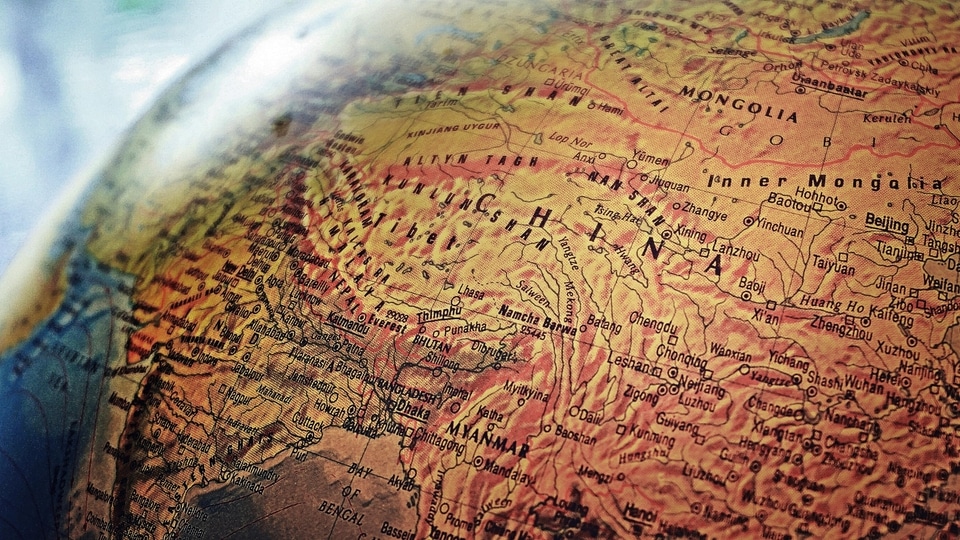
Nepal’s political history is rich and diverse but under-studied. The Himalayan region straddles the vast plains in India on the south and Tibet in the north. It has been a frontier zone for centuries, the pathway for trade and religions.
Over the last two thousand years various dynasties have ruled the Himalayan region. From the Buddhist-leaning Shakyas, to Tibetan-Burmese Kiratas and then the Licchavis. It is strongly hypothesised that the Licchavi princess Bhrikuti Devi became the principal queen of King Songtsen Gampo, King of Tibet, in 622 CE. She is also credited with the spread of Buddhism in Tibet and Nepal. The Thakuris then reigned as a confederation between the 8th and 11th centuries.
Deep Dive

This was followed by the native ‘Khas’ rule, which extended control up to present day Himachal Pradesh, parts of Tibet and Uttarakhand. At this time, the Terai regions of Nepal were under the control of the Karnats of Mithila. By the 14th century, the Khas split into ‘Baise rajyas’ or 22 states, but in these intervening centuries the Khas rule shaped the culture of Nepal. The Khasa language, a form of Prakrit, later became the official language of the country.
After the 14th century, the Mallas, a dynasty with ancient roots, took control of the Kathmandu valley and established their reign that endured until the mid-18th century when they were ousted by Prithvi Narayan Shah, the king of the Gorkhas, one of the 22 states formed during the Khas reign.
In the book “Who Won the Sino-Nepalese War of 1791–1792? A Study in Transcultural Complexity”, authors Axel Michaels and Xu Yunheng dig into the history before the conflict.
“The most famous early encounters are: the journey of Nepali craftsmen Araniko to Peking where he built the White Stupa of Miao-ying Temple in Beijing; and in the Ming dynasty, Chinese delegations visiting Nepal during the reigns of the king Sthitimalla and Jyotirmalla.”
Tibet-China and Nepal Conflict (1789-1791)
The devasted land port of Gyirong where an unknown number of Chinese and foreigners perished in the disaster is situated on the Trishuli river. Nepal and China inaugurated the land port formally only in 2012. These valleys riven by gushing rivers and narrow hairpin bends, however, have been used for at least two millennia for trans-Himalayan movement of goods.
Michaels and Yunheng writes: “Tibet held a pivotal position in the old trans-Himalayan trade network, serving as a vital hub for exporting various commodities to Nepal. Among these goods were salt, wool, silk, horses, and sheep, which formed the backbone of commerce between the two regions. In return, Nepal primarily exported items like rice, lentils, spices, clothing materials, and silver coins, with the latter being a crucial source of revenue for the Nepalese government”.
At least since the mid-18th century tensions had been simmering between Tibet, which was a protectorate under the Qing dynasty of China and the Malla ruled Kathmandu kingdom.
Interestingly, the conflict was seeded by warfare between the increasingly powerful Gorkhas led by Prithvi Narayan Shah and the well-established but decaying Malla kingdom led by Jaya Prakash Malla. The Gorkhas imposed an economic blockade on the Mallas forcing them to lower the quality of silver coins supplied to Tibet by mixing copper. Tibetans resented this and threatened to go war despite assurances from the Gorkha king Prithvi Narayan Shah who had taken over Kathmandu in 1769.
Tibetans were also incensed by the Gorkhas giving refuge to the 10th Shamarpa Lama, M C Gyamtso and his followers who had dissented on religious and political grounds and fled to Nepal. The Gorkhas too were upset with the low quality of salt being provided by Tibetans (in a few decades Nepal would start using salt from India and give up on Tibetan salt).
These tensions reached a boiling point leading to the invasion of Tibet by Gorkha forces who saw the conflict as an opportunity to expand their incipient kingdom. In 1789, the Gorkhas launched the first raid, and forced Tibet to annually pay ₹50,001 in return for lands occupied by Nepal, this was known as the Treaty of Kerung.
In the next couple of years an emboldened Nepal invaded Tibet to punish it for dishonouring the treaty. It was in the year 1791 when Gorkha forces again invaded Tibet but this time they were met with a Chinese response that overwhelmed them forcing them back to Nepal through the same terrain which currently lies devastated by the debris avalanche and flash flood.
The Chinese emperor dispatched over 10,000 troops to protect Tibet and teach their much tinier but fierce neighbour a lesson to remember. The two sides claimed decisive victory but according to scholars both sides suffered immense losses.
Cattle-horns with flaming torches
Both countries memorialised the battles of this Sino-Nepal war in self-congratulatory terms, making it difficult to establish their accuracy. However, an interesting account of Gorkha tactics is worth mentioning.
Describing how the Gorkha forces managed to temporarily defeat the Chinese, Padma Jung Bahadur writes about the tactics of Ranjeet Kunwar, a noted Gorkha commander, in “Life of Maharaja Sir Jung Bahadur, “...with his reduced force he (Ranjeet) directed a night attack upon the enemy in a manner that reminds us of Hannibal. He fastened flaming torches to the horns of several hundred cattle which were driven in one direction, and in another he hung
lights on every conspicuous bush and tree; while he himself marched silently in the dark and attacked the enemy in the rear, leaving the front open."
"The enemy, pressed in one quarter by an actual attack, and seeing lights on their right and left, fancied they had been caught in a trap, and so made their best haste to flee from the destruction which they feared was about to follow. They fled pell-mell, throwing down their arms, and leaving their camp to be plundered by the Nepalese. This happened on the 19th of September 1792, and the scene of the victory has since been called by the new name of Jitpur Fedi.”
The Chinese, however, were too numerous and powerful and despite this setback remained entrenched in Nepalese territory. The Gorkha state was eventually defeated and forced to agree to terms that were face-saving at best in the Treaty of Betravati in 1792.
(HistoriCity is a column by author Valay Singh that narrates the story of a city that is in the news, by going back to its documented history, mythology and archaeological digs. The views expressed are personal.)


