E-Paper



How abnormal is the rainfall in Himachal Pradesh and Uttarakhand this year?
A look at what IMD data shows
Published on: Aug 25, 2023, 00:32:26 IST

 Prefer HTon Google
Share via


Copy link

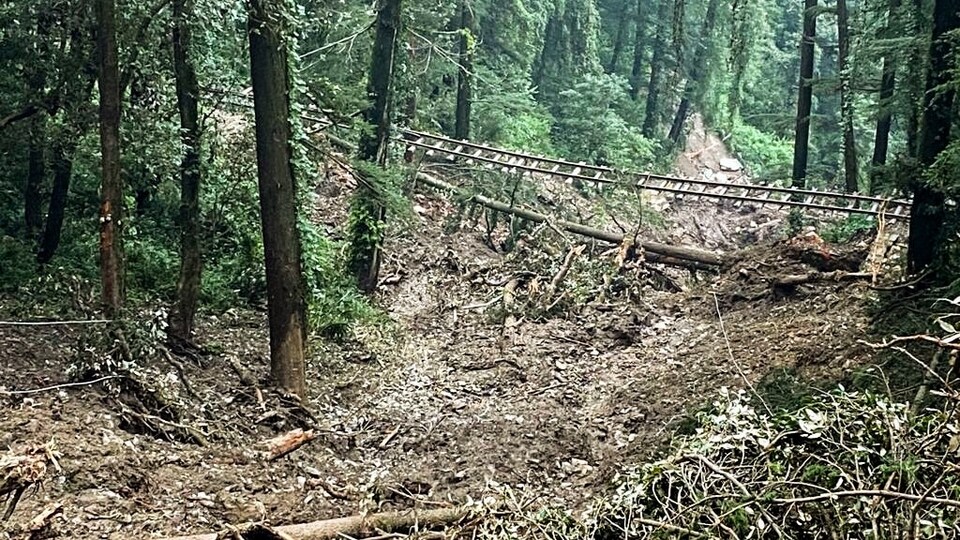
Himachal Pradesh and Uttarakhand are facing a third round of large-scale damage due to rains this monsoon season. While the usual factors or ecologically damaging construction and the Himalayas being a young and therefore active mountain (leading to landslides) are important here, it also needs to be asked whether these two states have received abnormal rainfall this year?
Here is what an HT analysis of India Meteorological Department’s (IMD) gridded database shows.
The charts that matter
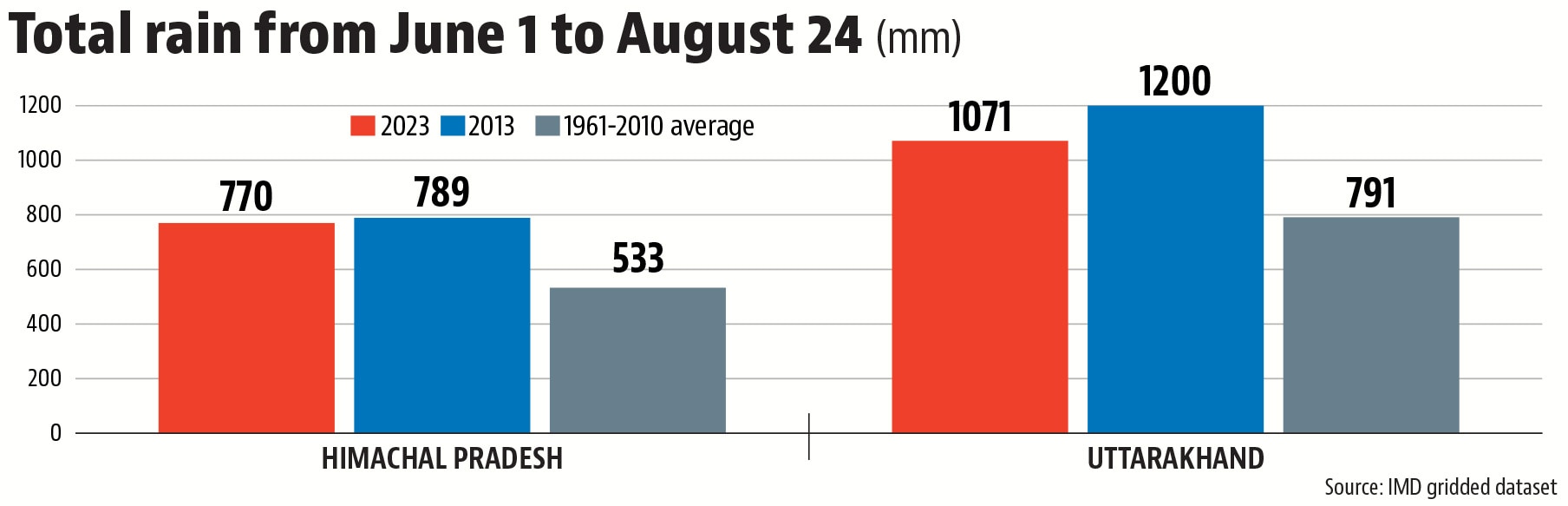
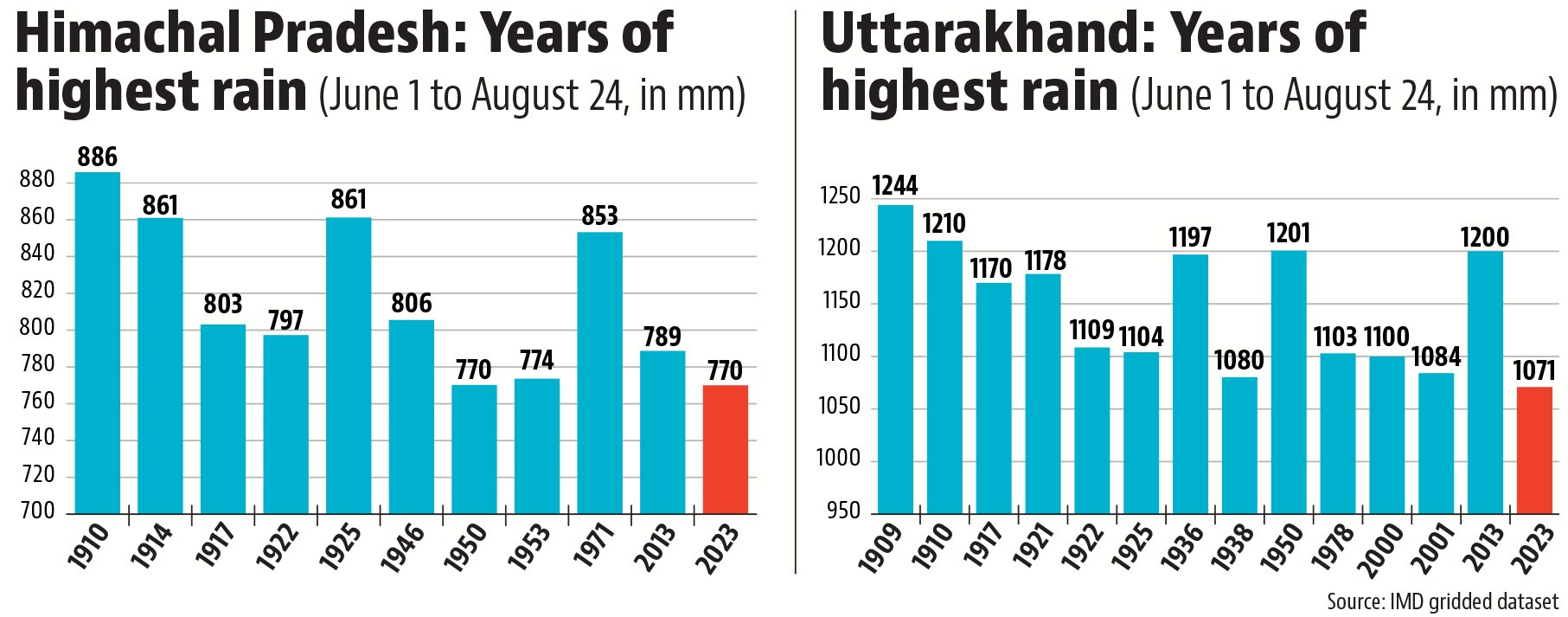
 Cumulative rainfall this year is the highest in a decadeHimachal Pradesh and Uttarakhand have received 770 mm and 1071 mm rain between June 1 and August 24 this year. The last time cumulative rainfall in this period exceeded these numbers was in 2013 when Himachal Pradesh and Uttarakhand received 789 mm and 1200 mm rain. The 2023 cumulative rainfall so far is the 11th highest and 14th highest rain respectively since 1901 and 45% and 35% more than the 1961-2010 average. The 2013 rainfall for Himachal Pradesh and Uttarakhand was the eighth highest and fourth highest since 1901.
- And many instances of higher rainfall than 2013 and 2023 are way back in the pastWhile this year’s rainfall is clearly not the highest, a large part of the population in these states is likely to feel that way. Seven of 10 rainier years than 2023 in Himachal Pradesh and nine of 13 rainier years in Uttarakhand belong to the 1901-1950 period. This means that those under seventy years of age would have seen only two rainier monsoons in Himachal Pradesh (in 1971 and 2013) and four in Uttarakhand (in 1978, 2000, 2001, and 2013).
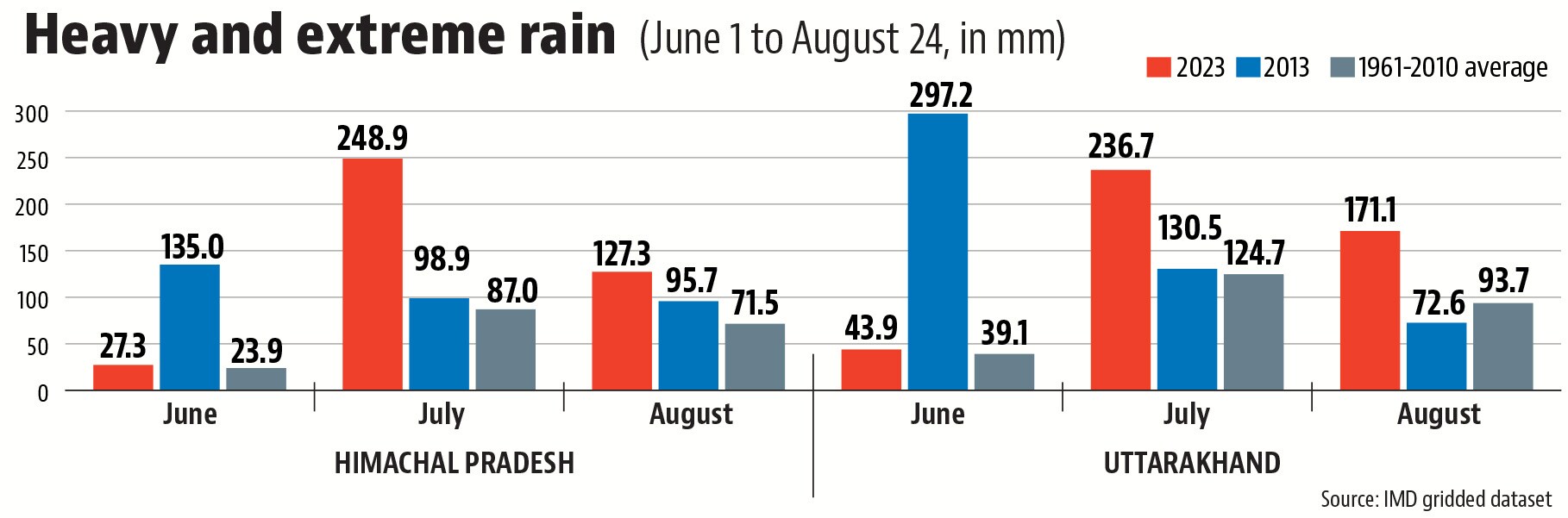
- The intensity of rain this year is also more relentless than in 2013To be sure, cumulative rainfall numbers do not tell us about the intensity of the rain. It is possible for record amount of average rain to be not destructive if it is spread over a large area and is, therefore, not intense. In 2013, this intensity was high largely only in June in the monsoon up to August 24. Heavy and extreme intensity rain – defined as rain of 35.5 mm or more in one place in 24 hours – was ranked highest ever for June but only around 49th or lower in both states in both July and August in 2013. On the other hand, 2023 is ranked high in two of three months. 2023 rain is ranked 29th, second, and 27th highest in Himachal Pradesh in June, July, and August; and 47th, 10th, and 19th in Uttarakhand. The August rank is likely to move higher as more heavy rain is expected in the two states in the last week of August.
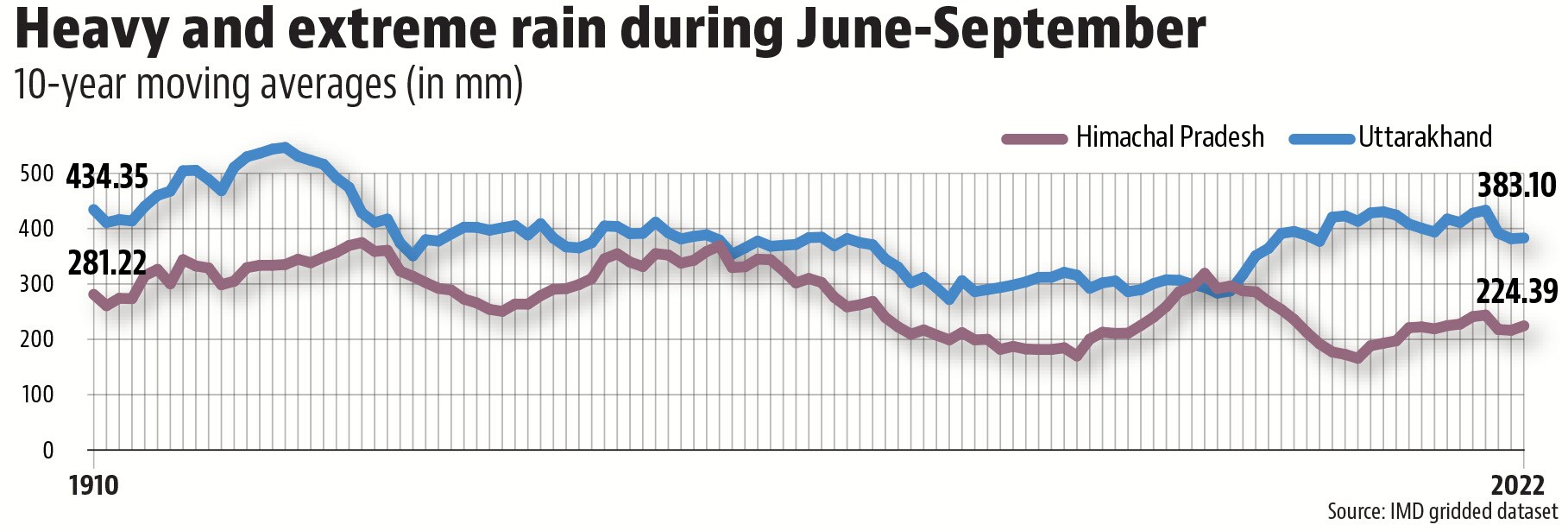
- Looking at past statistics will not help the two statesThe record-breaking rain in 2013 and 2023 in the two states is only the beginning of a trend. As the discussion above shows, there have not been many instances of such high rain in the recent past. Long-term trends from IMD’s gridded dataset show that heavy and extreme rain during the monsoon season has not increased consistently and the recent increase is still lower than all-time high levels. However, what governments need to understand is that these trends are not likely to hold in a future affected by the climate crisis. At least one government report has sounded a warning for the future in Himalayan states. A 2020 report of the earth sciences ministry on the possible impact of the climate crisis on India clearly says that the Himalayan region is going to see more rain (2% to 15% more than in 1976-2005 depending on different scenarios) in the future. What governments need to do is to prepare for a scenario where unprecedented rainfall will become the norm rather than an exception. Infrastructure built without factoring in this contingency will be susceptible to large scale destruction even if such extreme rainfall events take place once in a decade. Himachal and Uttarakhand should have realised that this year.