
How India, Pakistan reached a ceasefire with direct DGMO talks
India and Pakistan announced a full and immediate ceasefire on Saturday. Here's how the peace deal was reached
The cessation of hostilities between India and Pakistan was achieved after a call from the Pakistan DGMO Major General Kashif Abdullah to his Indian counterpart, Lieutenant General Rajiv Ghai early in the afternoon of Saturday. The former's offer to stop the firing and the air attacks was met with the response that India too would do the same, people directly familiar with the matter said.
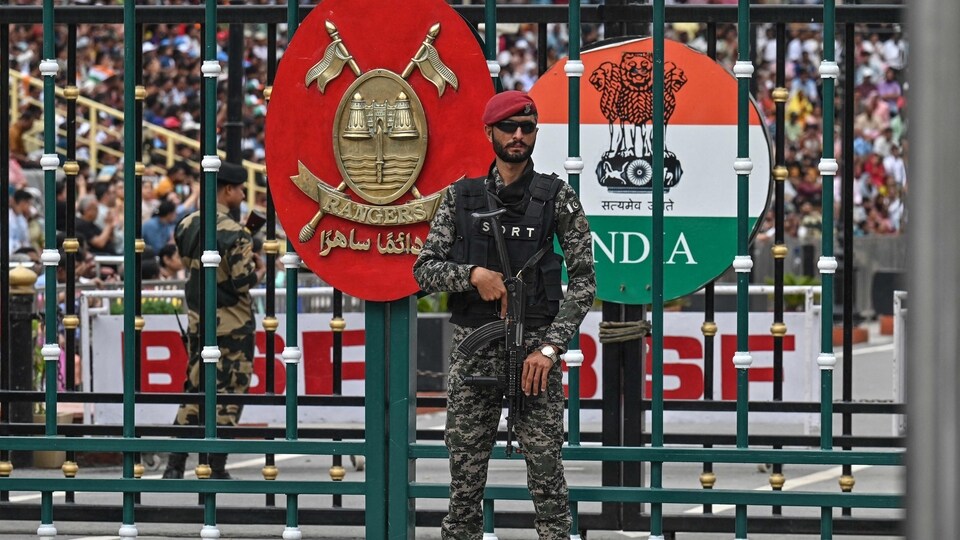
They added that while representatives from the US and various other countries had indeed spoken to top Indian officials including foreign minister S Jaishankar and NSA Ajit Doval, there was no interaction between the foreign ministers of the two countries, nor between the NSAs. This was only fitting, the people said, pointing out that it all started with the terror attack at Pahalgam, which India responded to on the morning of May 7, with targeted strikes at nine terror hubs in Pakistan and PoK, and that since then, India has only been responding, and proportionately and responsibly, to Pakistan’s escalation.
HT learns that the US pushed Pakistan to cease hostilities and that its support for the IMF bailout package for Islamabad may have been conditional to this.
The people said that there were no other aspects to the cessation of hostilities, and that there was no talk of a political dialogue or a meeting. Measures announced by India, including the country walking out of the Indus Water Treaty would remain, they added.
The people said that the sole objective of Operation Sindoor was to strike at terror, and to send Pakistan a message that its sponsorship of terror would not go unpunished, adding that any future terror attack would be seen as an act of war.
ABOUT THE AUTHORShishir GuptaShishir Gupta is Executive Editor at Hindustan Times and one of India's top journalists covering national security, strategic affairs, foreign policy and geopolitics. Over the past three decades, he has extensively reported on India's military, diplomatic and security landscape, covering every major conflict and national security challenge, from the 1999 Kargil War and the 2020 East Ladakh standoff to Operation Sindoor in 2025. He has also covered major terror attacks, including the IC-814 hijacking, the 26/11 Mumbai attacks and the 2025 Pahalgam terror strike, along with numerous Pakistan-backed terrorist incidents in the Kashmir Valley and across India. He has reported on national and state elections for more than three decades. A recognised authority on strategic affairs, Gupta has covered India's nuclear programme since the Pokhran-II (Shakti series) tests in May 1998 and has written extensively on global nuclear issues, Indian diplomacy and the country's expanding global outreach. He has also reported widely on international conflicts and terrorism, with a special focus on the Indian subcontinent. Gupta has interviewed Prime Minister Narendra Modi more than four times, including Modi's first interview with the print media after becoming Prime Minister in May 2014. His other interviews include three with the Dalai Lama, as well as conversations with Benjamin Netanyahu, Amit Shah, Yogi Adityanath, S. Jaishankar, Nirmala Sitharaman and Piyush Goyal. He is the author of Indian Mujahideen: The Enemy Within (Hachette, 2011) and Himalayan Face-off: Chinese Assertion and Indian Riposte (Hachette, 2014). He was awarded the Chevening-Wolfson Joint Scholarship at Wolfson College, University of Cambridge, UK, in 1998 and participated in the International Visitor Leadership Program (IVLP) of the US State Department in 2006. He received the Ben Gurion Prize from Israel in 2011 and the K. Subrahmanyam Prize for Strategic Studies in 2015 from the Manohar Parrikar Institute for Defence Studies and Analyses (MP-IDSA). Since 2024, he has hosted Point Blank, Hindustan Times' weekly YouTube show on global geopolitics.Read More

E-Paper


