
 E-Paper



How the acceptance of electric vehicles among women can be increased
As of March, 2020, women constituted only 6.3% of driving licenses issued, and they remain under-represented as drivers and two-wheeler owners

 Prefer HTon Google


The transition to electric two-wheelers (E2Ws) is essential for advancing low-carbon transport in India. India’s road transport sector is responsible for 12% of the country’s energy-related emissions (280 million tonnes), with two- and three-wheelers contributing 20% of this. Two-wheelers represented 73% of the registered vehicle fleet as of September 2024 and 62% of electric vehicle (EV) sales from September 2023-24. Yet EV penetration is below 6%.
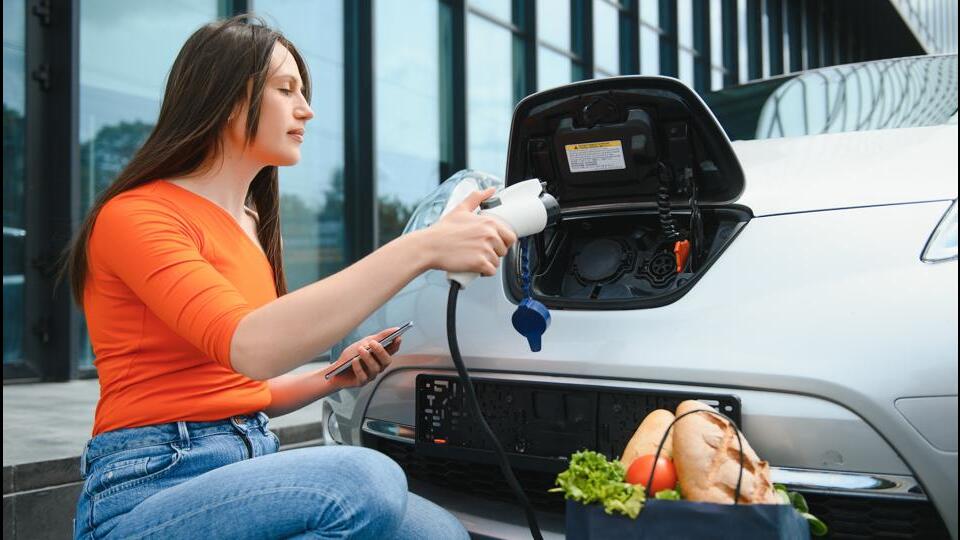
Women are under-represented as drivers, delivery partners and as two-wheeler owners. The gig economy, particularly in last-mile delivery, is projected to grow by $165.6 billion between 2022 and 2027. Women in India constitute only 6.3% of the total driving licenses issued as of March 2020. The number of driving licenses issued to women has increased at a compound annual growth rate (CAGR) of 9.3%. In 2019-20, 12% of all driving licenses were issued to women. Yet, only 4-7% of delivery drivers were women in 2021.
Addressing the multiple barriers impacting the uptake of electric two-wheelers amongst women is vital for ensuring low carbon transport and employment pathways.
Here’s how to do it
1. Create a road map for a gender-just transition to electric mobility systems at the national level.
In 2023, the heavy industries ministry (MHI) was identified as the nodal agency for formulating business rules related to electric mobility. It created a multistakeholder EV Taskforce to address different aspects of the transition to electric mobility. It is recommended that Niti Aayog in consultation with MHI convene a Working Group focused on a gender-just transition to electric vehicles with a focus on employment in the EV value chain and to increase uptake of electric vehicles among women.
2. Develop a gender-sensitive checklist for assessing and approval of charging points.
The Ministry of Power issued revised Guidelines for Installation and Operation of EV Charging Infrastructure (GIOEVCI)- 2024 in September 20241 . The Urban Catalysts developed a framework for assessing the quality of charging stations to improve the user experience, with a focus on women. This framework can be used to provide a checklist that the CPO could use to self-certify their charging point at the time of obtaining approval.
3. Track and publish annual data on registration of EV (2Ws, 3Ws, and 4Ws) vehicles, by gender.
There is no gender-disaggregated data on the registration of vehicles, both ICE and EV. The Vahan database offers information on the total number of registered vehicles categorized by fuel type at both the state and RTO levels. Access to gender-disaggregated data is essential for understanding vehicle-asset ownership rates among women and for implementing evidence-based measures to enhance the gender responsiveness of the EV ecosystem.
Also Read: EV sales surge worldwide. Is India ready to embrace battery power?
Stockholm (Sweden) is one such example which collects and publishes gender-disaggregated vehicle registration data. Form 20- filled at the time of vehicle registration, should be updated to collect gender of the vehicle owners. Since Form 20 is standardised across all states in India, the Ministry of Road Transport and Highways will have to update the form.
4. Develop gender-responsive vision, goals and set targets for adoption of E2Ws among women in state EV policies.
Our analysis of Delhi and Tamil Nadu EV policies indicate that both policies did not account the differential risks, vulnerabilities, and barriers women face in electric mobility systems as users, service providers (such as drivers, mechanics, etc.), and decision-makers, including the socio-cultural and economic realities. The TN EV Policy 2023 has provided an additional subsidy of ₹2000 per month for six months for skilling and reskilling women and other marginalised groups. Gender experts (with expertise in mobility, finance and community engagement) are required in EV task forces to support the state nodal agencies (SNA) in increasing uptake of EVs amongst women in the state, and increase women’s employment in the EV value chain.
5. Provide an additional purchase subsidy to women for electric two-wheelers.
In Delhi, the total cost of ownership2 (TCO) for E2Ws is 29% to 58% higher for women as compared to men, largely due to differences in vehicle utilisation. Men travel 1.3 to 1.7 times more than their female counterparts, depending on commercial or personal users. The difference in per kilometre costs becomes significant as compared to the acquisition cost of the E2W when considered on annual and life time basis. There is a significant gap in women’s financial literacy, particularly in areas such as credit assessment, customised financial products, loan and lease schemes, required documentation, and repayment terms. Financial institutions could consider recruiting more female business correspondents to provide essential information related to financial loan processes, products and support throughout the process.
Also Read: Anand Mahindra reveals how he will compete with Elon Musk if Tesla comes to India
The BC Sakhis under the National Rural Livelihoods Mission can be adapted for resource poor settlements in urban areas or peer-to-peer credit platforms. Women receive credit for only 27% of the deposits they make, compared to 52% for men. Co-applicants are requested and higher interest rates are charged when applicants have a zero or low CIBIL score. Since an E2W can serve as a collateral, the requirement of a guarantor or co-applicant can be reviewed if a woman has a letter of employment or engagement.
6. Provide a training-to-employment subsidy for women EV technicians and driving instructors in empaneled private institutes and include such courses in ITIs
Our survey respondents reported waiting for two-three days to submit their vehicles for service with turnaround times ranging from three to six months.
There is a shortage of skilled EV technicians for the repair and maintenance of E2Ws. The curriculum offered by training institutes covers key topics such as the fundamentals of electric vehicle systems, servicing and maintenance of E2Ws and E3Ws, including fault diagnosis and troubleshooting, battery management systems, EV wiring, lithium-ion battery testing, battery fitting, and replacement procedures. Typically, these short-term courses do not offer placement guarantee but instead provide information on job vacancies. Based on secondary information, few women typically participate in these courses and these institutions do not specifically target women as students for this program. A training subsidy is proposed to encourage skilling institutes to forge partnerships with OEMs to offer learning to earning courses for EV technicians and driving instructors and attract women to these roles. It will be important to work with decision makers in the households, ensure fair wages and safe workplaces so that women are attracted, hired and retained.
7. EV industry, with driving training organisations, fleet companies, delivery or service companies and financial institutions, can take proactive measures to attract women as buyers of E2Ws
OEMs should adopt gender-inclusive advertising that highlight women riders and emphasize key benefits of E2Ws for women, such as ease of use, safety, and environmental impact. These include the weight of the E2W, the ease of parking, seat width, storage capacity and how their digital tools ease the process of 2 TCO is calculated over a 10-year ownership period and includes the cost of battery replacement.
Also Read: Elon Musk’s Tesla likely to begin India rollout through imported EVs: Report
Additionally, it factors in the Delhi state subsidy of ₹5,000 per kWh and an ₹10,000 subsidy for Electric Mobility Promotion Scheme 2024. navigation in plains, driving on hilly terrain and slopes. Finally, clearly outlining a responsive grievance redress mechanism may be beneficial and ease concerns around emergency situations. This will enable women to make informed decisions regarding E2W ownership and use. OEMs can collaborate with women-oriented organisations to raise awareness about E2Ws.
Sonal Shah is the founder of The Urban Catalysts. This research was co-authored with Manisha Sharma, Lakshmi Radhakrishnan, Sutanu Pati, Priyadarshi Singh, Namita Danels and Adithya Dushyanth.


