E-Paper



How the LGBTQ+ movement grew over the years
The late 1980s-'90s were a tumultuous time for the public expression of gender and sexuality in an India that was entering the fast lane of global capitalism

 Prefer HTon Google


In the heart of the glorious cacophony of Hazratganj market stands a multilevel parking lot, its modern facade jutting out incongruously against the crumbling edifice of centuries-old landmarks. Yet, it was not always here.
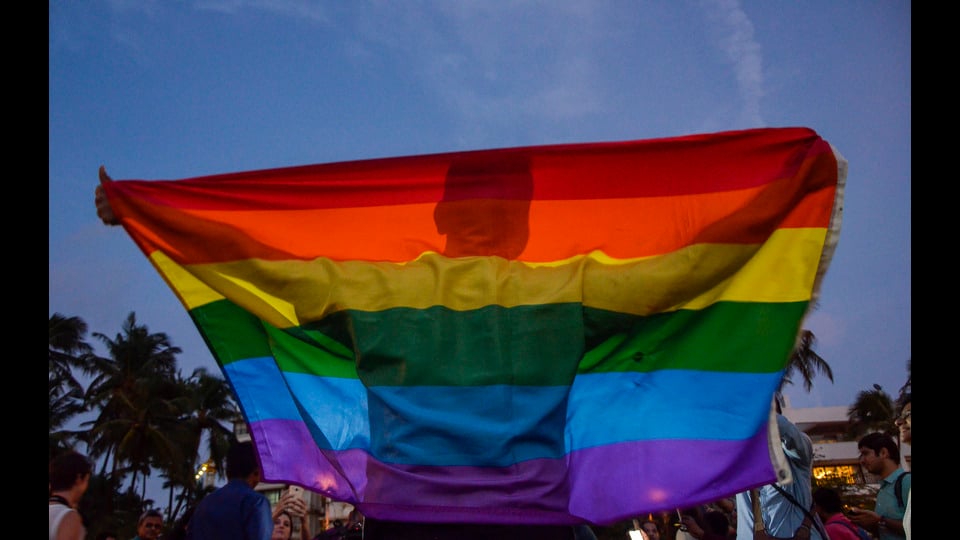
In its place once stood an imposing police station, one that turned into a battleground for India’s Lesbian, Gay, Bisexual, Transgender, Queer (LGBTQ+) movement one sultry afternoon in July 2001. That day, the local police picked up activist Arif Jafar and his co-workers from a non-governmental organisation that worked among vulnerable queer populations, ransacking their office, seizing HIV/AIDS literature, dildos, condom boxes, video cassettes, and thrashing the men in public before throwing them in jail.
For the next 47 days, Jafar and his fellow activists were beaten in jail by other inmates and the police, their revulsion at encountering a gay man writ large on their faces as the local media reported wildly untrue stories of “gay sex rackets” and “gangs”. By the time they limped out of jail, their predicament had brought home to India’s queer movement the horrors of their criminalised existence and the stigma attached to them.
Jafar, one of the petitioners in the landmark 2018 Supreme Court judgment that decriminalised homosexuality, continues to carry with him memories of the gruelling struggle it took to dispel the taint and convince the world that queer people deserved a life of dignity and respect.
“In the 90s, no one even wanted to talk to us. If we mentioned being gay, we’d be slapped or abused. Today, even if they don’t agree with us, they will let us speak our truth,” he said.
On Tuesday, as India’s queer movement reeled from the setback of the Supreme Court refusing to accord recognition to same-sex couples, many activists such as Jafar pointed to the extraordinary journey of LGBTQ+ rights in a country where being queer could be punished with life imprisonment just five years ago. “The change was made possible with painstaking advocacy on the ground. It can be made possible again,” he said.
Battling discrimination
“Many people deny that homosexuality exists in India, dismissing it as a phenomenon of the industrialised world. Others label it a disease to be cured, an abnormality to be set right, a crime to be punished. The present report has been prepared with a view to showing how none of these views can stand the test of empirical reality or plain and simple common sense.”
This is how a 70-page booklet with a pink cover titled Less Than Gay: A Citizen’s Report on the Status of Homosexuality in India described same-sex relationships. Published in 1991 by a collective called the Aids Bhedbhav Virodhi Andolan (ABVA), the report was the first document of its kind that broke the silence around LGBTQ+ lives.
The late 1980s and early 1990s were a tumultuous time for the public expression of gender and sexuality in an India that was also shedding its socialist skin and entering the fast lane of global capitalism. In 1990, Ashok Row Kavi founded Bombay Dost. Not only was Row Kavi one of the first gay men to come out publicly — in 1986, he gave an interview to Savvy magazine — he also went on to work on HIV/AIDS, co-founding an organisation called Humsafar Trust in the early 1990s.
The next year, Delhi-based activist, Giti Thadani, started a network called Sakhi, where lesbian women could communicate via letters. The same year, Delhi-based women’s group, Jagori, started a research project on single women (Ekal Aurat).
Under the glare of the law and social dogma, letters and anonymous columns in various newspapers, and newsletters and magazines run by LGBTQ+ organisations became a lifeline. One such organisation was the Counsel Club in Kolkata, founded by activist Pawan Dhall in 1993. The letters these groups received were varied, and formed a rich repository of not only the lives of lonely, isolated or confused queer individuals but also a society struggling to come to terms with its desires, fears and aspirations.
Fight to be recognised
But it was not just desire that was being talked about. So was marriage, and various forms of it. In the winter of 1987, policewomen Leela Ramdeo and Urmila Srivastava met on the job in Madhya Pradesh, fell for each other, and decided to get married. They gathered a few friends and went to a temple in Sagar town, exchanged vows and took turns to place a garland of flowers around each other’s necks in a “gandharva” marriage ritual presided over by a priest, academic Ruth Vanita noted in her 2005 book, Love’s Rite: Same-Sex Marriage in India and the West.
After the ceremony, the two women went to a local studio for a customary photo. A few days later, they were back at work. But wedded bliss was not theirs to be. A photo of the ceremony was leaked, some say by a co-worker, and the police moved swiftly to fire and imprison them. They eventually were freed, and fled to Srivastava’s ancestral village, melting away from public memory.
“Since at least 1987, low-income, non-English speaking couples, mostly women, including Dalits, Adivasis, factory workers, fisherwomen, agricultural labourers have been getting married by Hindu rites. This continued through the 1990s,” said Vanita.
She pointed out that at the time, same-sex marriage was not recognised anywhere in the world – even now, only around 40 countries accord it rights. “So we have been getting married, we are married and we will get married. Courts and governments can deprive us of our legal rights and treat us as second-class citizens…But we will still be married,” she added.
Lack of legal support
After the top court decriminalised homosexuality in 2018, a phalanx of people – young and old, cis and trans, educated and unlettered, rural and urban – approached the judiciary to shield themselves from familial and social hostility. Many of them – such as Anita Kumari and her partner, Priyanka Singh, both residents of Gaya town in Bihar, or S Sushma and U Seema Agarval, two university students from the rural parts of Madurai district in Tamil Nadu – did so while affirming their right to love, and be in relationships.
To be sure, the existence of forms of marriage didn’t obviate the need for official recognition, quite the opposite. “Courts and governments can deprive us of our legal rights and treat us as second-class citizens, causing us immense hardship and what is known as the “gay tax”, where we have to pay much higher financial, social and emotional costs to achieve simple things that heterosexual people take for granted, and often cannot achieve these at all,” said Vanita.
And often, these came with tangible threats – such as for Jaya Verma and Tanuja Chauhan, who got married in 2001 with Hindu rites and the support of their families in front of 100 guests, only for the registrar in Patna to tell them that their marriage couldn’t be registered. “So they were married but since they had no legal rights, their landlord asked them to vacate their flat,” added Vanita.