
 E-Paper



HT podcast: Mahatma’s march
But once the Congress declared its aim was independence, it turned to the only man who could mobilise the masses — the Mahatma.


The nationalist movement was at a crossroads by the end of the 1920s. On the one hand, the British had shown no inclination to give Indians the right to self-rule and continued with their repressive methods. The Simon Commission, meant to suggest constitutional reforms, had no Indians. On the other hand, anger against the colonial rule had been building up, with the Congress finally declaring that its aim was purna swaraj or complete independence.
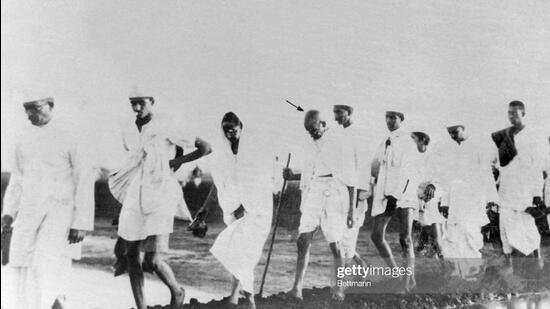
But once the Congress declared its aim was independence, it turned to the only man who could mobilise the masses — the Mahatma. And the Mahatma turned to the most unusual commodity, and the most unusual method to challenge the Empire. He decided to defy colonial salt tax laws, and he decided to do so by leading a march.
In this episode, Tridip Suhrud, among India’s most eminent Gandhian scholars, takes us back to the iconic Dandi March.
He explains why salt was so important both for the British and for Gandhi, for completely different reasons; reconstructs the Mahatma’s meticulous preparation for the march and design for what was meant to be grand political theatre; and how the march captivated the masses, captured the attention of the international media, and stunned the British. Mahatma Gandhi had inaugurated the Civil Disobedience Movement in a style that was unparalleled in the history of the world.
Link to podcast: https://www.htsmartcast.com/history-podcasts/1947-road-to-indian-independence/ep-8-the-mahatmas-march/


