
 E-Paper



Imran Khan’s Army Chief move serves many purposes. Kashmir isn’t one of them
In General Bajwa’s rather well-publicised appointment order that was put out on social media, Imran Khan attributed his decision to maintain status quo to the “regional security environment”.

 Prefer HTon Google


Pakistan Prime Minister Imran Khan’s shrill campaign to internationalise India’s move to end Jammu and Kashmir’s special status is an effort to use Kashmir for domestic power politics, two people in India’s national security establishment have said. The unequivocal interpretation comes a day after Imran Khan gave Army Chief general Qamar Javed Bajwa a three-year extension.
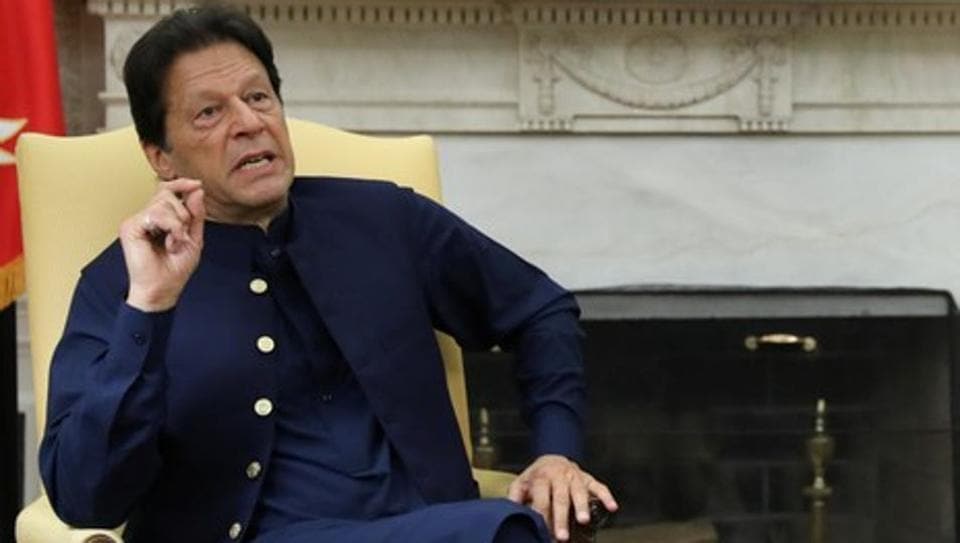
In General Bajwa’s rather well-publicised appointment order that was put out on social media, Imran Khan attributed his decision to maintain status quo to the “regional security environment”.
It was a thinly-veiled reference to tension with India, much of it driven by Imran Khan’s belligerent statements after New Delhi carved J&K into two union territories. It was, after all, Imran Khan who declared that there was information with the Pakistani army that New Delhi intended to carry out some big action, more sinister than the Balakot air strikes.
Bajwa’s extension is unusual for more reasons than one.
For one, the army chief’s original tenure is only going to end three months later. When General Bajwa was first appointed by the Nawaz Sharif government, the order had come in just a few days before he was supposed to take charge on 29 November 2016.
Watch| Bajwa extension: How Imran Khan is using Kashmir for domestic power politics
“That the order was issued at a time Pakistan is trying to keep the attention focused on Kashmir indicates there is a link between the two, not the one that the Pakistan PM’s order suggests,” a senior Indian security official said.
“It is an attempt to use Kashmir to serve their interests,” said a second official in the national security establishment, pointing how General Bajwa’s extension would alter the line of succession in the Pakistan Army. In 2022 when it is time for Gen Bajwa to step down at the end of his extended tenure, all the corp commanders who could have made it to the top in the army would have retired.
Lt General Faiz Hameed, who was abruptly appointed as Pakistan’s Inter Services Intelligence chief after shunting out the incumbent Lt Gen Asim Munir just two months earlier, would be at the top of the pecking order.
Lt Gen Hameed and Gen Bajwa go back a long way. Like General Bajwa, Lt Gen Hameed is also a career infantry officer from the Baloch regiment.
Besides, India’s national security establishment believes, Lt Gen Hameed who has a reputation of political manipulation, has earned his favours with the ruling Pakistan Tehreek-e-Insaf back in 2017 when played a key role in building the 2017 protests of Tehreek-e-Labbaik Pakistan (TLP) to weaken then Prime Minister Nawaz Sharif’s government, and later engineering a deal with the Barelvi militants. As and when he does get the upgrade as army chief, Lt Gen Hameed will be Pakistan’s first ISI chief to hold the post in the nation’s history.
But as a strategy, Prime Minister Imran Khan isn’t the first in Pakistan to leverage developments around Kashmir to maximise his own interests. Back in 2001, Gen Pervez Musharraf had used his India visit for the Agra Summit to upgrade himself as Pakistan’s President as well as the army chief.


