
 E-Paper



Inadequate space for cheetahs in Kuno National Park, claims ex-WII official
The cheetahs from the two African nations have been brought to India under the ambitious inter-continental translocation programme to revive their population.

 Prefer HTon Google


The Kuno National Park (KNP) of Madhya Pradesh has “inadequate space” for the cheetahs translocated from Africa, a former official of the Wildlife Institute of India (WII) has claimed after two felines died in less than a month. The national park is spread over an area of 748 square kilometre and has a buffer zone of 487 square kilometre and experts suggest that a cheetah needs about 100 sq km area for its movement. (Also Read | Poacher arrested from Kuno National Park, forest officers say no risk for cheetahs)
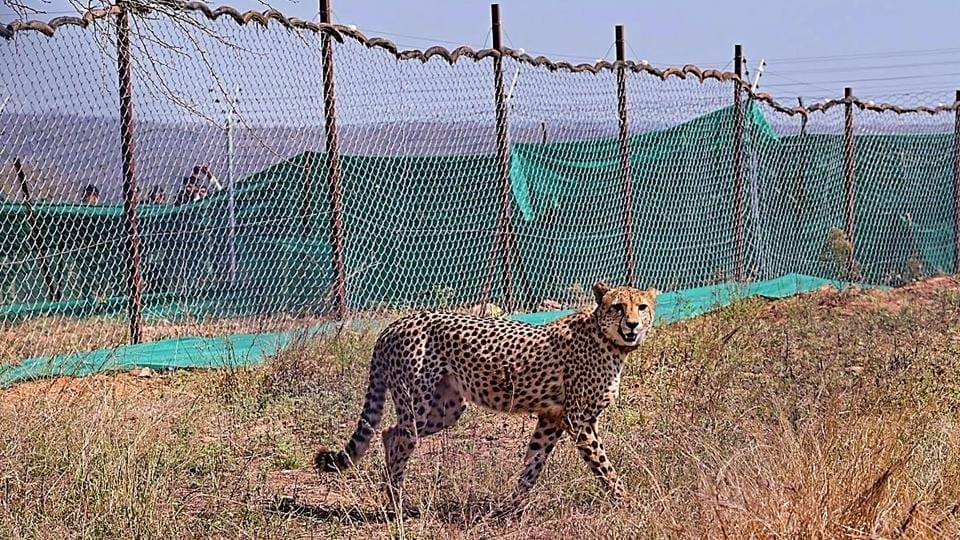
Yadvendradev Vikramsinh Jhala, the former dean of WII, told news agency PTI that the Kuno National Park has “inadequate space” for these animals but maintained that the felines can thrive if they can adapt to the larger landscape in Kuno which includes agricultural parts, forested habitats, and communities living within the area. He also suggested it is critical to establish multiple populations managed as a metapopulation, where animals are moved from one location to another, according to PTI.
“A 750 sq km area alone is not sufficient...We have to make (more than one) cheetah population and manage it like a metapopulation where you move animals from one place to another. It is very essential to establish a second, third population," PTI quoted Jhala as saying.
"So, it all depends on how we manage the communities, ecotourism, giving them incentives, making sure that (human-animal) conflict levels are appropriately compensated if there are any," he added.
When asked about the metapopulation, he said KNP is one site, Mukundara Hills Tiger Reserve (in Rajasthan) is one site, Gandhi Sagar Sanctuary and Nauradehi Wildlife Sanctuary in MP are two other sites.
“Each of these sites in itself is not viable. To shift one or three cheetahs after one, two generations from here to there is called metapopulation management so that there is genetic exchange. This is an important exercise. Without this, we can't manage cheetahs in our country,” he said.
“Without this, we can't have viability in the long run,” Jhala added.
A six-year-old cheetah brought from South Africa, named Uday, died last Sunday weeks after Sasha, brought in the first batch of cheetahs from Namibia, died of renal failure. A post-mortem examination of Uday indicated a heart attack was the cause of death, with experts suggesting that the condition may have itself been triggered due to a toxin that entered the big cat’s bloodstream.
The National Tiger Conservation Authority (NTCA), which is overseeing the ambitious cheetah reintroduction project in the country, has called a meeting in New Delhi on Monday in the wake of the death of two cheetahs.
(With PTI inputs)


