
 E-Paper



India believes in two-state solution: Modi on Palestine issue
The two-state solution envisions independent Israeli and Palestinian states coexisting side by side peacefully. The Palestinians see east Jerusalem as their future capital.


India believes in a two-state solution in which both Israel and a future Palestinian state coexist peacefully, Prime Minister Narendra Modi said on Monday as he supported all efforts to find an acceptable solution to all the pending issues, including Jerusalem.
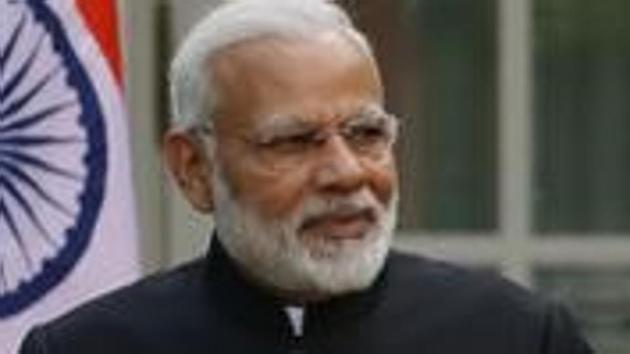
“A final-status agreement should respect the sentiments and address demands of all affected parties,” said Modi, who will travel to Israel on Tuesday on a three-day visit - the first-ever by an Indian Prime Minister.
“We believe in a two-state solution in which both Israel and a future Palestinian state coexist peacefully,” he said in an interview to the pro-government daily ‘Israel Hayom’.
India supports all efforts to find an acceptable solution to all the pending issues, including Jerusalem, he added.
The two-state solution envisions independent Israeli and Palestinian states coexisting side by side peacefully. The Palestinians see east Jerusalem as their future capital.
During his visit to Israel, Modi will not travel to Ramallah, the seat of the Palestinian Authority, to meet with Palestinian leaders, as is common for visiting foreign dignitaries.
He, however, met Palestinian Authority President Mahmoud Abbas in New Delhi in May.
“I assume the question refers to our embassy in Tel Aviv. We will take a decision on that after both sides have come to an agreement on Jerusalem,” Prime Minister Modi said in response to a question whether India will move its embassy there.
Asked whether India would take a more pro-Israel posture in the UN, Modi said India’s positions at the UN are based on the merit of specific issues and driven by the country’s core values and principles.
“We remain engaged with all our partners, including Israel, in finding optimal outcomes at the UN and other multilateral fora that reflect our commonly shared priorities and concerns. India is not in favour of singling out any country at the UN,” he added.
Asked whether India still considers itself unaligned with either the West or the East, Modi said, “We believe in the philosophy of ‘Vasudhaiva Kutumbakam,’ which means ‘the world is one family.’ We want to engage constructively with both the East and the West.”


