E-Paper



“India not a G7 member’: Delhi brushes aside G7 oil price cap on Russian crude
Foreign secretary Vinay Kwatra said India’s purchase of Russian oil is not done under any government-to-government mechanism but Indian entities buy oil from the market

 Prefer HTon Google


NEW DELHI: With energy security set to be a key part of deliberations at the Shanghai Cooperation Organisation (SCO) Summit, India on Thursday brushed aside the G7 price cap on Russian oil and said crude purchases are based on the country’s energy security needs.
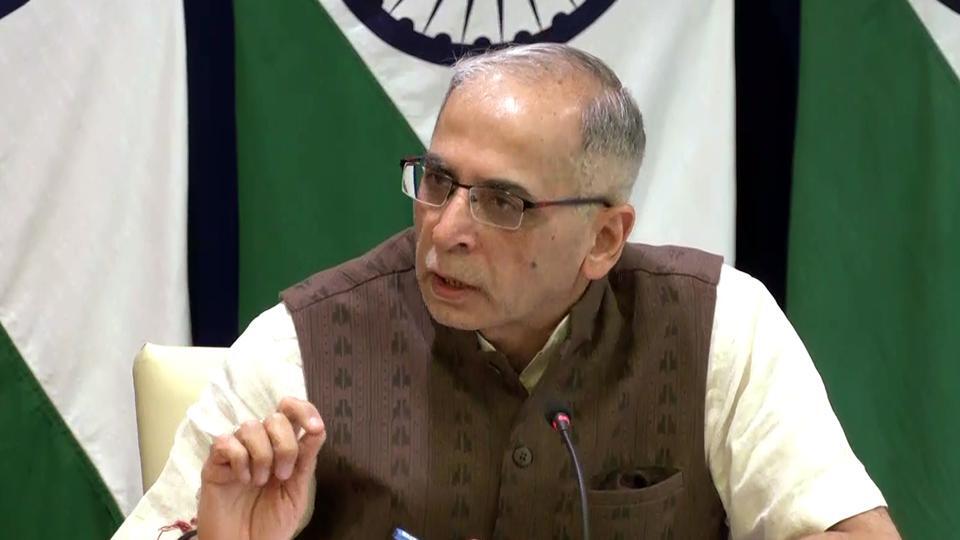
India’s purchases of Russian oil are not done under any government-to-government mechanism and Indian entities buy oil from the market to fill the country’s energy security requirements, foreign secretary Vinay Kwatra told a news briefing ahead of Prime Minister Narendra Modi’s departure for the SCO Summit in Uzbekistan.
Members of SCO will discuss energy security as part of their talks on economic cooperation at the grouping’s meeting in Samarkand, he said.
“India is not a member of the G7, just for the record. Deeper discounts, market pricing – look, we have said this several times that when Indian entities go out and try to respond to India’s needs of energy security and procure oil, they essentially procure it from the market,” Kwatra said.
“These are not government-to-government purchases...On the price cap coalition, what form it takes, what shape it evolves into is something I think which the countries that have floated that idea perhaps can better answer to that,” he added.
Modi is expected to discuss the Ukraine conflict and energy security both at the SCO Summit and in bilateral meetings with leaders such as Russian President Vladimir Putin, people familiar with the matter said.
The US has said it is determined to enforce the G7 price cap, which was announced earlier this month by that grouping’s finance ministers to deny Russia revenues to fund its war in Ukraine. The G7 – which comprises Japan, the UK, the US, Canada, France, Germany and Italy – plans to prohibit the provision of services for maritime transportation of Russian oil unless it is purchased at or below a price level determined by countries implementing the price cap.
Indian refiners, which rarely bought Russian crude before the Ukraine conflict, increased imports to 757,000 barrels per day (bpd) during April-August, compared to 20,000 bpd a year earlier, according to data from industry sources cited by Reuters.
Russian ambassador Denis Alipov said on Thursday Russian crude supplies to India will continue. “India, being a consumer...is looking for the cheapest offers and Russia, being deprived of its traditional markets in Europe...is looking for new markets. So, this meeting between best available options and best available offers is driving the trade and our relationship in the energy sector. It is natural, we think, this trend will continue in a structured manner,” he told ANI.
Soon after Russia invaded Ukraine in February, the US and its allies had pressured India not to accelerate purchases of discounted Russian commodities, including oil. India has maintained that its crude purchases will be decided solely by energy security needs.
At a time when the US and the European Union are winding down imports of Russian energy, senior US officials have said they believe low- and middle-income countries will be the main purchasers of cheap Russian oil under the price cap. They said India will have access to lower price and more affordable energy, and a purchaser such as an Indian refinery could use the price cap as “newfound leverage” to negotiate lower prices.