E-Paper



India hopes to rebuild ties with Canada based on mutual trust, sensitivity: MEA
The external affairs ministry blamed the downturn in bilateral ties to the “licence that was given to extremist and secessionist elements” in Canada.

 Prefer HTon Google


India on Friday said it hopes to rebuild ties with Canada based on “mutual trust and sensitivity”, striking a conciliatory tone after bilateral ties plummeted to an all-time low over the killing of Khalistani separatist Hardeep Singh Nijjar and New Delhi’s concerns at the activities of extremist elements on Canadian soil.
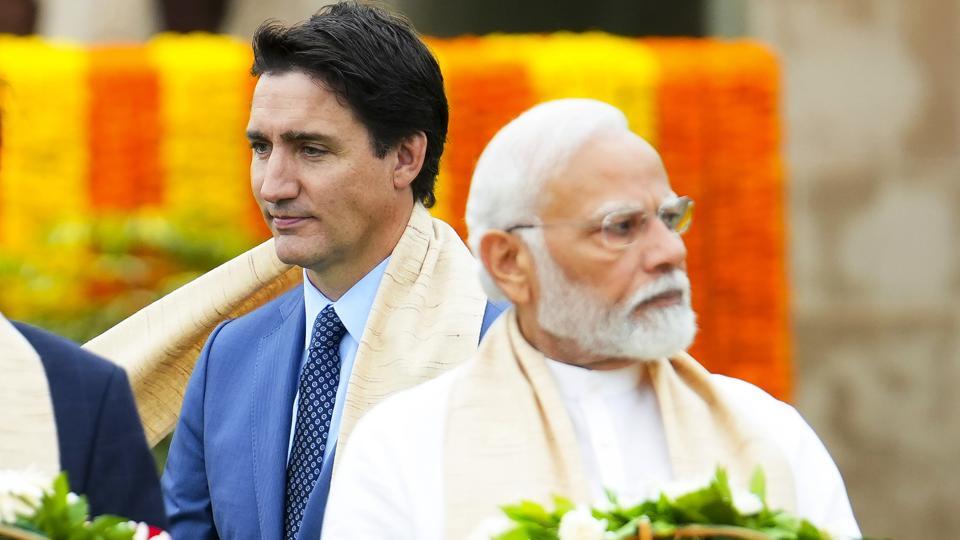
External affairs ministry spokesperson Randhir Jaiswal blamed the downturn in bilateral relations to the “licence that was given to extremist and secessionist elements” in Canada.
“Our hope is that we can rebuild our ties based on mutual trust and sensitivity,” he said while responding to a question during a media briefing on the current status of bilateral ties in the aftermath of a recent visit to India by the Canadian intelligence chief.
India-Canada ties went into free-fall after former prime minister Justin Trudeau alleged in September 2023 that Indian government agents were linked to the murder of Nijjar, who was gunned down by unidentified men in Surrey, British Columbia, earlier that year. India denounced the accusation as “absurd” and has maintained that Canada has never provided evidence to back up its allegation.
Since then, both sides have expelled a number of diplomats and traded charges over the killing of Nijjar. The Indian side has also accused Canada of providing a “safe haven” to anti-India elements such as Khalistani separatists. The bilateral relationship was hit again last October when Canadian authorities named the Indian envoy and five other diplomats as “persons of interest” in the probe into Nijjar’s murder.
India withdrew its high commissioner and the other diplomats and expelled an equal number of Canadian diplomats from New Delhi. Since then, however, the security authorities of India and Canada have resumed contacts and both sides are eyeing the possibility of appointing new high commissioners, as was first reported by HT on March 20.
A team from the Royal Canadian Mounted Police (RCMP) travelled to New Delhi in January and met Indian law enforcement officials, including representatives of the National Investigation Agency (NIA) and Enforcement Directorate (ED). People familiar with those talks said they included cooperation to tackle organised criminal gangs and the Khalistan issue, besides the Nijjar investigation.
Canadian Security Intelligence Service (CSIS) chief Daniel Rogers was among intelligence and security officials from some 20 countries who attended a security conclave hosted by National Security Adviser Ajit Doval on March 16 – another signal of the resumption of contacts between security agencies.
The exit of Trudeau, who triggered the diplomatic row over the Nijjar killing, and his replacement by Mike Carney as the Canadian prime minister too paved the way for improving ties. Carney has said he wants better ties with India, especially in trade.