
 E-Paper



India’s response to Covid-19 outbreak pro-active, says govt
The government said a comprehensive response was in place at its borders much before the World Health Organisation (WHO) declared Covid-19 as a public health emergency of international concern on January 30.


The Centre emphasised on Saturday that India’s response to the coronavirus disease (Covid-19) was pro-active, and rubbished allegations that “prosperous Indians” were allowed to return from abroad without mandatory screening at airports. The government contended that over 3.6 million passengers were screened at 30 airports, 12 major and 65 minor ports and at land borders.
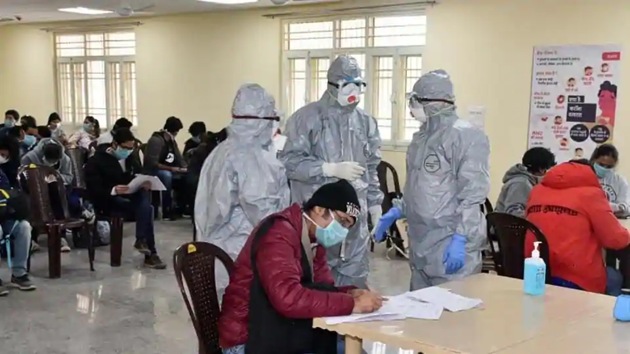
In an official statement, the government said a comprehensive response was in place at its borders much before the World Health Organisation (WHO) declared Covid-19 as a public health emergency of international concern on January 30.
Screening of incoming air passengers followed by suspension of visas and ban on international flights was done much ahead of any other country, it added. The government stressed that thermal screening of incoming international passengers from China and Hong Kong was started on January 18, while first Covid-19 positive case was detected in India on January 30.
A look at the global scenario would highlight that Italy and Spain, which are devastated by Covid-19, started screening of travellers 25 days and 39 days, respectively, after the first reported case, the statement said.
The Centre, according to the statement, took several proactive measures such as travel restrictions, adding more countries and airports for screening, suspension of visas and self quarantine to effectively contain, prevent and manage the spread of Covid-19.
It maintained that travel advisories were revised and thermal screening was expanded to all airports as the global spread of the disease evolved.
Passengers were quarantined or sent to hospitals, based on risk assessment by health authorities, after they were screened at airports, the government said.
The details of even those who were cleared by health authorities were shared with the state authorities in a bid to keep them under surveillance by respective state/Union Territory government mandatorily for 14 days, it added.
“The statement that ‘prosperous Indians’ were allowed to return without screening, is preposterous,” the government said.
A section of social media users have been alleging that the lockdown was ordered without proper preparations on the part of the government.
The government said every traveller, including Indians returning after business, or tourism, students and foreigners, was screened and each individual was tracked down who tried to avoid surveillance or who did not follow quarantine measures.
So far, the Centre has held 20 videoconferences chaired by Union health secretary Preeti Sudan with state governments and six by cabinet secretary Rajiv Gauba with the state chief secretaries to step up the preparedness to tackle the Covid-19 outbreak.
Integrated disease surveillance system, including monitoring of international travellers, have also been put in place.
The government also listed a chronology of its decisions taken:
Jan 16: Advisory issued to avoid travel to China
Jan 18: Thermal screening of passengers from China and Hong Kong
Jan 30: Strong advisory issued to avoid travel to China
Feb 3: E-visa facility suspended for Chinese nationals
Feb 22: Advisory issued to avoid travel to Singapore; universal screening for flights from Nepal, Indonesia, Vietnam, and Malaysia
Feb 26: Advisory issued to avoid travel to Iran, Italy, and South Korea. Passengers coming from these countries to be screened, and maybe quarantined based on screening and risk assessment
March 3: Suspension of all visas for Italy, Iran, South Korea, Japan, and China; compulsory health screening for passengers arriving directly or indirectly from China, South Korea, Japan, Iran, Italy, Hong Kong, Macau, Vietnam, Malaysia, Indonesia, Nepal, Thailand, Singapore, and Taiwan.
March 4: Universal screening of all international Flights. Quarantine or isolation at home or sent to hospital-based on screening and risk profile
March 5: Passengers from Italy or South Korea need to get a medical certificate before entry
March 10: Home isolation: incoming international passengers should self-monitor health and follow govt. Dos and don’ts: passengers with travel history to China, Hong Kong, South Korea, Japan, Italy, Thailand, Singapore, Iran, Malaysia, France, Spain, and Germany to undergo home quarantine for a period of 14 days from the date of their arrival
March 11: Compulsory quarantine: Incoming travellers (including Indians) arriving from or having visited China, Italy, Iran, South Korea, France, Spain, and Germany after February 15 shall be quarantined for a minimum period of 14 days.
Comprehensive advisory (March 16-19):
March 16: Expanded compulsory quarantine for travellers from or through the UAE, Qatar, Oman, and Kuwait for a minimum of 14 days.
Travel of passengers from member countries of the European Union, the European Free Trade Association, Turkey and the United Kingdom to India totally prohibited
March 17: Travel of passengers from Afghanistan, Philippines and Malaysia prohibited
March 19: All Incoming international flights suspended, with effect from March 22


